Pencil sharpener vintage
1344×768 · AVIF · CC BY 4.0
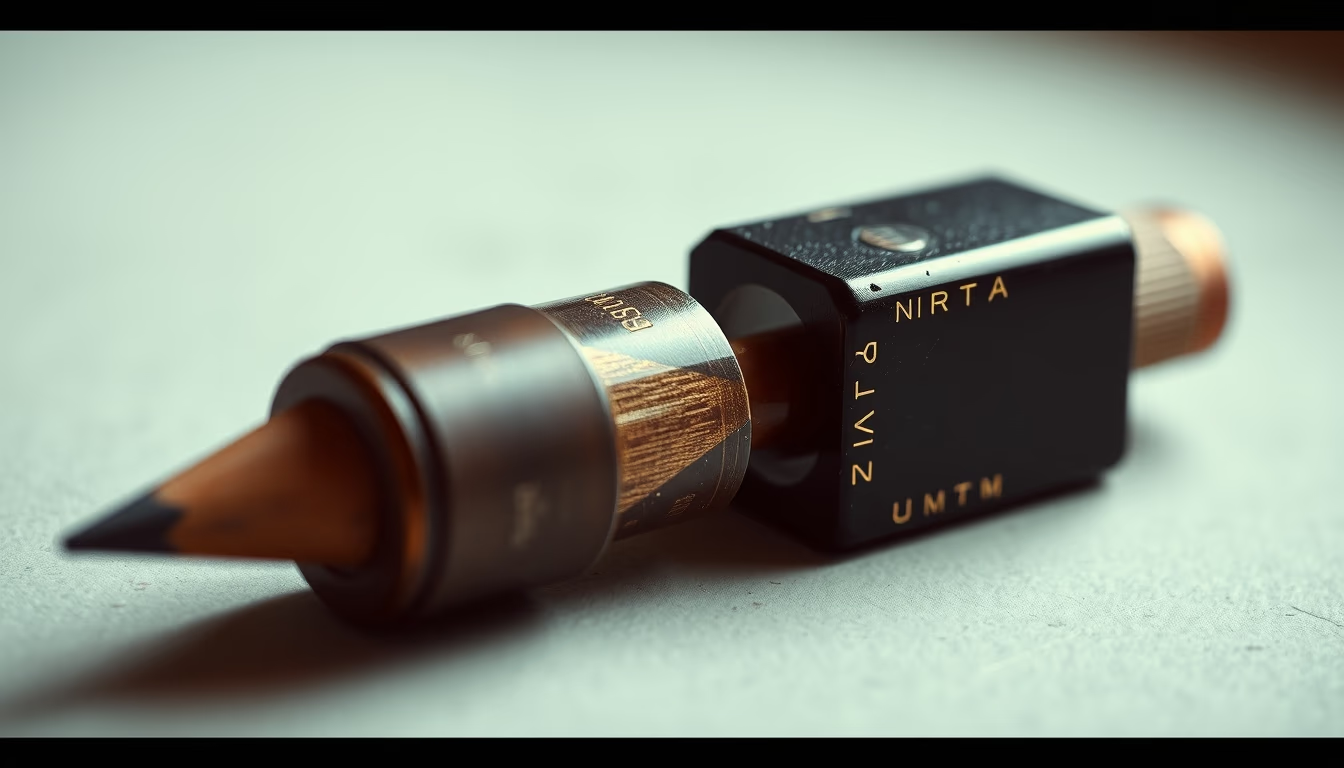
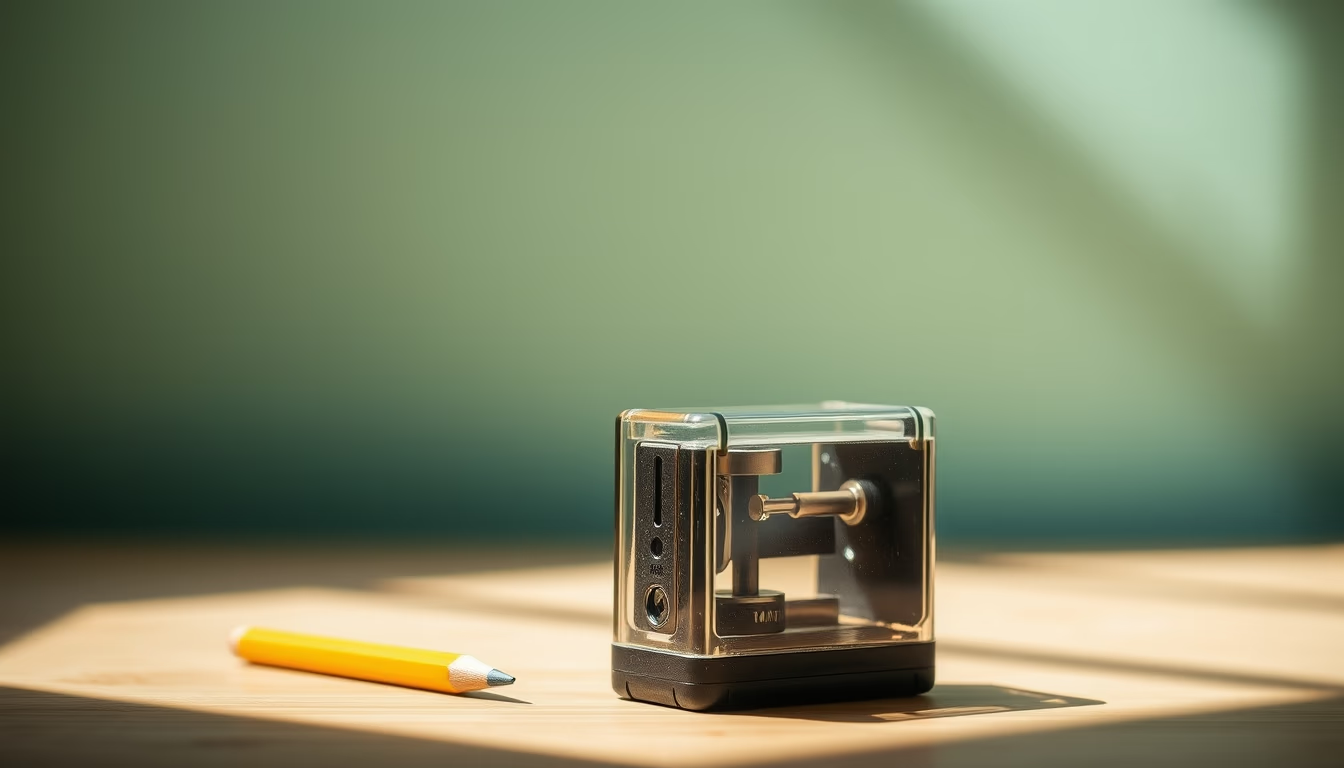
Vintage pencil sharpeners blend craftsmanship and functional design, collectible pieces that tell the history of writing.
About this subject
Vintage pencil sharpeners are far more than simple stationery items. They represent an era when functionality met artisanal design, often crafted from cast metal, turned wood, or Bakelite. The first mechanical pencil sharpener was patented in 1828 by French mathematician Bernard Lassimonne, but it was only in the late 19th century that portable models became popular. Companies like German Pelikan and Japanese Kuru Toga began producing versions with adjustable blades and shavings containers, now coveted items at antique fairs.
Their popularity grew alongside the standardization of the hexagonal graphite pencil, which required precise sharpening. Models such as the “Cleveland” by American Automatic Pencil Sharpener Co. (1910) or the “Apollo” by Swiss Caran d’Ache (1930s) exemplify engineering with art deco elegance. Wall-mounted sharpeners with cranks and gears equipped offices and schools until the 1970s, many made by German El Casco, which also produced knife sharpeners.
In Brazil, São Paulo-based factory Cis (1942) launched chrome-plated metal models that became classics, and the national plastic industry in the 1960s popularized colorful sharpeners shaped like objects. Today, collectors especially value models with vintage advertising, such as those bearing logos of coffee brands or banks. A rare sharpener can fetch hundreds of dollars at specialized auctions.
Interestingly, sharpener design even influenced high fashion: in 2017, Prada released a handbag shaped like a vintage pencil sharpener, evidencing how this everyday object transcended its original function. The retro aesthetic and mechanical precision continue to fascinate designers and collectors worldwide.
Frequently Asked Questions
How to identify a valuable vintage pencil sharpener?
Check the brand, material (cast metal or Bakelite are rarer), condition, and any original advertising. Models from companies like El Casco, Caran d’Ache, or Cis, especially with art deco design, can be highly valuable.
What was the first mechanical pencil sharpener in history?
The first was patented in 1828 by Frenchman Bernard Lassimonne. However, the model that truly popularized it was the “Planet” by German A. W. Faber (now Faber-Castell), launched in 1907 with an adjustable holder for different pencil diameters.
Are wall-mounted crank sharpeners still manufactured?
Yes, companies like El Casco and Japanese Muji still produce wall-mounted crank sharpeners, maintaining the classic design. However, most collectors seek original early 20th-century models.
Direct URL
https://pub-c7d6a6ea828543ac903a74a341ccb2e1.r2.dev/imagens/pencil-sharpener-vintage-high-fashion-editorial-fresh3.avifHow to credit
Include a visible link back to UtilizAí. Copy one of the snippets below:
<a href="https://xn--utiliza-eza.com/en/midia/imagens/pencil-sharpener-vintage-high-fashion-editorial-fresh3">Pencil sharpener vintage</a> by <a href="https://xn--utiliza-eza.com">UtilizAí</a>, licensed under <a href="https://creativecommons.org/licenses/by/4.0/">CC BY 4.0</a>.
[Pencil sharpener vintage](https://xn--utiliza-eza.com/en/midia/imagens/pencil-sharpener-vintage-high-fashion-editorial-fresh3) by [UtilizAí](https://xn--utiliza-eza.com), CC BY 4.0
License: CC-BY-4.0