Pelican flying low water
1344×768 · AVIF · CC BY 4.0
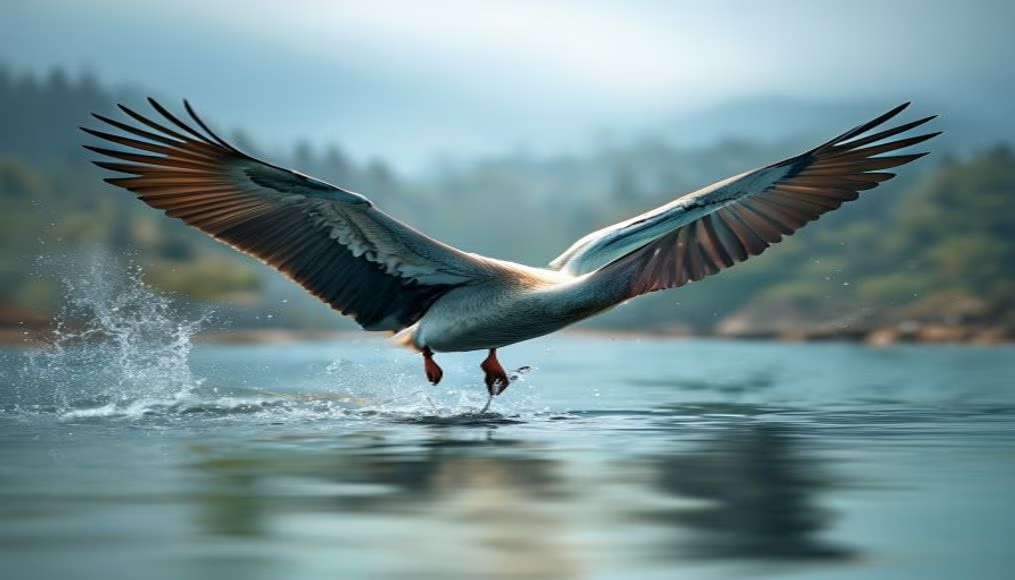
Pelicans fly low over water to save energy, using ground effect over seas and coastal lakes.
About this subject
Pelicans are large water birds recognized by their long beaks and throat pouches used to catch fish. When flying low over the water surface, they take advantage of the ground effect: the proximity to the water reduces aerodynamic drag, allowing the bird to move with lower energy expenditure. This behavior is especially common in species such as the brown pelican (Pelecanus occidentalis), which often glides close to the waves in search of schools of fish. This flight strategy is observed both in marine environments and in lakes and estuaries, where pelicans travel long distances during migration or in their feeding routine.
Pelicans belong to the family Pelecanidae and are present on all continents except Antarctica. The brown pelican is the only species that plunge-dives from great heights to fish, but most species fish while swimming, using their pouch as a net. Flying low over water also helps avoid predators and allows them to move in organized formations, such as V-shaped or straight lines. These birds can reach speeds of up to 60 km/h in level flight.
Historically, pelican populations declined due to the use of the pesticide DDT, which made their eggshells fragile. After the ban of DDT in the 1970s, populations gradually recovered. Today, they are considered a conservation symbol in many coastal regions. Furthermore, their image is associated with legends and folklore, such as the story of the pelican wounding its own breast to feed its young, a metaphor for altruism.
Ecologically, pelicans are important indicators of the health of aquatic ecosystems. They feed mainly on fish but also consume crustaceans and amphibians. Their nesting colonies, often on islands or mangroves, can host thousands of pairs. Observing pelicans flying low over water is a common sight on beaches and nature reserves, especially at dawn and dusk when fish are closer to the surface.
Frequently Asked Questions
Why do pelicans fly so low over water?
They use the ground effect to save energy: the proximity to the surface reduces air resistance, allowing them to glide with less effort. This is common during hunting and long-distance travel.
Which pelican species is best known for flying low?
The brown pelican (Pelecanus occidentalis) is famous for flying close to the waves and performing spectacular plunge dives to catch fish.
Are pelicans endangered?
Most pelican species are not currently threatened. The brown pelican was once at risk due to DDT but recovered after the pesticide was banned.
Direct URL
https://pub-c7d6a6ea828543ac903a74a341ccb2e1.r2.dev/imagens/pelican-flying-low-water-studio-still-life-p2.avifHow to credit
Include a visible link back to UtilizAí. Copy one of the snippets below:
<a href="https://xn--utiliza-eza.com/en/midia/imagens/pelican-flying-low-water-studio-still-life-p2">Pelican flying low water</a> by <a href="https://xn--utiliza-eza.com">UtilizAí</a>, licensed under <a href="https://creativecommons.org/licenses/by/4.0/">CC BY 4.0</a>.
[Pelican flying low water](https://xn--utiliza-eza.com/en/midia/imagens/pelican-flying-low-water-studio-still-life-p2) by [UtilizAí](https://xn--utiliza-eza.com), CC BY 4.0
License: CC-BY-4.0