Pcie expansion slot
1344×768 · AVIF · CC BY 4.0
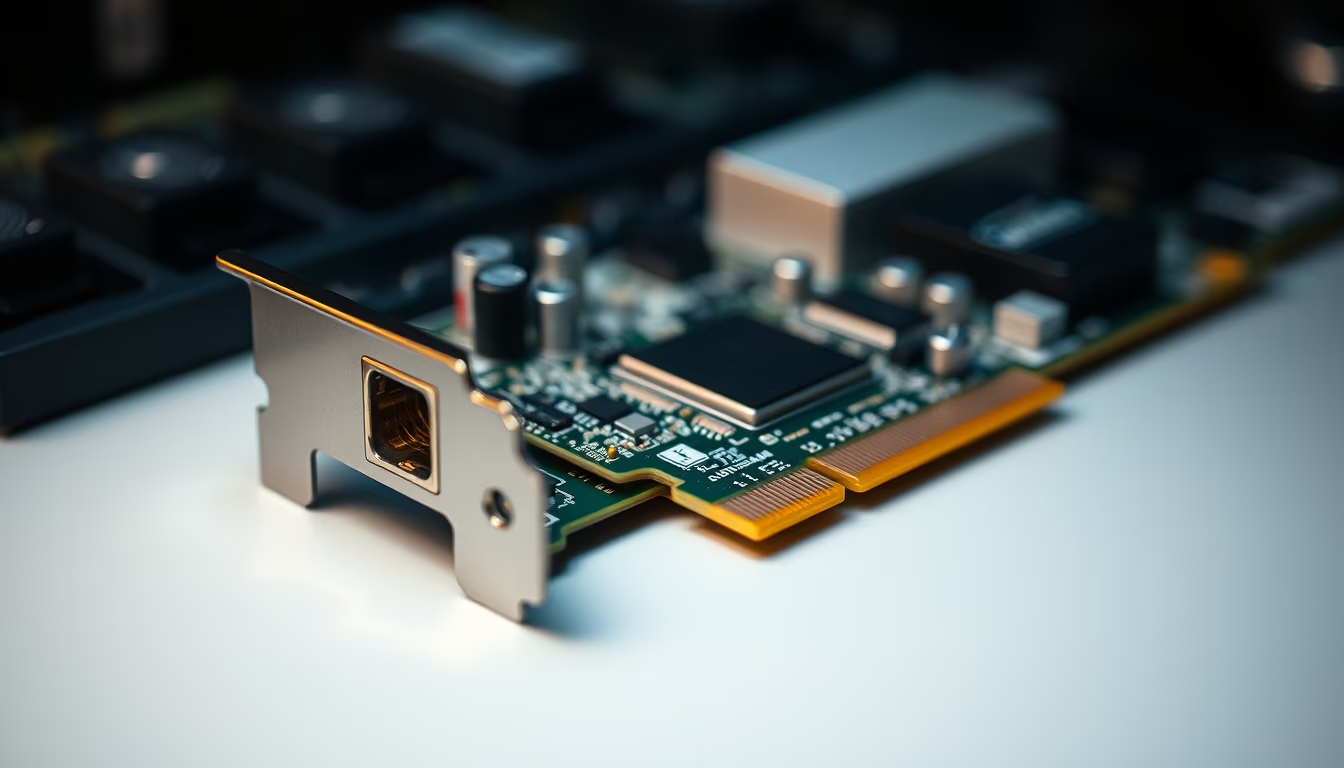
O slot PCI Express (PCIe) é um padrão de conexão de alta velocidade para placas de expansão em computadores, usado em GPUs, SSDs e mais.
Sobre o tema
O barramento PCI Express (Peripheral Component Interconnect Express), ou PCIe, é o padrão dominante para conectar placas de expansão em computadores modernos. Ele substituiu gradualmente os antigos padrões PCI e AGP a partir de 2004, oferecendo comunicação serial ponto a ponto com muito maior largura de banda. Cada conexão PCIe é composta por 'lanes' (vias), que podem ser agrupadas em configurações como x1, x4, x8 e x16, sendo que x16 é típico para placas de vídeo e x4 para SSDs NVMe.
As gerações do PCIe evoluíram significativamente. O PCIe 1.0 oferecia 250 MB/s por lane, enquanto o PCIe 4.0 (lançado em 2017) atinge 2 GB/s por lane, e o PCIe 5.0 dobra para 4 GB/s. A mais recente, PCIe 6.0, anunciada em 2022, chega a 8 GB/s por lane, utilizando modulação PAM-4 para maior eficiência. Essa escalabilidade permite que hardware de alto desempenho, como GPUs modernas e SSDs de última geração, aproveitem toda a velocidade disponível.
Uma curiosidade importante é que os slots físicos podem ter tamanhos diferentes: um slot x16 pode ser eletricamente configurado como x8 ou x4, dependendo do chipset e do número de lanes suportados pela CPU. Além disso, dispositivos PCIe são compatíveis entre gerações, embora a velocidade máxima seja limitada pela geração mais antiga envolvida. Por exemplo, uma placa PCIe 4.0 funciona em um slot 3.0, mas opera na velocidade 3.0. Essa retrocompatibilidade é essencial para a longevidade dos componentes.
Além de uso interno, o PCIe também é a base de conexões externas via cabos, como Thunderbolt e alguns adaptadores para GPUs externas (eGPU). Em servidores e workstations, o PCIe permite conectar controladoras RAID, placas de rede de alta velocidade e aceleradores de IA. A versatilidade do padrão o tornou indispensável na computação moderna, do desktop ao data center.
Perguntas frequentes
Qual a diferença entre PCIe x16 e x8?
A diferença está no número de lanes: x16 possui 16 vias de dados, oferecendo maior largura de banda (até 32 GB/s no PCIe 4.0), enquanto x8 tem metade (8 vias, até 16 GB/s). Placas de vídeo geralmente usam x16; placas de rede ou controladoras podem usar x8.
Posso usar uma placa PCIe 4.0 em um slot PCIe 3.0?
Sim, é compatível. A placa funcionará, mas limitada à velocidade máxima do slot 3.0 (por exemplo, uma GPU 4.0 terá desempenho igual a uma 3.0). A retrocompatibilidade é garantida pelo padrão.
Quantos slots PCIe uma placa-mãe típica tem?
Placas-mãe de consumo comuns possuem de 1 a 3 slots físicos x16 (geralmente um ligado à CPU e outros ao chipset) e alguns slots x1 ou x4. Modelos para servidores ou workstations podem ter mais slots configuráveis.
URL direta
https://pub-c7d6a6ea828543ac903a74a341ccb2e1.r2.dev/imagens/pcie-expansion-slot-national-geographic-style-p9.avifComo creditar
Inclua um link visível de volta pro UtilizAí. Copie um dos snippets abaixo:
<a href="https://xn--utiliza-eza.com/midia/imagens/pcie-expansion-slot-national-geographic-style-p9">Pcie expansion slot</a> by <a href="https://xn--utiliza-eza.com">UtilizAí</a>, licensed under <a href="https://creativecommons.org/licenses/by/4.0/">CC BY 4.0</a>.
[Pcie expansion slot](https://xn--utiliza-eza.com/midia/imagens/pcie-expansion-slot-national-geographic-style-p9) by [UtilizAí](https://xn--utiliza-eza.com), CC BY 4.0
Licença: CC-BY-4.0