Pcie expansion slot
1344×768 · AVIF · CC BY 4.0
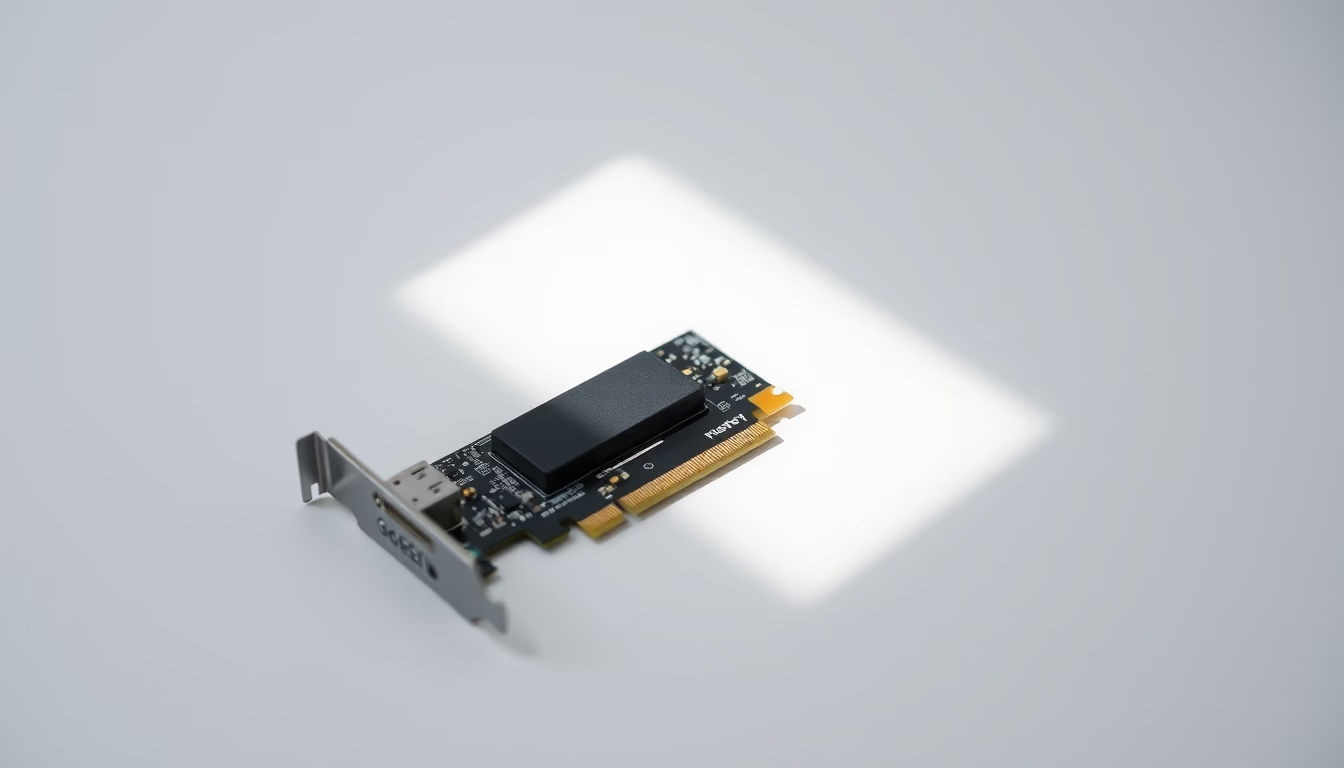
The PCI Express (PCIe) expansion slot is the current standard for connecting graphics cards, SSDs, and other peripherals to a computer's motherboard.
About this subject
The PCI Express (PCIe) expansion slot replaced older PCI and AGP standards starting in 2004. It provides high-speed serial communication between the motherboard and peripherals such as graphics cards, network cards, NVMe SSDs, and additional controllers. The most common versions are PCIe 4.0 and 5.0, with transfer rates up to 32 GT/s per lane in PCIe 5.0.
Slots vary in physical size and number of lanes: x1, x4, x8, and x16. The x16 slot is most commonly used for graphics cards, while x1 is used for network or sound cards. Devices can work in smaller slots with reduced performance; for instance, an x16 card in an x8 slot. Backward compatibility exists between versions, but performance is limited by the older version.
PCIe technology is critical for gaming, video editing, and servers. Modern graphics cards require at least PCIe 3.0 x16 for optimal performance. Additionally, NVMe SSDs use the M.2 slot, which also connects via PCIe, offering speeds far exceeding SATA SSDs. The standard continues to evolve to meet increasing bandwidth demands from AI and virtual reality applications.
Frequently Asked Questions
What is the difference between PCIe x16 and x8?
The number indicates the data lanes. An x16 slot has 16 lanes, offering higher bandwidth, ideal for graphics cards. The x8 has half the lanes, used in motherboards with multiple slots or for devices that don't require as much speed.
Can I use a PCIe 4.0 card in a PCIe 3.0 slot?
Yes, it is backward compatible. The card will run at the slower slot's speed (PCIe 3.0). For modern graphics cards, the performance loss is minimal, usually under 5%.
What does NVMe mean and how does it relate to PCIe?
NVMe (Non-Volatile Memory Express) is a protocol designed for SSDs to use the PCIe bus directly, delivering much higher speeds than the SATA standard. NVMe SSDs typically use the M.2 form factor, which connects to PCIe slots on the motherboard.
Direct URL
https://pub-c7d6a6ea828543ac903a74a341ccb2e1.r2.dev/imagens/pcie-expansion-slot-minimalist-composition-p4.avifHow to credit
Include a visible link back to UtilizAí. Copy one of the snippets below:
<a href="https://xn--utiliza-eza.com/en/midia/imagens/pcie-expansion-slot-minimalist-composition-p4">Pcie expansion slot</a> by <a href="https://xn--utiliza-eza.com">UtilizAí</a>, licensed under <a href="https://creativecommons.org/licenses/by/4.0/">CC BY 4.0</a>.
[Pcie expansion slot](https://xn--utiliza-eza.com/en/midia/imagens/pcie-expansion-slot-minimalist-composition-p4) by [UtilizAí](https://xn--utiliza-eza.com), CC BY 4.0
License: CC-BY-4.0