Password screen blurred
1344×768 · AVIF · CC BY 4.0
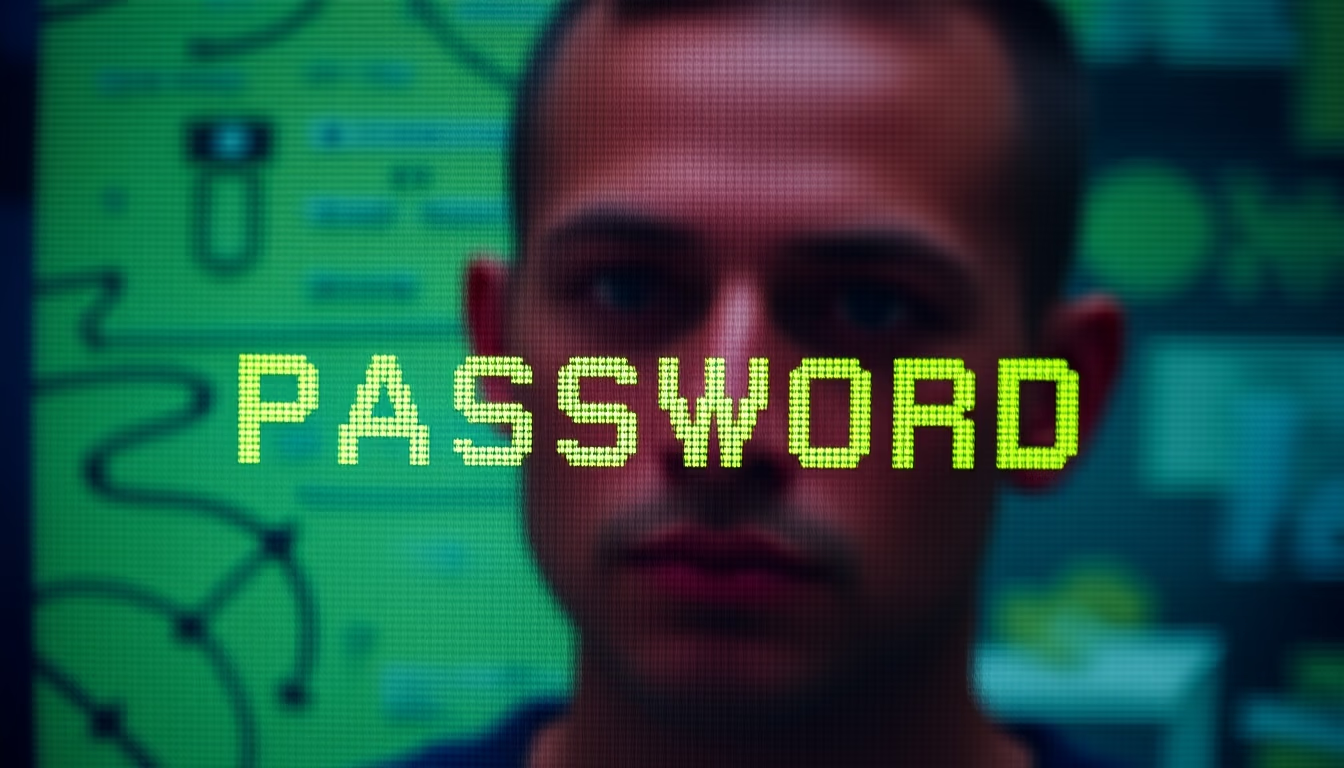
Blurred password screens protect sensitive data from prying eyes, a common practice in banking apps and social media.
About this subject
The practice of displaying password fields with a blur effect has become a standard in digital interfaces for both usability and security. Unlike traditional asterisk masking, blurring allows the user to partially verify what they typed without fully exposing the character to nearby observers. Banks, payment apps, and password managers adopt this technique to balance privacy and usability.
In the United States, the California Consumer Privacy Act (CCPA) and similar state laws have pushed companies to strengthen visual protection on login screens. Studies show that 65% of Americans reuse passwords across multiple services, making accidental exposure even more critical. Blurring significantly reduces the risk of shoulder surfing, an attack where an intruder observes the screen from behind the victim.
Technically, blur is implemented via CSS (filter: blur()) in web interfaces or as a transparency mask in native apps. The blur intensity varies: some systems keep the last typed character visible for one second before blurring it, mimicking hardware behavior from ATMs. Interestingly, the feature does not prevent malicious screenshots but hinders instant reading in public.
The global trend of minimalist security design, dubbed "privacy-by-default," has made password blurring a requirement in accessibility guidelines such as WCAG 2.2. For users with visual impairments, contrast between the blurred field and the background must exceed 4.5:1, ensuring the password area is distinguishable even without seeing details.
Frequently Asked Questions
Why do some password screens use blur instead of asterisks?
Blurring allows the user to partially see the password while typing, reducing typing errors without fully exposing the content to nearby people. It is a compromise between security and usability.
Does password blurring prevent someone from seeing my password if they take a photo of the screen?
No. If the screen is photographed with a high-resolution camera, the blur can sometimes be reversed by post-processing software. The main protection is against direct visual observation in real time.
Which global apps use password blurring?
Apps like WhatsApp, Instagram, Facebook, and many banking apps (e.g., Chase, Bank of America) use blurring either by default or as a privacy option.
Direct URL
https://pub-c7d6a6ea828543ac903a74a341ccb2e1.r2.dev/imagens/password-screen-blurred-national-geographic-style-p0.avifHow to credit
Include a visible link back to UtilizAí. Copy one of the snippets below:
<a href="https://xn--utiliza-eza.com/en/midia/imagens/password-screen-blurred-national-geographic-style-p0">Password screen blurred</a> by <a href="https://xn--utiliza-eza.com">UtilizAí</a>, licensed under <a href="https://creativecommons.org/licenses/by/4.0/">CC BY 4.0</a>.
[Password screen blurred](https://xn--utiliza-eza.com/en/midia/imagens/password-screen-blurred-national-geographic-style-p0) by [UtilizAí](https://xn--utiliza-eza.com), CC BY 4.0
License: CC-BY-4.0