Particles glowing dark
1344×768 · AVIF · CC BY 4.0
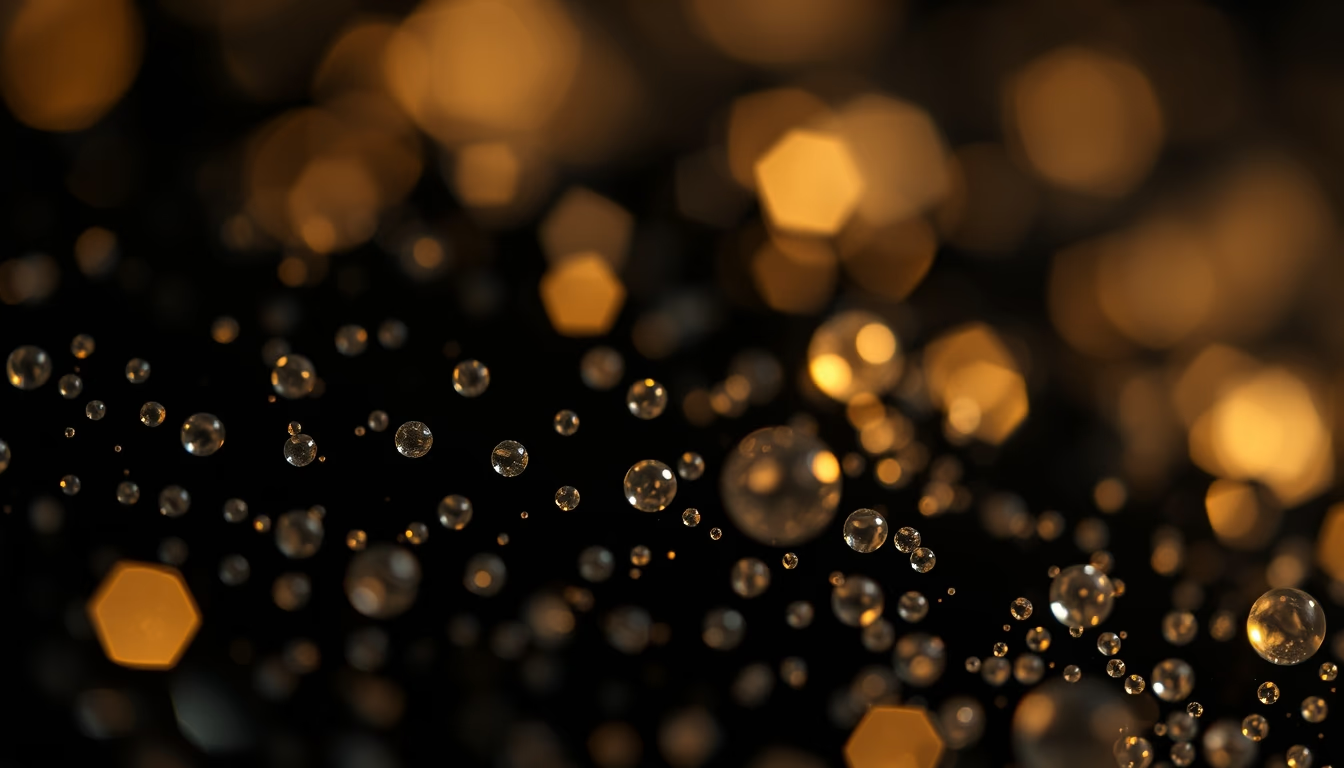
Glowing particles on dark backgrounds reveal natural and artificial phenomena, from marine bioluminescence to laboratory nanoparticles.
About this subject
Glowing particles in darkness arise from natural and artificial sources. Natural bioluminescence occurs in fireflies, jellyfish, and marine plankton. In the ocean, dinoflagellates flash when disturbed, creating 'milky seas' or glowing tides visible on dark beaches. This chemical reaction involves luciferin and luciferase, producing cold light without heat.
Artificial glowing particles include phosphors, zinc sulfide, and quantum dots. Quantum dots are semiconductor nanocrystals that emit specific colors based on size, used in TV displays, biological markers, and solar cells. Phosphorescent pigments absorb light and re-emit it slowly, common in toys and safety signs.
Macro photography of glowing particles requires specialized techniques: macro lenses, long exposure, and low light. Photographers capture the random dispersion of light points, creating abstract compositions that blend art and science. This aesthetic is popular in scientific visualizations, magazine covers, and digital art, a trend persisting around 2026 with advances in microLED displays and computer simulations.
Interestingly, particle glow inspires sustainable lighting innovations, such as bioluminescent fungi being researched for urban illumination. Thus, studying these materials connects biology, chemistry, and design.
Frequently Asked Questions
What makes particles glow in the dark?
They glow due to bioluminescence (a natural chemical reaction) or phosphorescence/fluorescence (absorbing and re-emitting light). Quantum dots emit light when excited by electricity or radiation.
Where can I see glowing particles in nature?
In fireflies, some fungi (e.g., Armillaria), bioluminescent plankton in the ocean (glowing tides), and jellyfish. In the U.S., glowing bays in Puerto Rico and bioluminescent blooms in California are famous.
How to photograph glowing particles in close-up?
Use a macro lens, tripod, manual mode, and long exposure (5, 30 seconds). Set ISO to 100, 400 and aperture to f/2.8, f/5.6. Use soft LED lighting without overpowering the particles' glow.
Direct URL
https://pub-c7d6a6ea828543ac903a74a341ccb2e1.r2.dev/imagens/particles-glowing-dark-macro-closeup-p1.avifHow to credit
Include a visible link back to UtilizAí. Copy one of the snippets below:
<a href="https://xn--utiliza-eza.com/en/midia/imagens/particles-glowing-dark-macro-closeup-p1">Particles glowing dark</a> by <a href="https://xn--utiliza-eza.com">UtilizAí</a>, licensed under <a href="https://creativecommons.org/licenses/by/4.0/">CC BY 4.0</a>.
[Particles glowing dark](https://xn--utiliza-eza.com/en/midia/imagens/particles-glowing-dark-macro-closeup-p1) by [UtilizAí](https://xn--utiliza-eza.com), CC BY 4.0
License: CC-BY-4.0