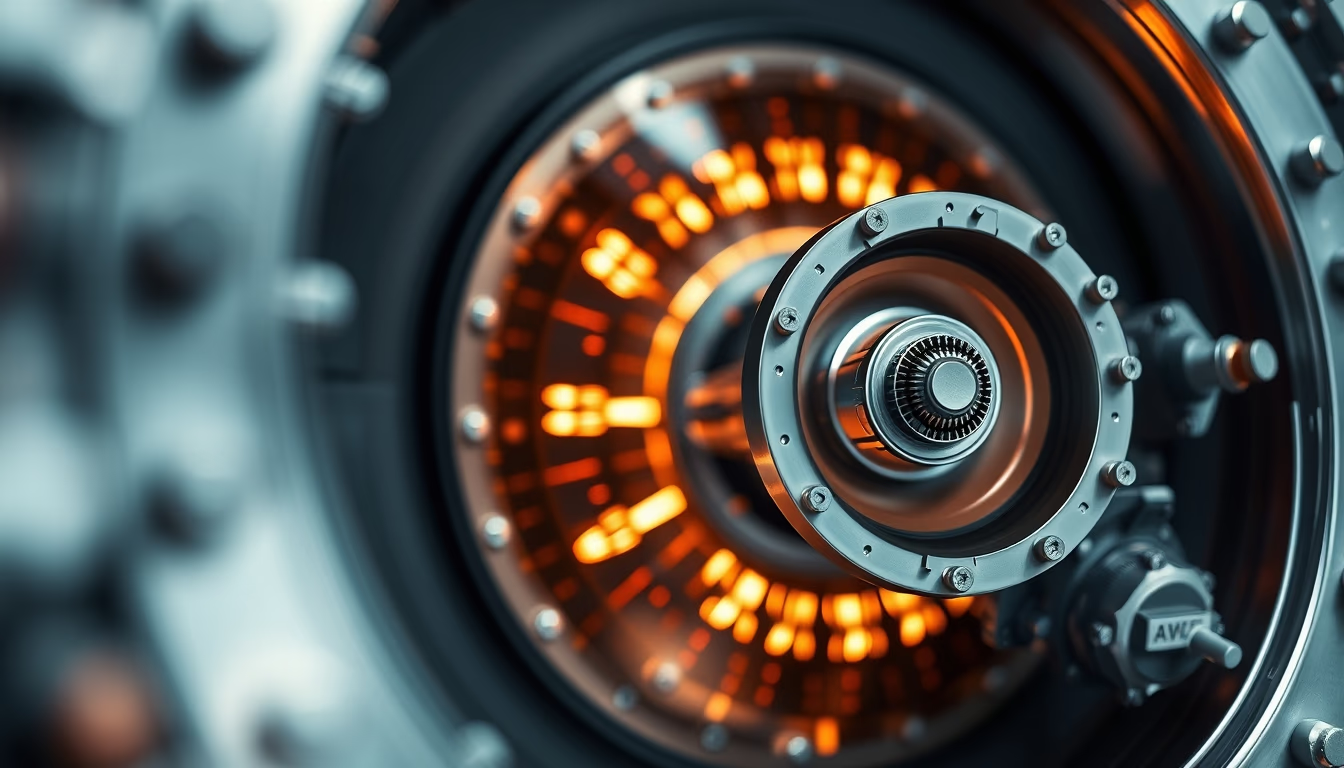
Acelerador de partículas interior cern
1344×768 · AVIF · CC BY 4.0
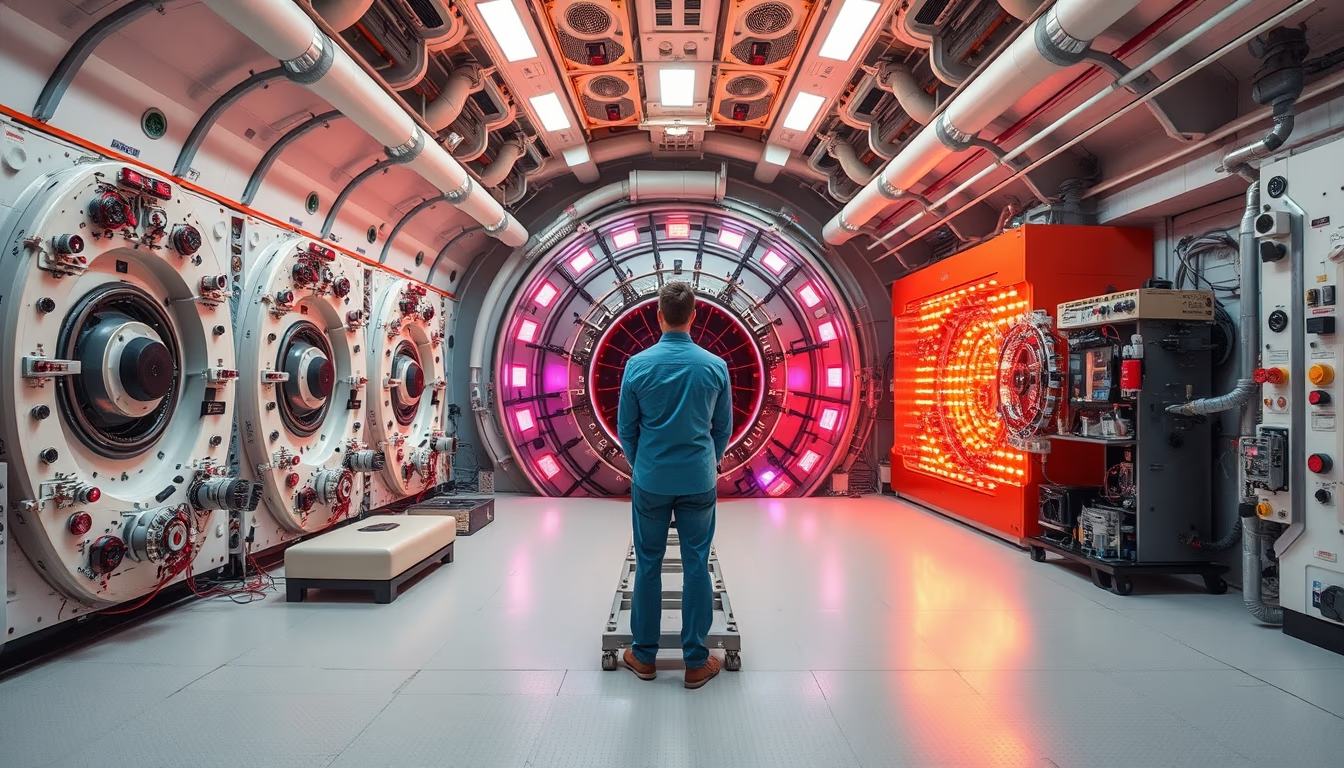
O interior do Grande Colisor de Hádrons (LHC) no CERN revela a complexidade do maior acelerador de partículas do mundo.
Sobre o tema
O Grande Colisor de Hádrons (LHC) é o maior e mais potente acelerador de partículas já construído. Localizado no CERN, na fronteira entre França e Suíça, seu túnel circular tem 27 quilômetros de extensão e fica a cerca de 100 metros de profundidade. Dentro dele, feixes de prótons ou íons são acelerados a velocidades próximas à da luz e colidem em quatro pontos principais, onde estão instalados detectores como ATLAS, CMS, ALICE e LHCb.
O funcionamento do LHC depende de uma complexa rede de sistemas criogênicos e eletroímãs supercondutores. Esses ímãs operam a temperaturas mais frias que o espaço interestelar, chegando a 1,9 Kelvin, e geram campos magnéticos extremamente intensos para curvar a trajetória das partículas. Ao colidir, as partículas liberam energia que se converte em novas partículas, permitindo estudar as forças fundamentais e os constituintes básicos da matéria.
Uma das maiores conquistas do LHC foi a descoberta do bóson de Higgs em 2012, partícula prevista pelo Modelo Padrão da física de partículas. Essa descoberta rendeu o Prêmio Nobel de Física a Peter Higgs e François Englert. Além disso, o LHC continua a buscar fenômenos além do Modelo Padrão, como matéria escura, supersimetria e dimensões extras. O acelerador já passou por várias atualizações, como o Long Shutdown 2, e está programado para o High-Luminosity LHC a partir de 2029, que aumentará significativamente a taxa de colisões.
O LHC também tem aplicações tecnológicas, como o desenvolvimento de supercondutores e sistemas de computação distribuída. A World Wide Web foi criada no CERN para facilitar a troca de dados entre cientistas, e hoje o LHC gera petabytes de dados por ano, processados por uma rede global de mais de 170 centros de computação. O impacto do LHC vai além da física, inspirando gerações de cientistas e engenheiros.
Perguntas frequentes
Qual é o principal objetivo do LHC no CERN?
O principal objetivo do LHC é investigar as leis fundamentais da física, testar o Modelo Padrão, descobrir novas partículas como o bóson de Higgs e buscar fenômenos além do Modelo Padrão, como matéria escura e supersimetria.
Como as partículas são aceleradas dentro do LHC?
As partículas são aceleradas por uma sequência de aceleradores lineares e circulares até atingirem altas energias. No LHC, prótons ou íons são injetados em feixes e circulam em direções opostas dentro do túnel, impulsionados por campos elétricos de radiofrequência e curvados por ímãs supercondutores.
Quais descobertas importantes foram feitas no LHC?
A descoberta mais notável foi o bóson de Higgs em 2012, que confirmou o mecanismo de geração de massa das partículas. Além disso, o LHC já observou diversas partículas exóticas, como pentaquarks e tetraquarks, e continua a fornecer dados para estudos de precisão do Modelo Padrão.
URL direta
https://pub-c7d6a6ea828543ac903a74a341ccb2e1.r2.dev/imagens/particle-accelerator-interior-cern-national-geographic-style-p5.avifComo creditar
Inclua um link visível de volta pro UtilizAí. Copie um dos snippets abaixo:
<a href="https://xn--utiliza-eza.com/midia/imagens/particle-accelerator-interior-cern-national-geographic-style-p5">Acelerador de partículas interior cern</a> by <a href="https://xn--utiliza-eza.com">UtilizAí</a>, licensed under <a href="https://creativecommons.org/licenses/by/4.0/">CC BY 4.0</a>.
[Acelerador de partículas interior cern](https://xn--utiliza-eza.com/midia/imagens/particle-accelerator-interior-cern-national-geographic-style-p5) by [UtilizAí](https://xn--utiliza-eza.com), CC BY 4.0
Licença: CC-BY-4.0