Particle accelerator interior cern
1344×768 · AVIF · CC BY 4.0
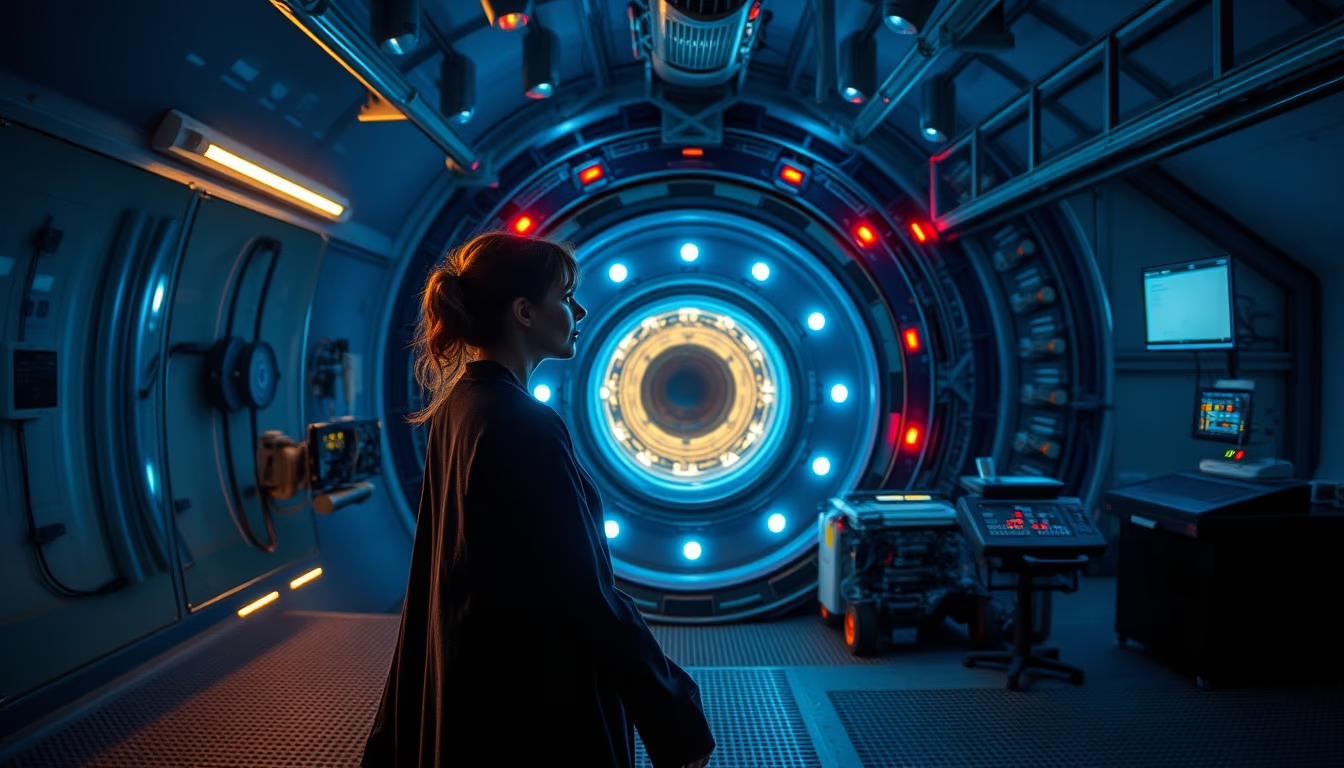
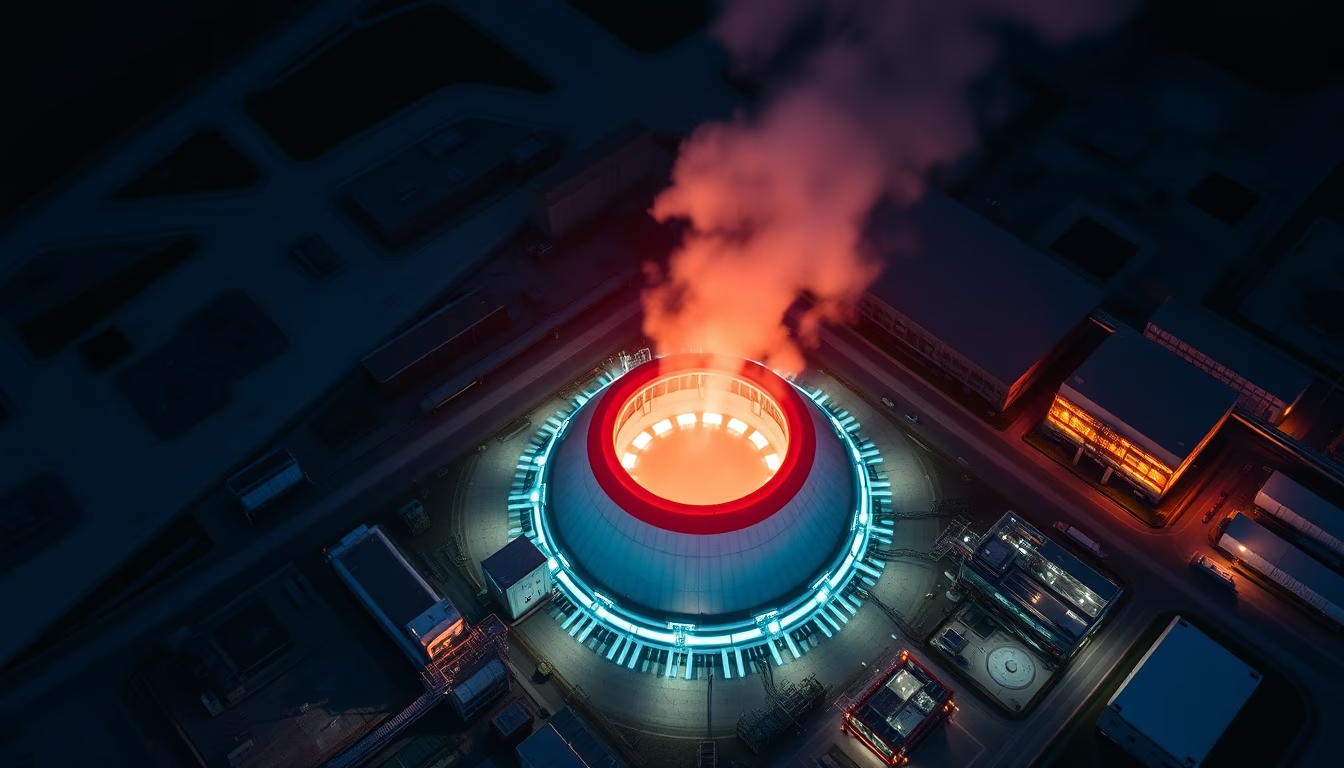
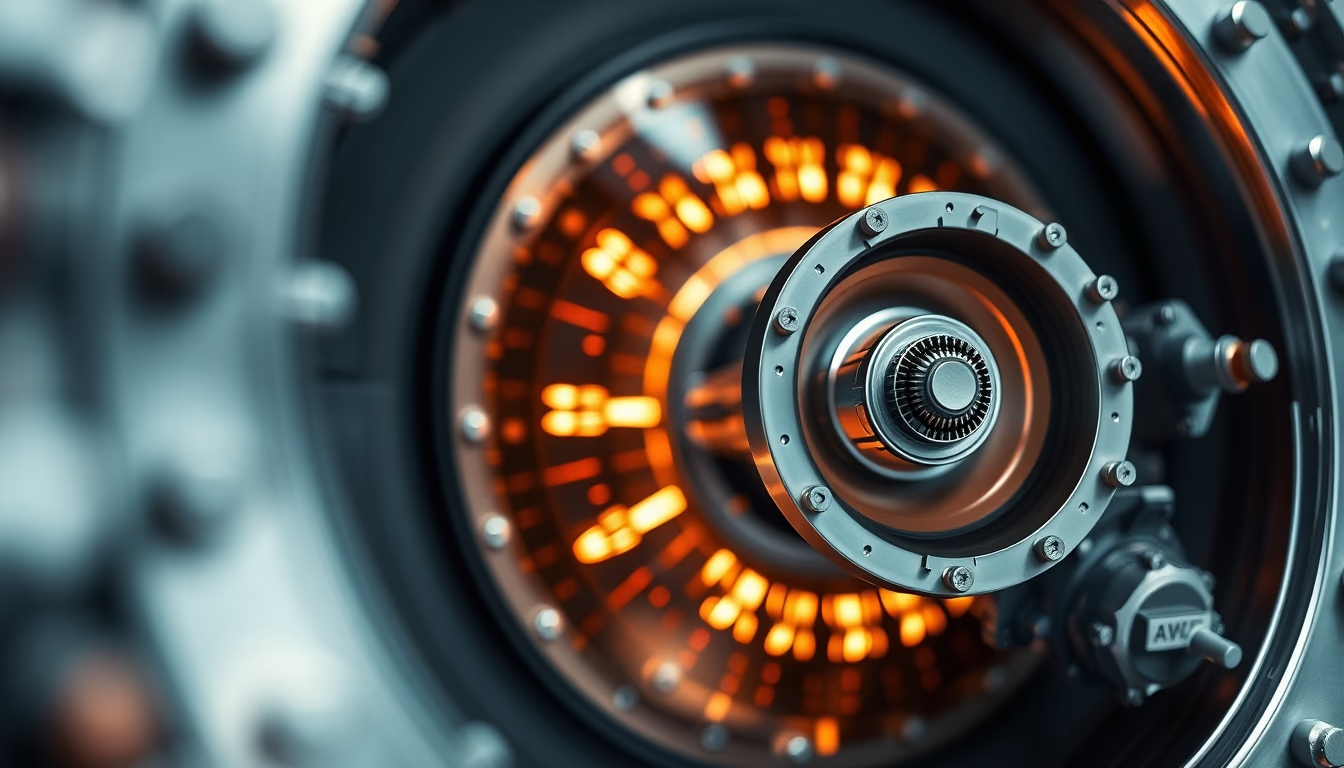
The interior of the Large Hadron Collider (LHC) at CERN reveals the complexity of the largest machine ever built by humanity.
About this subject
The Large Hadron Collider (LHC) is the world's most powerful particle accelerator, located at CERN laboratory on the border between France and Switzerland. Its interior consists of a circular tunnel 27 kilometers in circumference, built about 100 meters underground. Inside this tunnel, beams of protons or heavy ions are accelerated to near-light speeds, guided by superconducting magnets cooled to temperatures below -271°C, colder than outer space.
The LHC began operations in 2008 and has been the site of fundamental discoveries, such as the confirmation of the Higgs boson in 2012, which earned the Nobel Prize for Peter Higgs and François Englert. The machine collides particles at four main points, where detectors like ATLAS, CMS, ALICE, and LHCb are located, each designed to study different aspects of particle physics. The collisions recreate conditions similar to those existing a billionth of a second after the Big Bang.
Maintenance and upgrades of the LHC are constant, with technical shutdowns for improvements. The High-Luminosity LHC, expected to begin operation in the late 2020s, will increase the collision rate by a factor of 5 to 10, enabling more precise studies of rare phenomena. The interior of the LHC is a high-tech environment, with cables, tubes, and vacuum systems maintained by an international team of engineers and physicists.
Beyond its scientific purpose, the LHC has also generated practical applications, such as the development of the World Wide Web at CERN and advances in medical imaging and distributed computing. The total cost of the project was approximately 4.6 billion euros, funded by CERN member states. The LHC tunnel, originally built for the LEP (Large Electron-Positron Collider) in the 1980s, was reused, demonstrating the sustainability of large-scale scientific infrastructure.
Frequently Asked Questions
What is the temperature inside the LHC tunnel?
The LHC's superconducting magnets operate at 1.9 K, or -271.3°C, colder than outer space (2.7 K).
How long is the LHC ring?
The main LHC ring has a circumference of 27 kilometers, buried about 100 meters underground.
What was discovered at the LHC in 2012?
In 2012, the LHC confirmed the existence of the Higgs boson, a fundamental particle predicted by the Standard Model, completing the picture of elementary particles.
Direct URL
https://pub-c7d6a6ea828543ac903a74a341ccb2e1.r2.dev/imagens/particle-accelerator-interior-cern-high-fashion-editorial-p6.avifHow to credit
Include a visible link back to UtilizAí. Copy one of the snippets below:
<a href="https://xn--utiliza-eza.com/en/midia/imagens/particle-accelerator-interior-cern-high-fashion-editorial-p6">Particle accelerator interior cern</a> by <a href="https://xn--utiliza-eza.com">UtilizAí</a>, licensed under <a href="https://creativecommons.org/licenses/by/4.0/">CC BY 4.0</a>.
[Particle accelerator interior cern](https://xn--utiliza-eza.com/en/midia/imagens/particle-accelerator-interior-cern-high-fashion-editorial-p6) by [UtilizAí](https://xn--utiliza-eza.com), CC BY 4.0
License: CC-BY-4.0