Parker solar probe sun
1344×768 · AVIF · CC BY 4.0
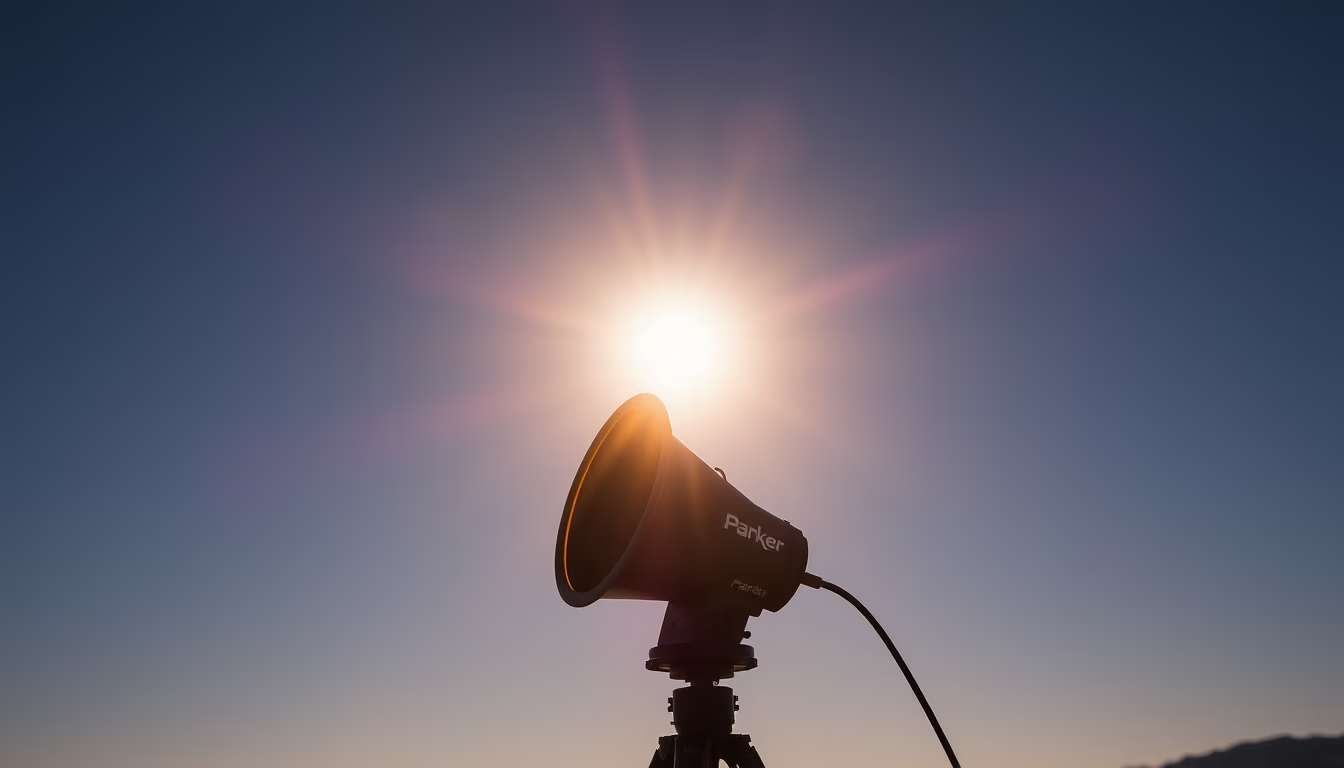
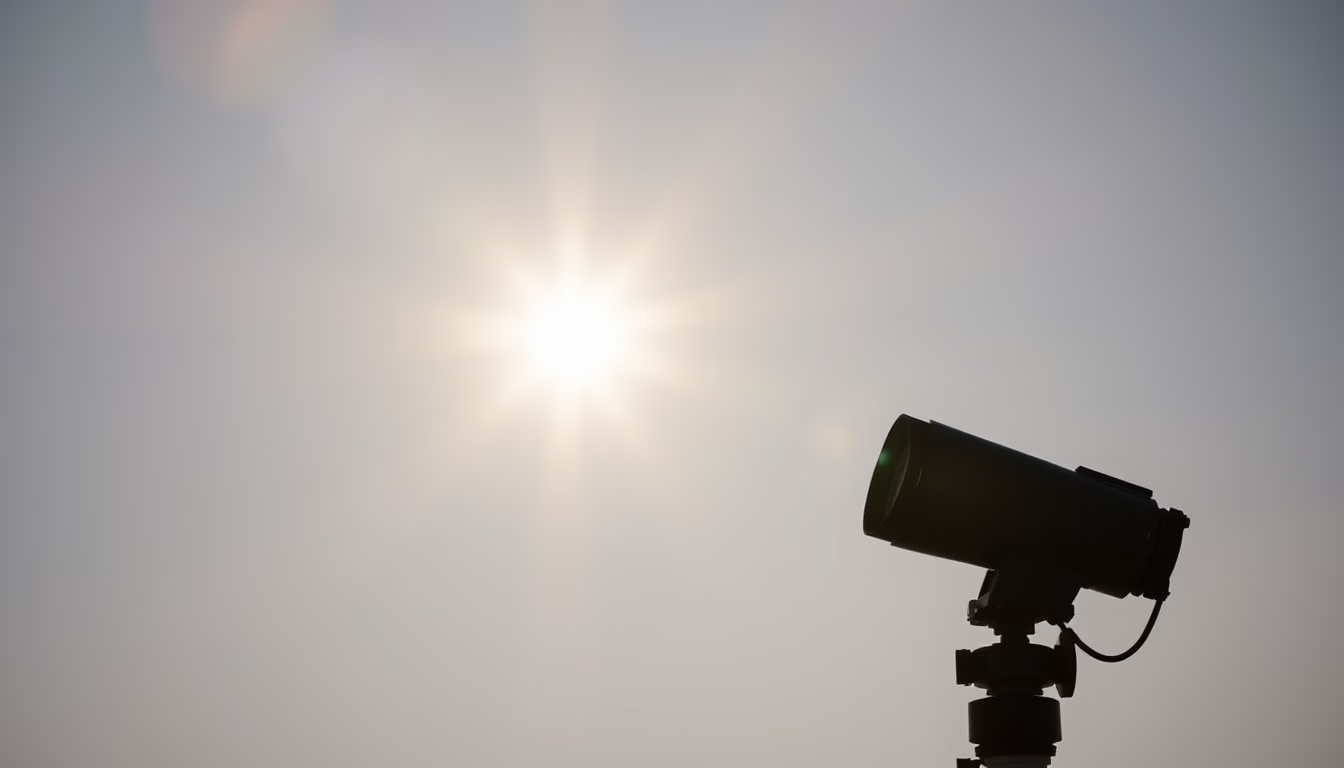
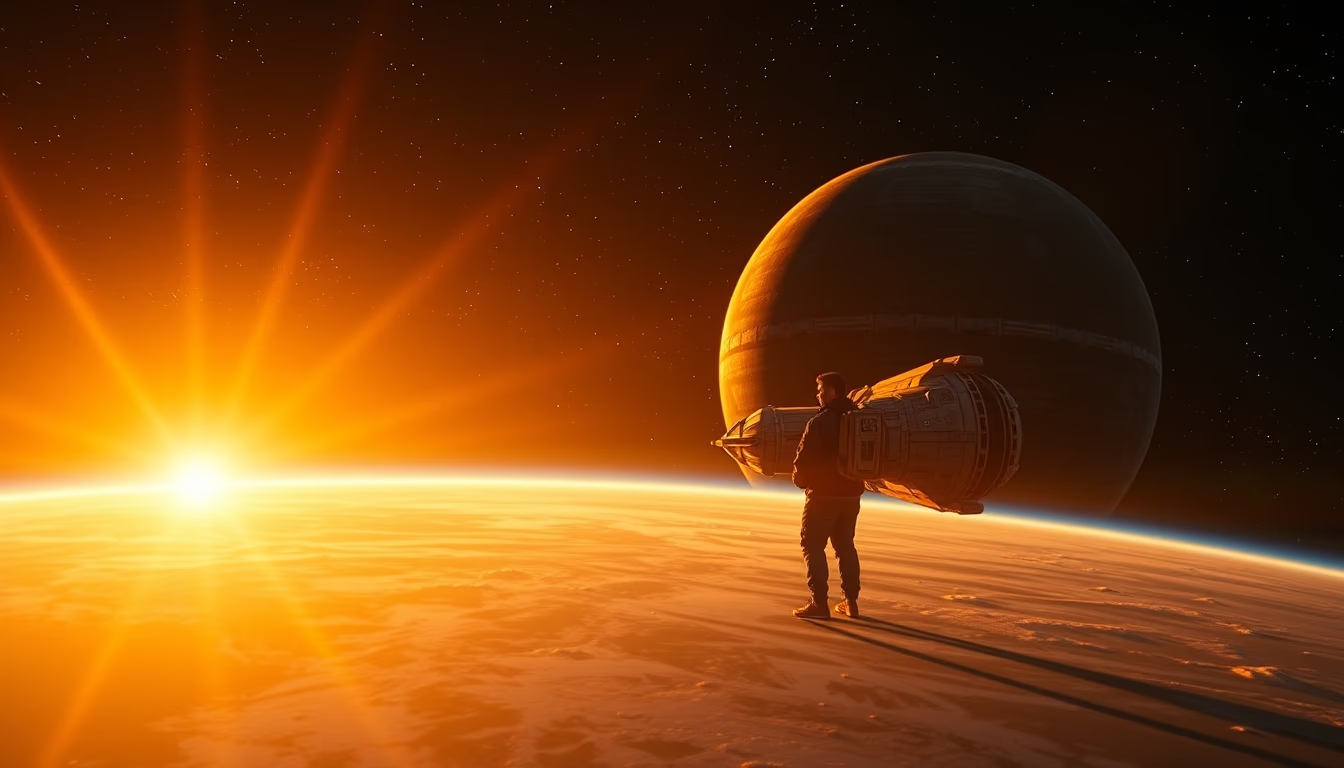
The Parker Solar Probe is the first spacecraft to enter the solar corona, approaching closer to the Sun than any previous mission.
About this subject
Launched on August 12, 2018, by NASA, the Parker Solar Probe aims to revolutionize our understanding of the Sun. Named after astrophysicist Eugene Parker, who predicted the existence of the solar wind, the probe is the first to fly through the solar corona, the Sun's outer atmosphere. To withstand extreme temperatures of up to 1,400°C, it relies on a carbon-composite heat shield 11.4 cm thick, keeping instruments at about 29°C.
The spacecraft uses Venus gravity assists to progressively approach the Sun, achieving record-breaking speeds. At its closest approach, planned for 2025, it will come within 6.2 million kilometers of the solar surface, traveling at approximately 690,000 km/h, making it the fastest human-made object ever. Onboard instruments measure magnetic fields, plasma, energetic particles, and capture images of the corona.
Discoveries from the Parker Solar Probe have already transformed heliophysics. It detected radio waves in the solar atmosphere, revealed that the solar wind near the Sun consists of narrow jets, and confirmed the presence of interstellar dust. The mission helps predict solar storms that can affect satellites and power grids on Earth. Originally designed for 7 years, the probe continues to operate successfully, exceeding lifespan expectations.
Frequently Asked Questions
Why doesn't the Parker Solar Probe melt when approaching the Sun?
It has a 11.4 cm carbon foam heat shield that reflects most solar radiation, keeping instruments at room temperature even as the exterior reaches over 1,400°C.
What is the top speed of the Parker Solar Probe?
At its closest approach to the Sun, the probe reaches about 690,000 km/h, making it the fastest human-made object ever.
What are the main scientific goals of the mission?
The mission aims to understand why the solar corona is hotter than the surface, how the solar wind is accelerated, and to study energetic particles and solar magnetic fields.
Direct URL
https://pub-c7d6a6ea828543ac903a74a341ccb2e1.r2.dev/imagens/parker-solar-probe-sun-long-exposure-fresh7.avifHow to credit
Include a visible link back to UtilizAí. Copy one of the snippets below:
<a href="https://xn--utiliza-eza.com/en/midia/imagens/parker-solar-probe-sun-long-exposure-fresh7">Parker solar probe sun</a> by <a href="https://xn--utiliza-eza.com">UtilizAí</a>, licensed under <a href="https://creativecommons.org/licenses/by/4.0/">CC BY 4.0</a>.
[Parker solar probe sun](https://xn--utiliza-eza.com/en/midia/imagens/parker-solar-probe-sun-long-exposure-fresh7) by [UtilizAí](https://xn--utiliza-eza.com), CC BY 4.0
License: CC-BY-4.0