Parker solar probe sun
1344×768 · AVIF · CC BY 4.0

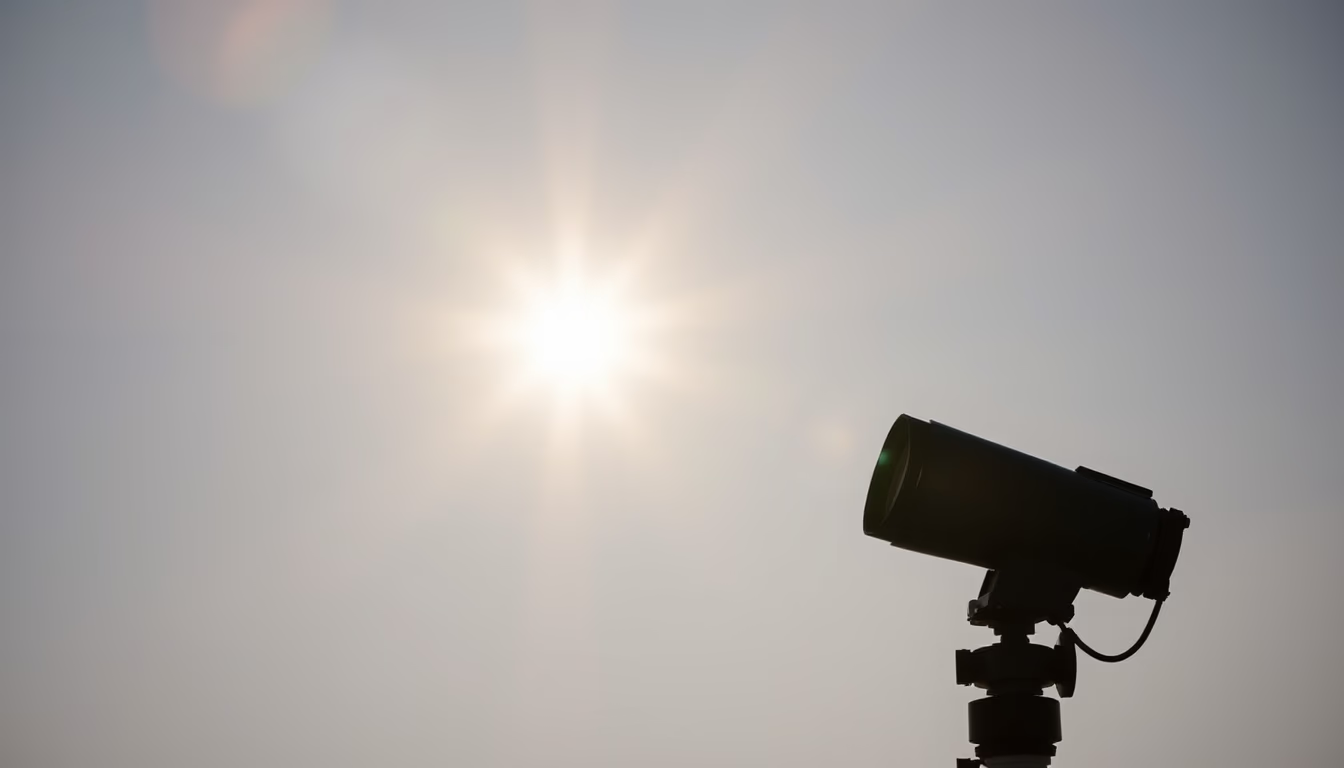
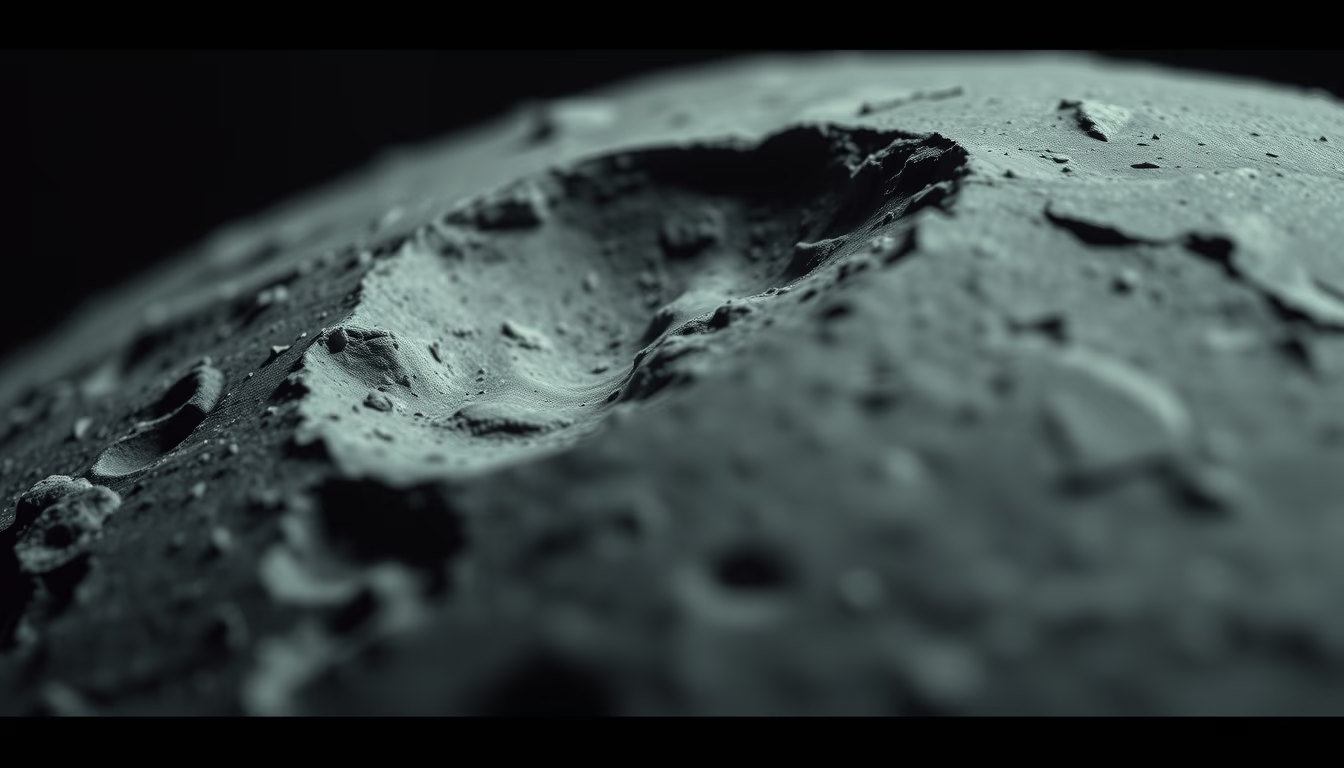
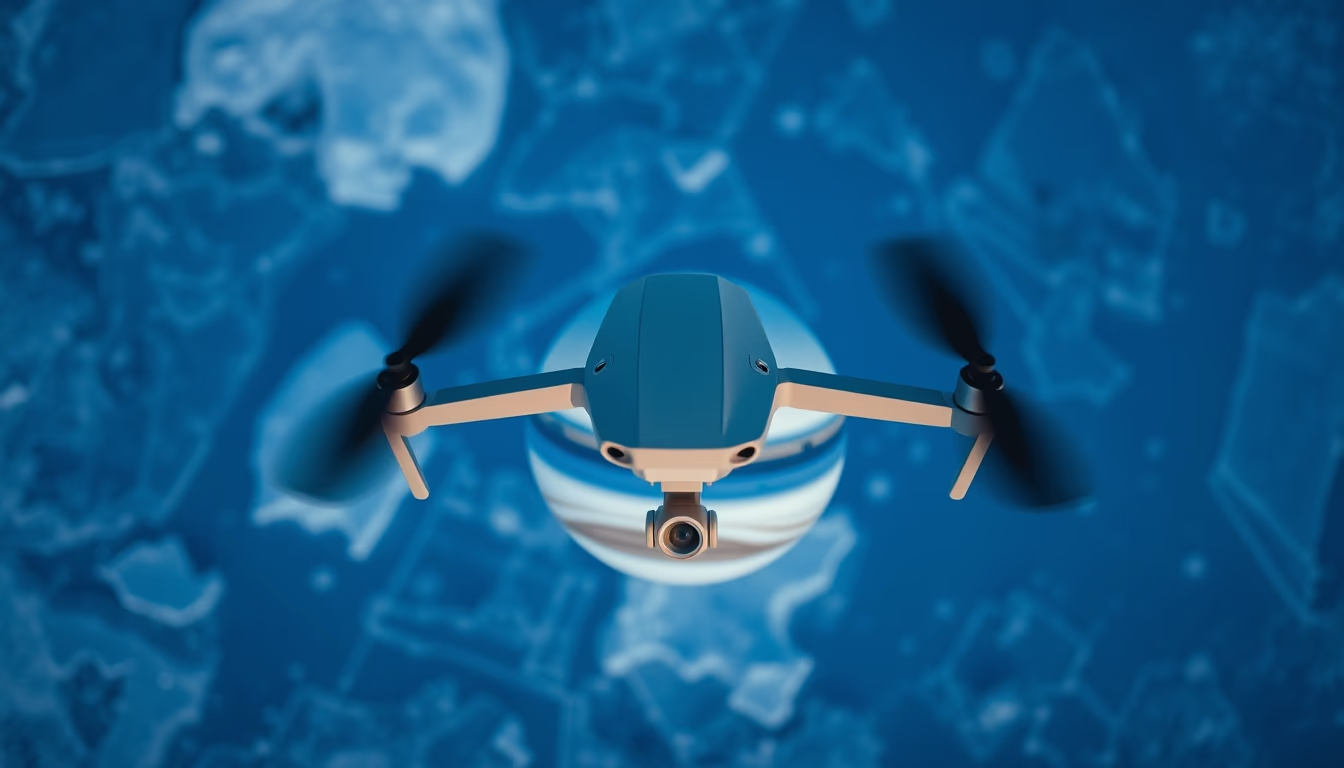
The Parker Solar Probe is the first spacecraft to 'touch' the Sun, studying the solar corona at record-breaking distances.
About this subject
Launched on August 12, 2018, by NASA, the Parker Solar Probe aims to revolutionize our understanding of the Sun. It is the first spacecraft to fly through the solar corona, the outermost layer of the star's atmosphere. To withstand extreme temperatures up to 1,400 °C, it relies on a carbon-composite heat shield 11.4 cm thick, called the Thermal Protection System. The probe reaches incredible speeds of up to 692,000 km/h during its closest approaches, making it the fastest human-made object ever. Its elliptical orbits bring it within 6.2 million kilometers of the solar surface, deep inside the region where phenomena like the solar wind and coronal mass ejections occur.
One of the mission's greatest challenges is measuring particles and magnetic fields in such a hostile environment. The Parker Solar Probe carries four main instruments: FIELDS (measuring electric and magnetic fields), WISPR (visible images of the corona), SWEAP (analyzing solar wind particles), and ISOIS (detecting energetic particles). These instruments have already provided unprecedented data, such as the discovery of zigzag-shaped structures in the solar wind called 'switchbacks' and evidence that the Sun's surface has locally reversing magnetic fields.
The mission is named after astrophysicist Eugene Parker, who predicted the existence of the solar wind in 1958. It is the first NASA spacecraft named after a living person. The Parker Solar Probe will continue its approaches until 2025, completing 24 orbits. The collected data are essential for predicting space weather events that can affect satellites and power grids on Earth, as well as helping to solve mysteries such as why the solar corona is hotter than the Sun's surface.
The technology developed for the Parker Solar Probe also inspires advances in heat-resistant materials and autonomous navigation systems. Its heat shield, for instance, is made of carbon foam coated with ceramic, capable of reflecting 99.7% of incoming solar radiation. Without this protection, the probe would melt within seconds. The mission demonstrates how cutting-edge engineering allows us to explore extreme environments, paving the way for future interstellar missions.
Frequently Asked Questions
What is the closest distance the Parker Solar Probe reaches to the Sun?
The probe comes within about 6.2 million kilometers of the solar surface, roughly 8.5 solar radii. This is seven times closer than any previous mission.
What is the Parker Solar Probe's heat shield made of?
The heat shield is made of carbon foam between two carbon-compposite plates, coated with white ceramic. It is 11.4 cm thick and reflects 99.7% of solar radiation.
What are the key discoveries of the Parker Solar Probe so far?
It discovered zigzag structures in the solar wind called 'switchbacks', showed that interstellar dust decreases near the Sun, and confirmed the solar corona has locally reversing magnetic fields.
Direct URL
https://pub-c7d6a6ea828543ac903a74a341ccb2e1.r2.dev/imagens/parker-solar-probe-sun-isometric-flat-lay-fresh8.avifHow to credit
Include a visible link back to UtilizAí. Copy one of the snippets below:
<a href="https://xn--utiliza-eza.com/en/midia/imagens/parker-solar-probe-sun-isometric-flat-lay-fresh8">Parker solar probe sun</a> by <a href="https://xn--utiliza-eza.com">UtilizAí</a>, licensed under <a href="https://creativecommons.org/licenses/by/4.0/">CC BY 4.0</a>.
[Parker solar probe sun](https://xn--utiliza-eza.com/en/midia/imagens/parker-solar-probe-sun-isometric-flat-lay-fresh8) by [UtilizAí](https://xn--utiliza-eza.com), CC BY 4.0
License: CC-BY-4.0