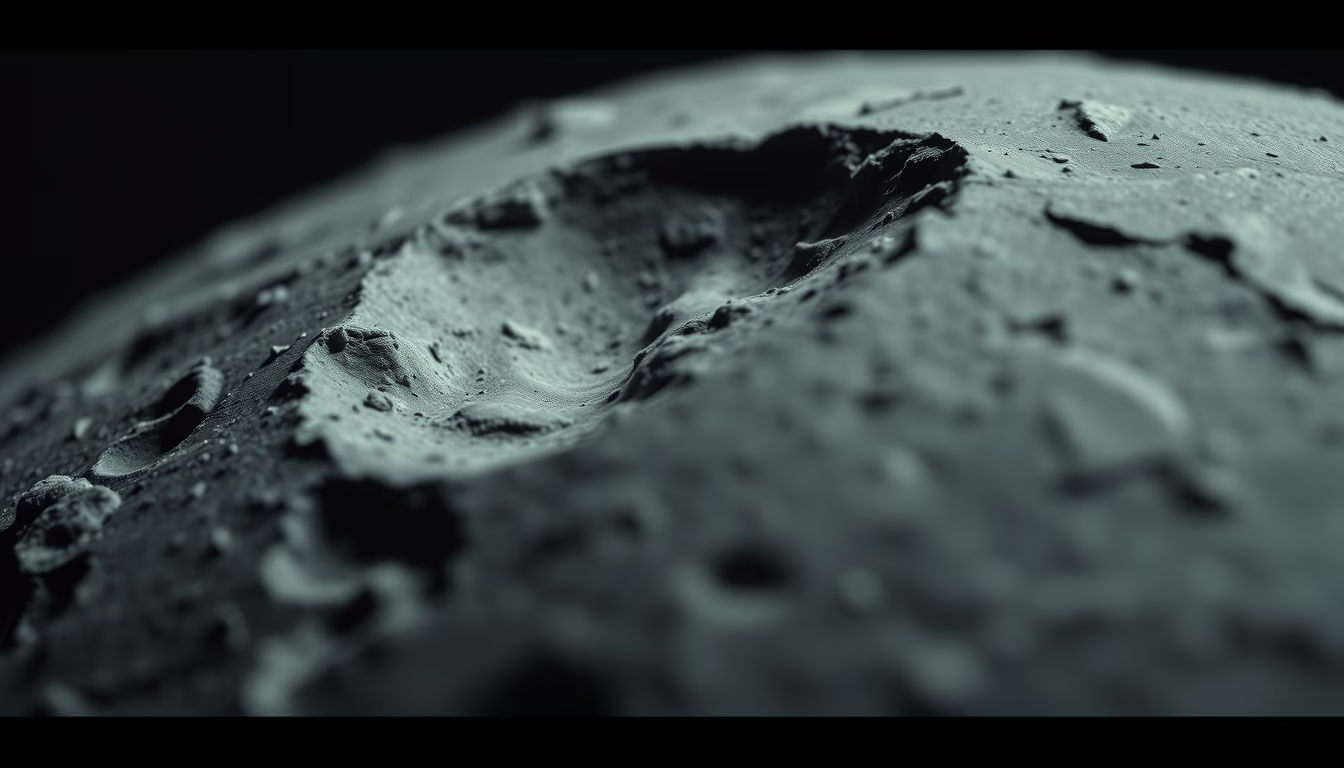
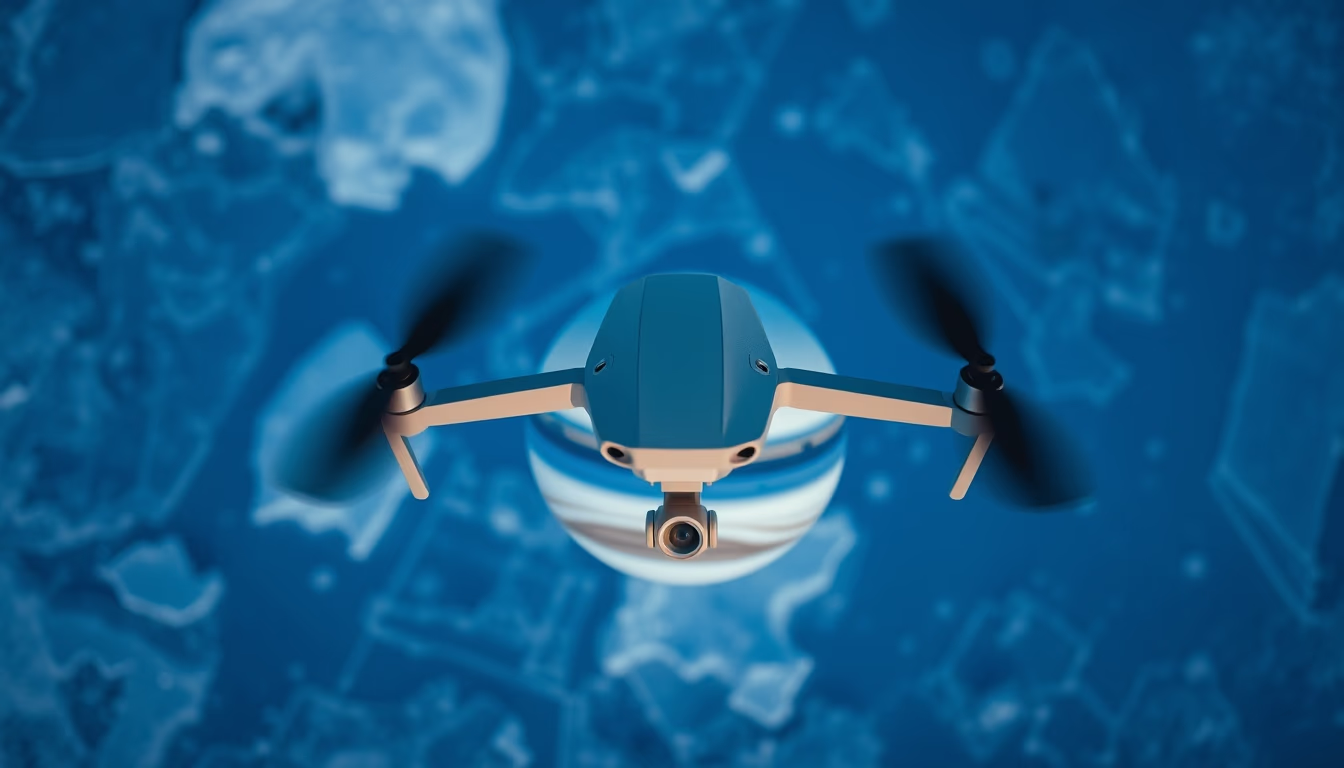
Parker solar probe sun
1344×768 · AVIF · CC BY 4.0

The Parker Solar Probe is NASA's fastest spacecraft ever built, designed to study the solar corona and solar wind from just a few million kilometers away from the Sun.
About this subject
The Parker Solar Probe, launched in August 2018, is an ambitious NASA mission to explore the Sun's outer atmosphere, the corona. Its primary goal is to unravel mysteries such as why the corona is much hotter than the solar surface (about 1 million degrees Celsius vs. 5,500 degrees) and how solar particles are accelerated to form the solar wind. The probe makes progressively closer approaches to the Sun, coming within just 6.2 million kilometers of the surface, inside the orbit of Mercury.
To withstand extreme temperatures up to 1,400°C, the Parker Solar Probe uses a carbon-composite heat shield 11.4 cm thick, which keeps its instruments at room temperature (around 30°C). It is the fastest spacecraft ever built, reaching speeds of up to 700,000 km/h, which would allow it to travel from New York to Tokyo in less than a minute. This speed is achieved through gravity assists from Venus.
As of 2024, the probe has completed over 20 solar approaches, collecting unprecedented data on magnetic fields, energetic particles, and plasma waves. A key discovery was confirming that magnetic reversals in the solar wind, called 'switchbacks', originate at the solar surface. This data helps predict solar storms that affect satellites and power grids on Earth. The mission is scheduled to continue until 2025, with the probe eventually being destroyed as it plunges into the Sun.
Frequently Asked Questions
What is the maximum speed of the Parker Solar Probe?
The Parker Solar Probe reaches speeds of up to 700,000 km/h, making it the fastest object ever built by humans. This speed is achieved through gravity assists from Venus and allows it to cross Mercury's orbit in record time.
How does the Parker Solar Probe withstand the Sun's high temperatures?
It uses a carbon-composite heat shield 11.4 cm thick, called the Thermal Protection System (TPS). The shield reflects most of the solar radiation and keeps instruments at about 30°C, while the front face reaches up to 1,400°C.
What has the Parker Solar Probe discovered about the Sun?
It confirmed the origin of 'switchbacks' (magnetic reversals in the solar wind) at the solar surface, mapped the magnetic field structure of the corona, and detected plasma waves that accelerate particles. This data helps understand solar storms and protect technology on Earth.
Direct URL
https://pub-c7d6a6ea828543ac903a74a341ccb2e1.r2.dev/imagens/parker-solar-probe-sun-fish-eye-wide-angle-fresh9.avifHow to credit
Include a visible link back to UtilizAí. Copy one of the snippets below:
<a href="https://xn--utiliza-eza.com/en/midia/imagens/parker-solar-probe-sun-fish-eye-wide-angle-fresh9">Parker solar probe sun</a> by <a href="https://xn--utiliza-eza.com">UtilizAí</a>, licensed under <a href="https://creativecommons.org/licenses/by/4.0/">CC BY 4.0</a>.
[Parker solar probe sun](https://xn--utiliza-eza.com/en/midia/imagens/parker-solar-probe-sun-fish-eye-wide-angle-fresh9) by [UtilizAí](https://xn--utiliza-eza.com), CC BY 4.0
License: CC-BY-4.0