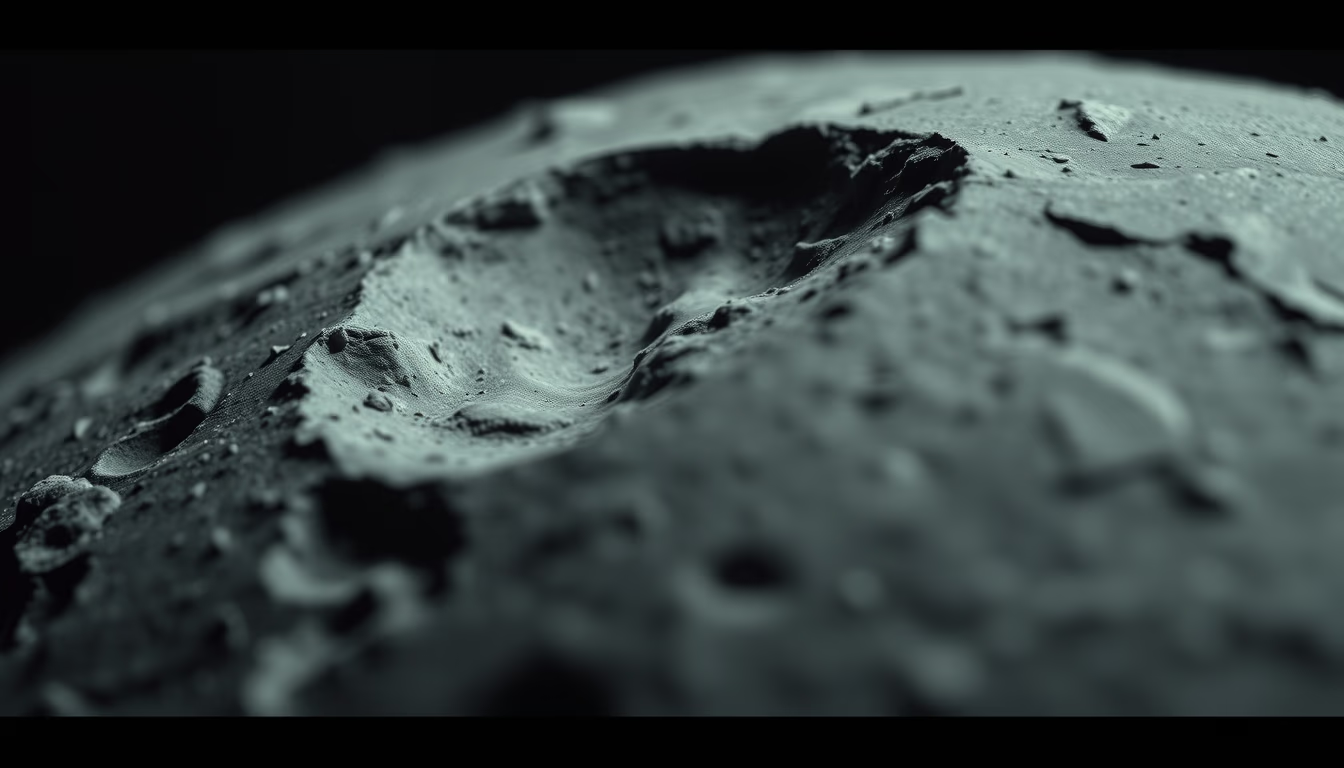
Parker solar probe sun
1344×768 · AVIF · CC BY 4.0
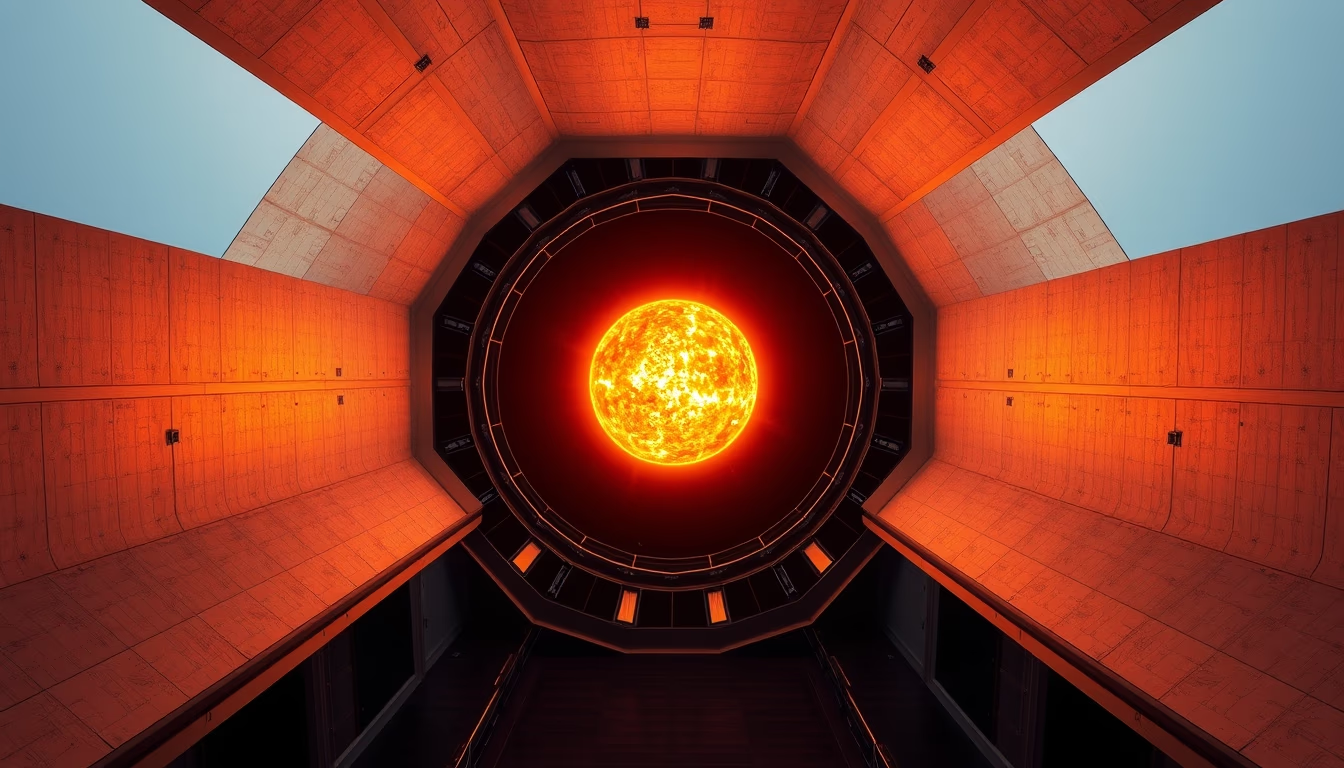
NASA's Parker Solar Probe is the spacecraft that has come closest to the Sun, revolutionizing our understanding of the star and the solar wind.
About this subject
Launched on August 12, 2018, the Parker Solar Probe is a NASA mission designed to study the Sun's outer atmosphere, the corona. Named after astrophysicist Eugene Parker, who predicted the existence of the solar wind in the 1950s, the spacecraft has been performing increasingly close approaches to the Sun, setting records for speed and heat resistance.
Its heat shield, made of carbon composite, can withstand temperatures up to 1,400 °C, keeping the internal instruments at room temperature. The probe has come as close as 6.2 million kilometers from the solar surface, over seven times closer than any previous mission. During these passes, it collects data on magnetic fields, energetic particles, and the structure of the solar wind.
Key discoveries include the identification of folds and reversals in the solar magnetic field, known as 'switchbacks', and confirmation that interplanetary dust is heated and vaporized near the Sun. These findings help solve long-standing mysteries, such as why the corona is millions of degrees hotter than the surface. The probe has also captured unprecedented solar storms, offering insights into how space weather affects Earth.
The mission is expected to last until 2025, with at least 24 orbits around the Sun. Each approach relies on Venus's gravity for trajectory adjustments. The Parker Solar Probe is a milestone in space exploration, combining cutting-edge engineering with fundamental science about the star that sustains life in the Solar System.
Frequently Asked Questions
Why doesn't the Parker Solar Probe melt when approaching the Sun?
It has a carbon composite heat shield that reflects most of the heat, keeping the instruments at safe temperatures. The shield withstands up to 1,400 °C, while the interior stays at room temperature.
What is the top speed of the Parker Solar Probe?
During its closest approach, the probe reaches speeds of about 690,000 km/h, equivalent to 0.064% of the speed of light. It is the fastest object ever built by humans.
What important discoveries has the probe made?
It discovered magnetic structures called 'switchbacks' in the solar wind, confirmed theories about coronal heating, and detected interplanetary dust vaporizing near the Sun. These data help predict solar storms.
Direct URL
https://pub-c7d6a6ea828543ac903a74a341ccb2e1.r2.dev/imagens/parker-solar-probe-sun-architectural-photography-fresh3.avifHow to credit
Include a visible link back to UtilizAí. Copy one of the snippets below:
<a href="https://xn--utiliza-eza.com/en/midia/imagens/parker-solar-probe-sun-architectural-photography-fresh3">Parker solar probe sun</a> by <a href="https://xn--utiliza-eza.com">UtilizAí</a>, licensed under <a href="https://creativecommons.org/licenses/by/4.0/">CC BY 4.0</a>.
[Parker solar probe sun](https://xn--utiliza-eza.com/en/midia/imagens/parker-solar-probe-sun-architectural-photography-fresh3) by [UtilizAí](https://xn--utiliza-eza.com), CC BY 4.0
License: CC-BY-4.0