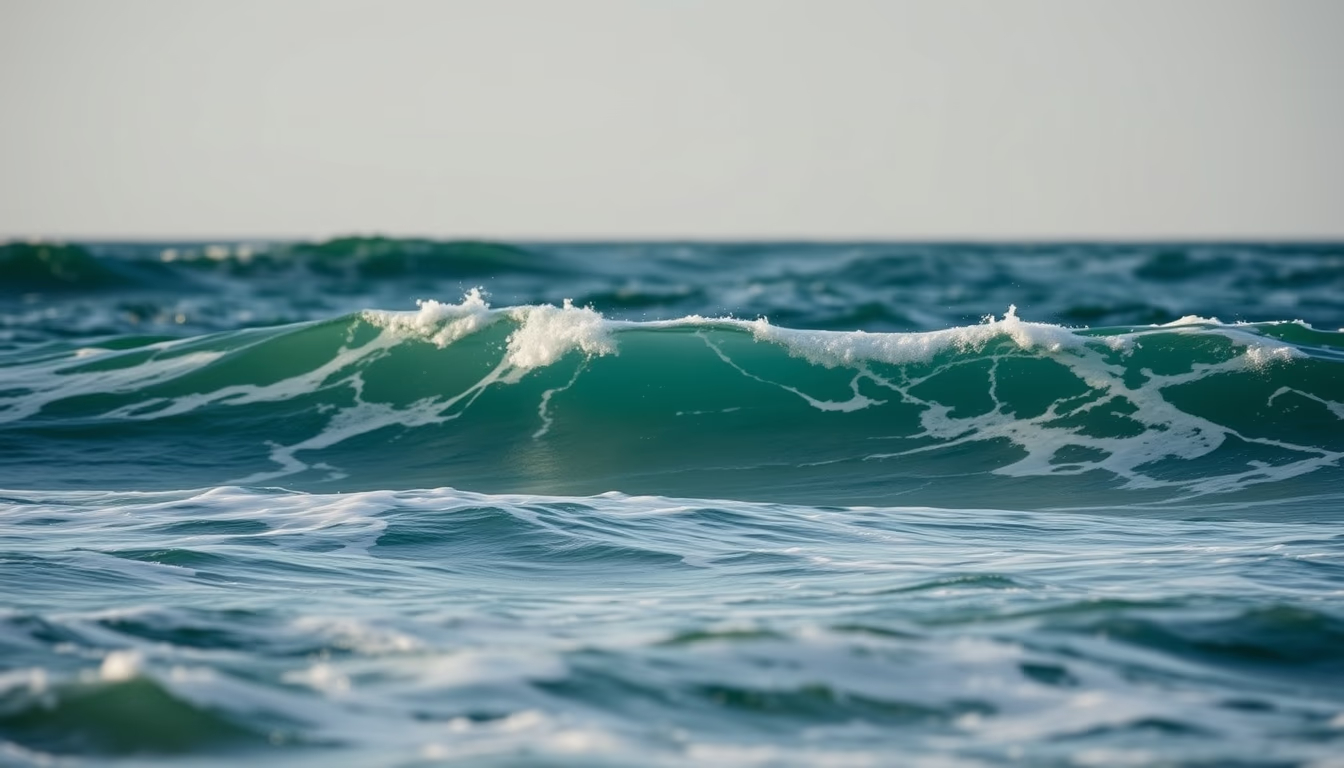
Pacific ocean waves
1344×768 · AVIF · CC BY 4.0
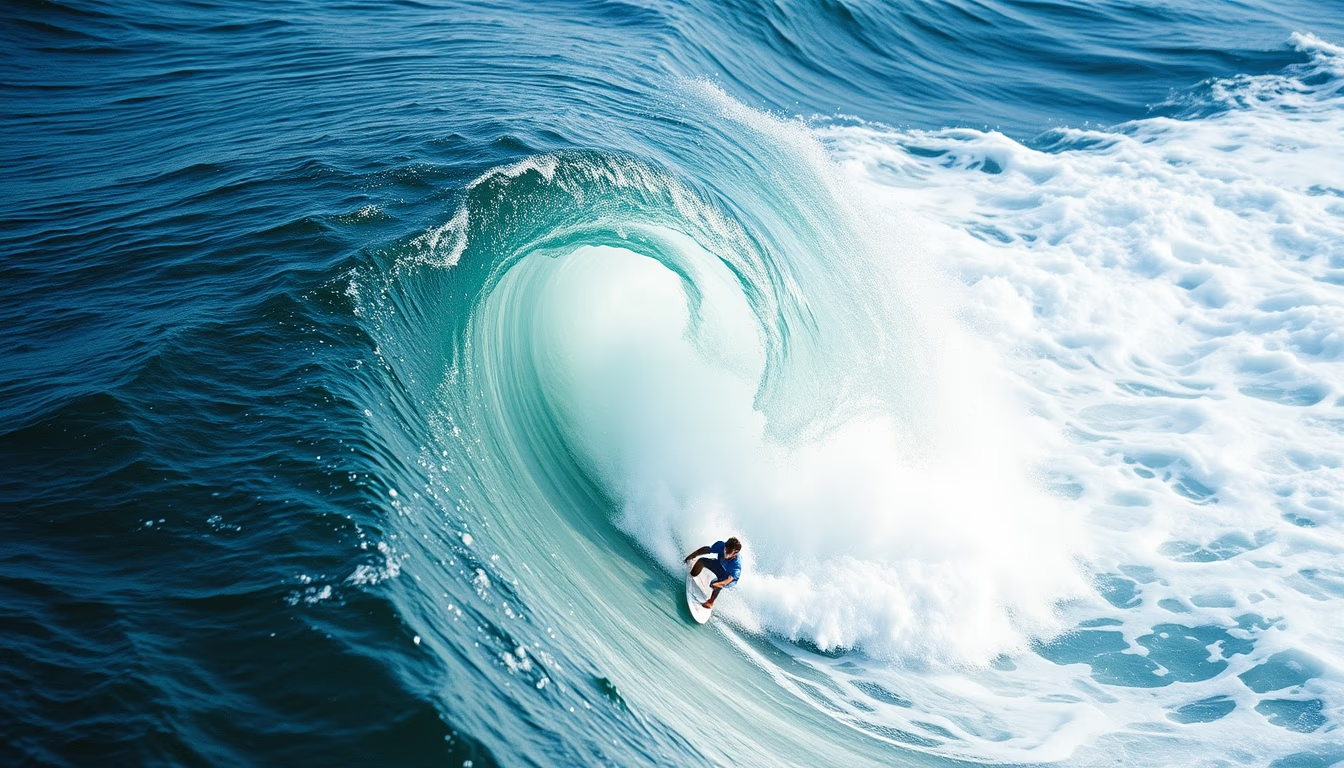
Pacific Ocean waves, the largest and deepest ocean on Earth, with unique swell and energy characteristics.
About this subject
The Pacific Ocean covers approximately 165 million square kilometers, more than one-third of Earth's surface. Its waves are shaped by trade winds, tropical storms, and extratropical cyclones, generating swells that travel thousands of kilometers. The Mariana Trench, in the Pacific, is the deepest point on the planet, nearly 11 km deep, influencing wave propagation in deep waters.
Pacific waves are known for their power and consistency, especially in the Southern Hemisphere, where swells generated by storms near the Antarctic region reach coasts like Hawaii, Tahiti, and Chile. In the North Pacific, giant waves are common in winter, exceeding 20 meters in height at locations such as the west coast of the United States and Japan. The El Niño and La Niña phenomena alter wind and temperature patterns, impacting wave generation across the Pacific.
Beyond their importance for surfing, Pacific waves play a crucial role in global climate regulation. They transport heat from the tropics to the poles, influencing ocean currents like the Humboldt Current and the Kuroshio Current. Wave energy is also studied for electricity generation, with pilot projects in countries like Portugal and Australia harnessing the constant swell of the South Pacific.
Culturally, Pacific waves are celebrated in Polynesian and Hawaiian mythologies, where gods such as Kanaloa (ocean god) and Namaka (sea goddess) represent the power of waves. Surfing, a sport originating in Polynesia, made beaches like Waikiki and Pipeline global icons. Recent scientific studies monitor coastal erosion caused by increased storm intensity, highlighting the need to preserve Pacific marine ecosystems.
Frequently Asked Questions
What causes waves in the Pacific Ocean?
Waves are primarily generated by wind. Distant storms create swells that travel long distances. In the Pacific, trade winds and tropical cyclones contribute to the formation of consistent and powerful waves.
What is the largest wave ever recorded in the Pacific?
In 2013, a wave of about 23 meters was recorded in the North Atlantic, but in the Pacific, there are reports of waves above 30 meters during extreme storms. Giant waves like those at Nazaré, Portugal, are influenced by Pacific conditions.
How do Pacific waves affect the climate?
They transport heat from the tropics to higher latitudes, influencing ocean currents and atmospheric patterns such as El Niño. The exchange of heat and gases between the ocean and atmosphere regulates global climate.
Direct URL
https://pub-c7d6a6ea828543ac903a74a341ccb2e1.r2.dev/imagens/pacific-ocean-waves-film-grain-authentic-p4.avifHow to credit
Include a visible link back to UtilizAí. Copy one of the snippets below:
<a href="https://xn--utiliza-eza.com/en/midia/imagens/pacific-ocean-waves-film-grain-authentic-p4">Pacific ocean waves</a> by <a href="https://xn--utiliza-eza.com">UtilizAí</a>, licensed under <a href="https://creativecommons.org/licenses/by/4.0/">CC BY 4.0</a>.
[Pacific ocean waves](https://xn--utiliza-eza.com/en/midia/imagens/pacific-ocean-waves-film-grain-authentic-p4) by [UtilizAí](https://xn--utiliza-eza.com), CC BY 4.0
License: CC-BY-4.0