Osmosis membrane diagram
1344×768 · AVIF · CC BY 4.0
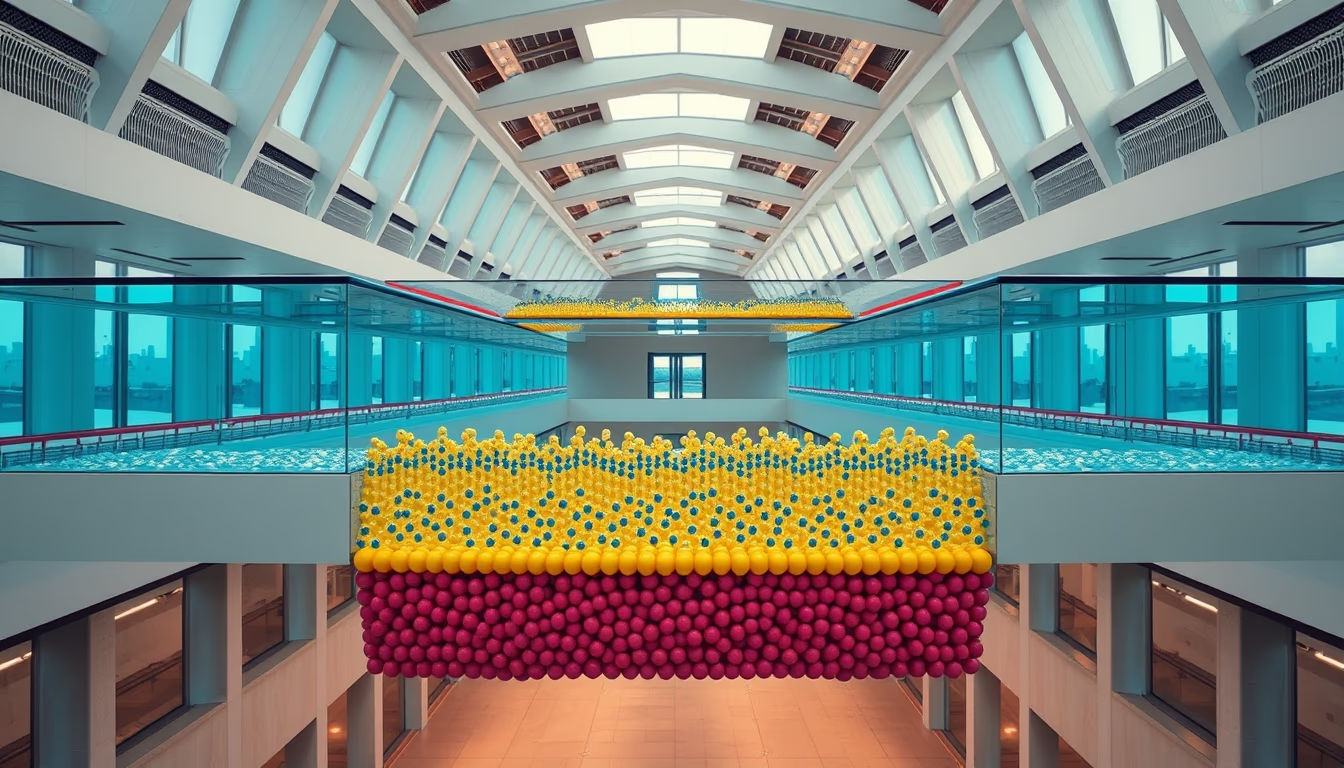
Diagrama que ilustra o processo de osmose através de uma membrana semipermeável, mostrando o fluxo de solvente do meio hipotônico para o hipertônico.
Sobre o tema
A osmose é um fenômeno físico-químico fundamental em que moléculas de solvente (geralmente água) atravessam uma membrana semipermeável, movendo-se de uma região de menor concentração de soluto (hipotônica) para uma de maior concentração (hipertônica). Esse processo ocorre espontaneamente até que o equilíbrio químico seja atingido. A membrana semipermeável, como a bicamada lipídica das células, permite a passagem de água mas bloqueia a maioria dos solutos. Na biologia celular, a osmose regula o volume celular e a homeostase; sem ela, as células murchariam ou estourariam. O conceito foi descrito pela primeira vez por Wilhelm Pfeffer no século XIX e posteriormente integrado à termodinâmica por Jacobus van 't Hoff. Em aplicações tecnológicas, a osmose inversa é amplamente usada na dessalinização da água do mar e na purificação de água potável. Curiosamente, o termo osmose deriva do grego “ōsmos”, que significa impulso ou empurrão. A representação diagramática desse processo geralmente destaca a membrana como uma barreira seletiva, com setas indicando o fluxo de água para equilibrar as concentrações. Esse princípio também inspira projetos em arquitetura e design, onde membranas funcionais são empregadas para controle térmico ou acústico.
Perguntas frequentes
O que é uma membrana semipermeável?
É uma barreira que permite a passagem seletiva de certas moléculas (como água) enquanto bloqueia outras (como íons ou moléculas grandes). Exemplos incluem a bicamada lipídica das células e membranas sintéticas usadas em osmose inversa.
Qual a diferença entre osmose e osmose inversa?
Na osmose natural, o solvente flui espontaneamente do meio hipotônico para o hipertônico. Na osmose inversa, aplica-se pressão externa para reverter o fluxo, forçando o solvente a ir do hipertônico para o hipotônico, usada para purificar água.
Como a osmose afeta as células humanas?
A osmose mantém o equilíbrio hídrico celular. Em meio hipotônico, a célula absorve água e pode inchar (hemólise em glóbulos vermelhos). Em meio hipertônico, perde água e murcha (crenação).
URL direta
https://pub-c7d6a6ea828543ac903a74a341ccb2e1.r2.dev/imagens/osmosis-membrane-diagram-architectural-photography-p4.avifComo creditar
Inclua um link visível de volta pro UtilizAí. Copie um dos snippets abaixo:
<a href="https://xn--utiliza-eza.com/midia/imagens/osmosis-membrane-diagram-architectural-photography-p4">Osmosis membrane diagram</a> by <a href="https://xn--utiliza-eza.com">UtilizAí</a>, licensed under <a href="https://creativecommons.org/licenses/by/4.0/">CC BY 4.0</a>.
[Osmosis membrane diagram](https://xn--utiliza-eza.com/midia/imagens/osmosis-membrane-diagram-architectural-photography-p4) by [UtilizAí](https://xn--utiliza-eza.com), CC BY 4.0
Licença: CC-BY-4.0