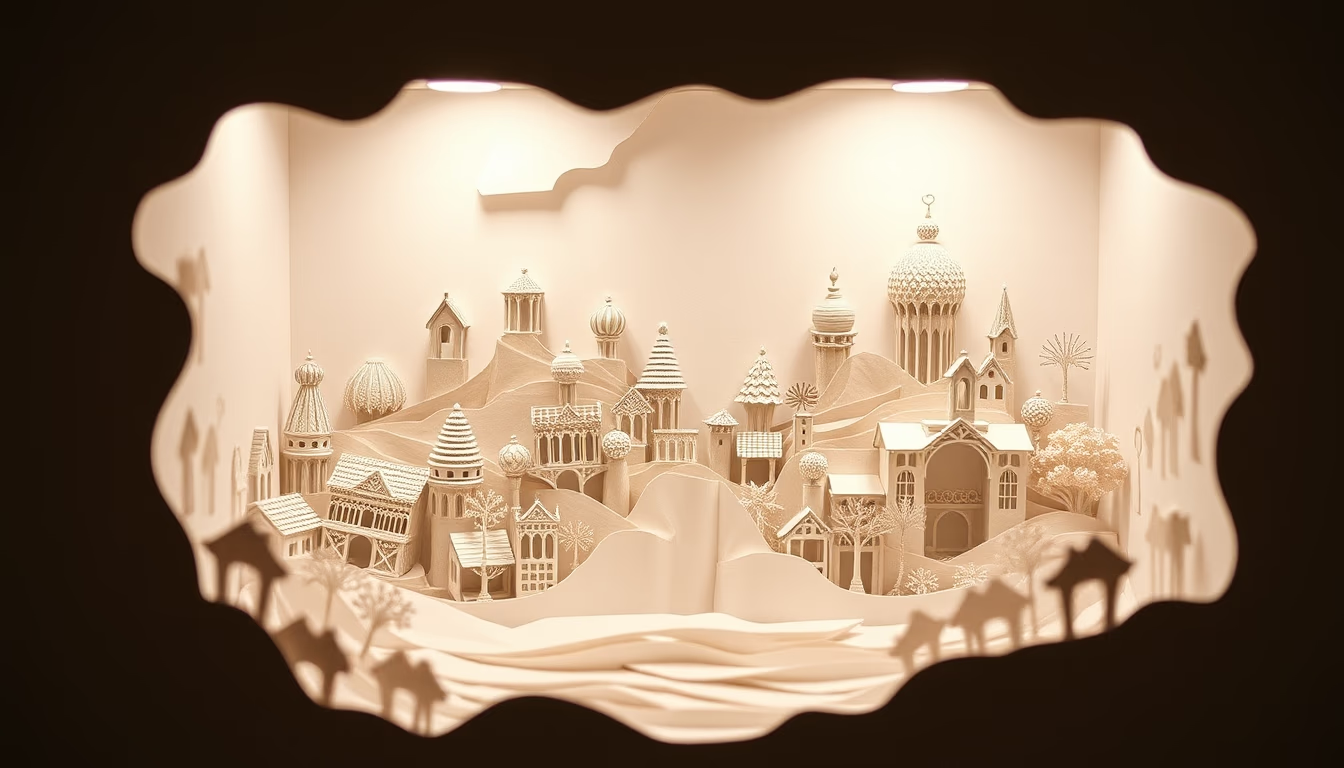
Origami crane paper white
1344×768 · AVIF · CC BY 4.0

The origami crane, a sacred Japanese bird, symbolizes peace and longevity. Made of white paper, it is a classic of paper folding.
About this subject
The tsuru is one of the most emblematic figures in origami, the Japanese art of paper folding. Its simple yet elegant shape, often made in white paper, represents purity and hope. The legend of the thousand cranes (senbazuru) holds that folding a thousand of these birds grants a wish, a practice that gained worldwide fame through the story of Sadako Sasaki, a girl who attempted to fold a thousand cranes after the atomic bombing of Hiroshima.
The technique for creating a classic tsuru requires precision and patience, starting from a square base of paper. Each crease must be well defined so that the bird acquires proportional wings, neck, and tail. The use of white paper is common for its neutrality and emphasis on fold lines, besides evoking mourning and peace in many Eastern cultures.
Historically, origami originated in Japan around the 6th century, initially used in religious ceremonies. The tsuru, a migratory bird, symbolizes good luck and longevity in Japanese culture, often gifted at weddings and celebrations. Today, origami is practiced globally as a hobby and educational tool, developing motor skills and concentration.
The lo-fi style image, resembling a disposable camera photograph, evokes a nostalgic feel, contrasting the delicacy of origami with the imperfect aesthetic of analog photography. The neutral background and soft lighting highlight the shadows and folds of the paper, inviting viewers to appreciate the simplicity and complexity of the form.
Frequently Asked Questions
What does the tsuru in origami mean?
The tsuru symbolizes peace, health, longevity, and good luck. In Japanese culture, it is considered a sacred bird that can live for a thousand years.
How many cranes are needed to make a wish?
The legend of senbazuru says that one thousand origami cranes must be folded. After completing them, a wish is made, which is believed to come true.
What is the origin of origami?
Origami originated in Japan in the 6th century, brought by Buddhist monks who used paper in ceremonies. It became popular as a hobby during the Edo period (1603-1868).
Direct URL
https://pub-c7d6a6ea828543ac903a74a341ccb2e1.r2.dev/imagens/origami-crane-paper-white-lo-fi-disposable-camera-fresh0.avifHow to credit
Include a visible link back to UtilizAí. Copy one of the snippets below:
<a href="https://xn--utiliza-eza.com/en/midia/imagens/origami-crane-paper-white-lo-fi-disposable-camera-fresh0">Origami crane paper white</a> by <a href="https://xn--utiliza-eza.com">UtilizAí</a>, licensed under <a href="https://creativecommons.org/licenses/by/4.0/">CC BY 4.0</a>.
[Origami crane paper white](https://xn--utiliza-eza.com/en/midia/imagens/origami-crane-paper-white-lo-fi-disposable-camera-fresh0) by [UtilizAí](https://xn--utiliza-eza.com), CC BY 4.0
License: CC-BY-4.0