Organic compost bin
1344×768 · AVIF · CC BY 4.0
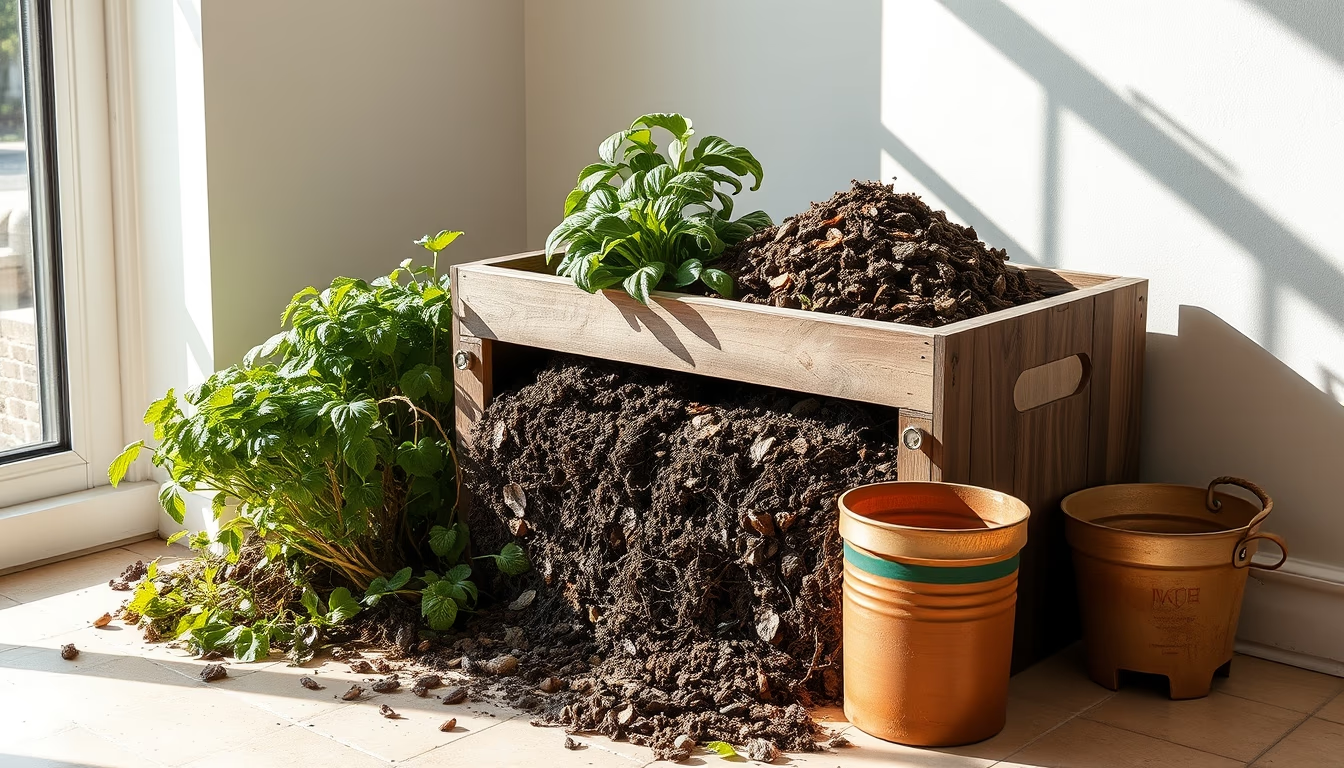
Learn all about organic compost bins: how they work, types, and benefits for reducing household waste.
About this subject
An organic compost bin is a simple and efficient system for turning food waste into nutrient-rich fertilizer. Home composting can reduce the volume of trash sent to landfills by up to 50% while providing natural plant food. Common designs include three-chamber bins, tumbling models, and worm composters (vermicomposting), which speed up decomposition.
In recent years, interest in compost bins has grown globally, driven by zero-waste movements and urban gardening. Cities like San Francisco and Seoul have mandatory composting programs, while many others offer subsidies or free bins to residents. Materials range from wood and recycled plastic to metal, affecting durability and price. Successful composting relies on balancing carbon-rich materials (dry leaves, cardboard) with nitrogen-rich ones (fruit scraps, coffee grounds).
A typical household can produce about 200 kg of compost per year, preventing methane emissions from landfills. The resulting compost improves soil texture, water retention, and reduces the need for synthetic fertilizers. Basic maintenance involves keeping the pile moist, turning it weekly, and adding dry material to prevent odors. For beginners, compact bins or those with a spigot for liquid fertilizer are good choices.
Frequently Asked Questions
What's the difference between worm composting and traditional composting?
Worm composting (vermicomposting) uses worms to speed up breakdown, producing high-quality castings and liquid fertilizer. Traditional composting relies on microorganisms and takes longer but handles larger volumes without worms.
Can I put citrus peels in the compost?
Yes, but in moderation. Citrus peels are acidic and decompose slowly; chop them small and mix with dry material to avoid overwhelming the pile.
How do I prevent bad smells from my compost bin?
Smells usually mean too much moisture or lack of air. Add dry leaves, straw, or shredded paper, and turn the pile regularly. Avoid adding meat, dairy, or oily foods.
Direct URL
https://pub-c7d6a6ea828543ac903a74a341ccb2e1.r2.dev/imagens/organic-compost-bin-minimalist-composition-p6.avifHow to credit
Include a visible link back to UtilizAí. Copy one of the snippets below:
<a href="https://xn--utiliza-eza.com/en/midia/imagens/organic-compost-bin-minimalist-composition-p6">Organic compost bin</a> by <a href="https://xn--utiliza-eza.com">UtilizAí</a>, licensed under <a href="https://creativecommons.org/licenses/by/4.0/">CC BY 4.0</a>.
[Organic compost bin](https://xn--utiliza-eza.com/en/midia/imagens/organic-compost-bin-minimalist-composition-p6) by [UtilizAí](https://xn--utiliza-eza.com), CC BY 4.0
License: CC-BY-4.0