Organ on chip device
1344×768 · AVIF · CC BY 4.0
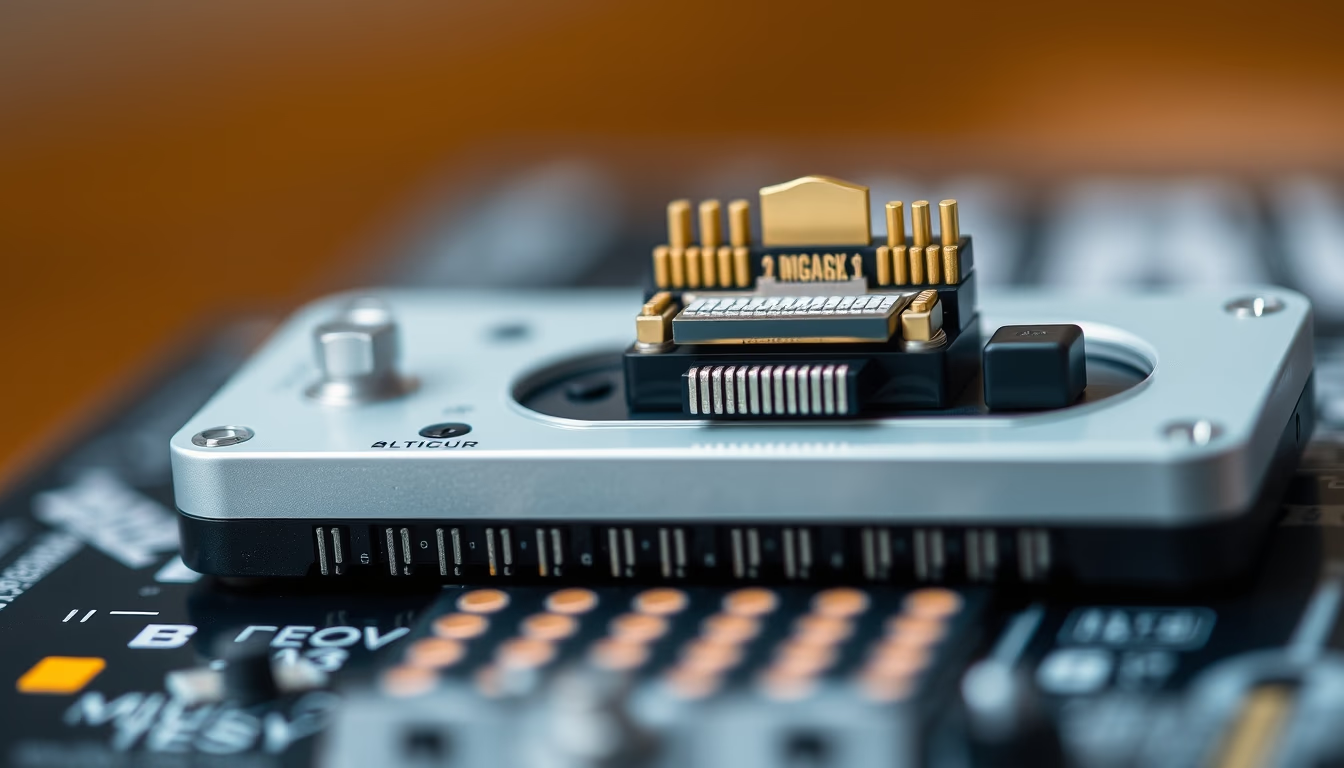
Organ-on-chip devices mimic human organ functions on microchips, revolutionizing drug testing and reducing animal experimentation.
About this subject
The concept of organ-on-chip emerged in the early 2010s at Harvard's Wyss Institute, led by researcher Donald Ingber. The first model, a lung-on-chip, was published in 2010 in Science. These devices integrate microfluidics, living cells, and sensors on a transparent plastic chip the size of a coin. Microscopic channels allow the flow of nutrients and oxygen, while mechanical stimuli (such as breathing or heartbeat) are applied to replicate the physiological microenvironment.
Currently, organ-on-chips exist for the lung, heart, liver, kidney, intestine, and blood-brain barrier. They are used to test the efficacy and toxicity of new drugs, model diseases, and study biological mechanisms. Companies like Emulate, Mimetas, and CN Bio commercialize these platforms. In 2018, the US FDA tested a liver chip to predict drug-induced hepatotoxicity, with promising results.
The main advantage over animal models is human physiology, avoiding interspecies differences. Moreover, chips allow automation and simultaneous testing of hundreds of compounds, accelerating drug discovery. However, challenges include the complexity of integrating multiple organs (body-on-chip) and regulatory validation to fully replace preclinical tests. Research advances to connect multiple chips, simulating organ interactions.
In Brazil, groups at USP and UNICAMP develop prototypes for tropical diseases and cancer. Funding comes from FAPESP and CNPq. The technology is seen as an ethical and efficient alternative for the pharmaceutical industry, potentially reducing animal use by up to 80% in early research phases.
Frequently Asked Questions
What is an organ-on-chip?
It is a microfluidic device containing living human cells in channels that mimic the structure and function of an organ, used for drug testing and disease studies.
How does an organ-on-chip work?
Cells are cultured in microchannels where nutrients flow, and mechanical stimuli (like stretching) mimic physiological conditions. Sensors measure cellular responses in real time.
What are the advantages over animal testing?
They offer more accurate human physiology, reduce cost and time, and avoid ethical issues. They can be more predictive of human toxicity and efficacy.
Direct URL
https://pub-c7d6a6ea828543ac903a74a341ccb2e1.r2.dev/imagens/organ-on-chip-device-tilt-shift-miniature-p3.avifHow to credit
Include a visible link back to UtilizAí. Copy one of the snippets below:
<a href="https://xn--utiliza-eza.com/en/midia/imagens/organ-on-chip-device-tilt-shift-miniature-p3">Organ on chip device</a> by <a href="https://xn--utiliza-eza.com">UtilizAí</a>, licensed under <a href="https://creativecommons.org/licenses/by/4.0/">CC BY 4.0</a>.
[Organ on chip device](https://xn--utiliza-eza.com/en/midia/imagens/organ-on-chip-device-tilt-shift-miniature-p3) by [UtilizAí](https://xn--utiliza-eza.com), CC BY 4.0
License: CC-BY-4.0