Organ on chip device
1344×768 · AVIF · CC BY 4.0
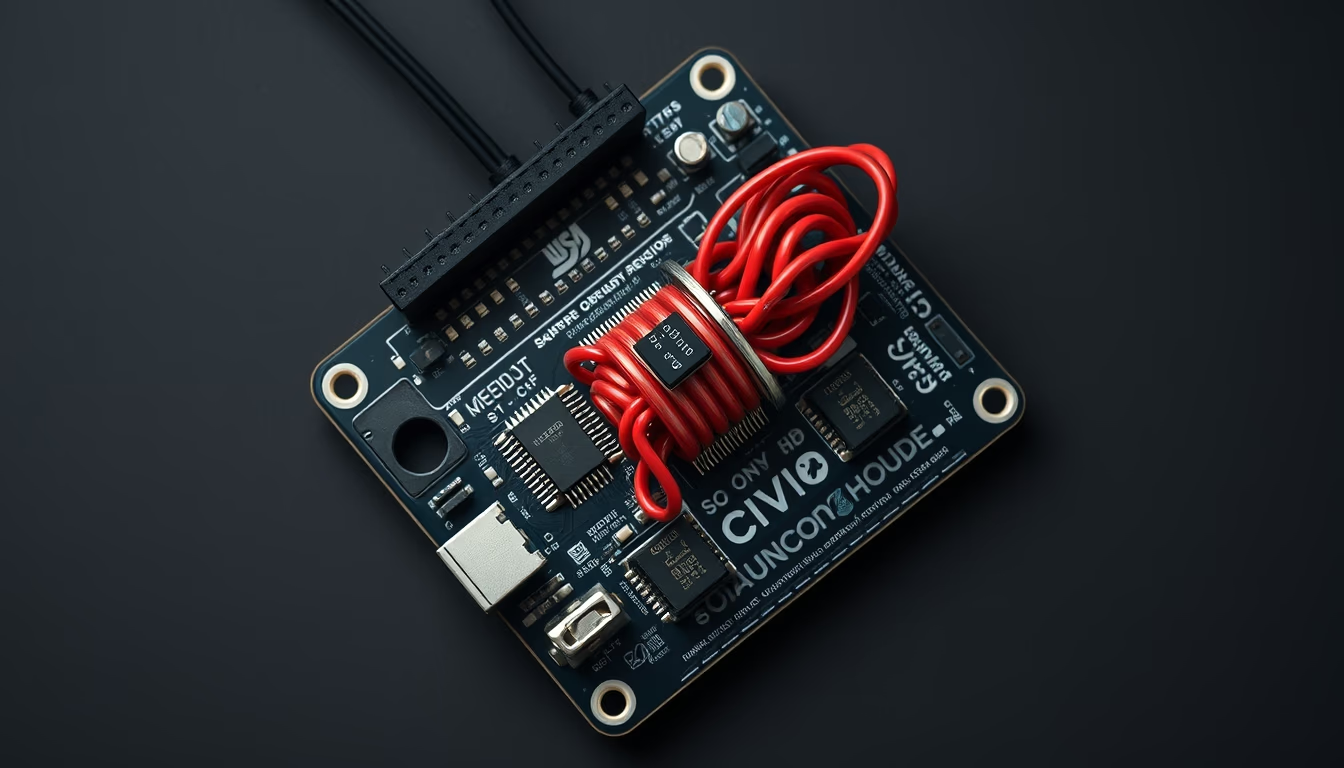
Organ-on-chip is a microplatform that simulates human organ functions for drug testing and disease research.
About this subject
Organ-on-chip devices are microfluidic platforms that recreate physiological microenvironments of human organs, such as lung, liver, and heart. They integrate living cells in channels that mimic blood flow and cellular interactions, enabling real-time observation of responses to drugs and toxins. Initially developed at Harvard's Wyss Institute, these chips reduce reliance on animal testing and provide more predictive human data.
In practice, a lung chip can simulate mechanical breathing and particle absorption, while a liver chip evaluates drug metabolism. Pharmaceutical companies already use the technology for early screening of drug candidates, identifying toxicity early. Additionally, disease models for conditions like cystic fibrosis and Alzheimer’s are being replicated on chips to test personalized therapies.
A notable milestone: in 2023, the U.S. FDA approved a study that replaced animal tests with organ-on-chip data for a new liver disease treatment, a major regulatory step. The global organ-on-chip market is expected to grow at over 30% annually through 2030, driven by investments in precision medicine and animal welfare.
Challenges remain: integrating multiple organ chips into a single body-on-chip system and ensuring adequate vascularization for long-term culture. Researchers are exploring 3D bioprinting and smart materials to bring these models closer to real physiology.
Frequently Asked Questions
How does an organ-on-chip work?
An organ-on-chip uses microfluidic channels lined with living cells that mimic the structure and function of an organ, such as lung or liver. A nutrient fluid circulates to simulate blood flow, and mechanical stimuli like breathing can be applied to recreate the physiological microenvironment.
What are the advantages of organ-on-chip over animal testing?
They provide more relevant human models, reduce research costs and time, allow real-time observation, and decrease animal use, aligning with ethical standards. They can also be used for personalized medicine using a patient's own cells.
Are organ-on-chip devices already used in the pharmaceutical industry?
Yes, many companies already use these devices for compound screening and toxicity testing. Major pharma firms like Roche and AstraZeneca have partnerships with organ-on-chip startups to validate drug candidates.
Direct URL
https://pub-c7d6a6ea828543ac903a74a341ccb2e1.r2.dev/imagens/organ-on-chip-device-isometric-flat-lay-p1.avifHow to credit
Include a visible link back to UtilizAí. Copy one of the snippets below:
<a href="https://xn--utiliza-eza.com/en/midia/imagens/organ-on-chip-device-isometric-flat-lay-p1">Organ on chip device</a> by <a href="https://xn--utiliza-eza.com">UtilizAí</a>, licensed under <a href="https://creativecommons.org/licenses/by/4.0/">CC BY 4.0</a>.
[Organ on chip device](https://xn--utiliza-eza.com/en/midia/imagens/organ-on-chip-device-isometric-flat-lay-p1) by [UtilizAí](https://xn--utiliza-eza.com), CC BY 4.0
License: CC-BY-4.0