Orchestra empty stage
1344×768 · AVIF · CC BY 4.0
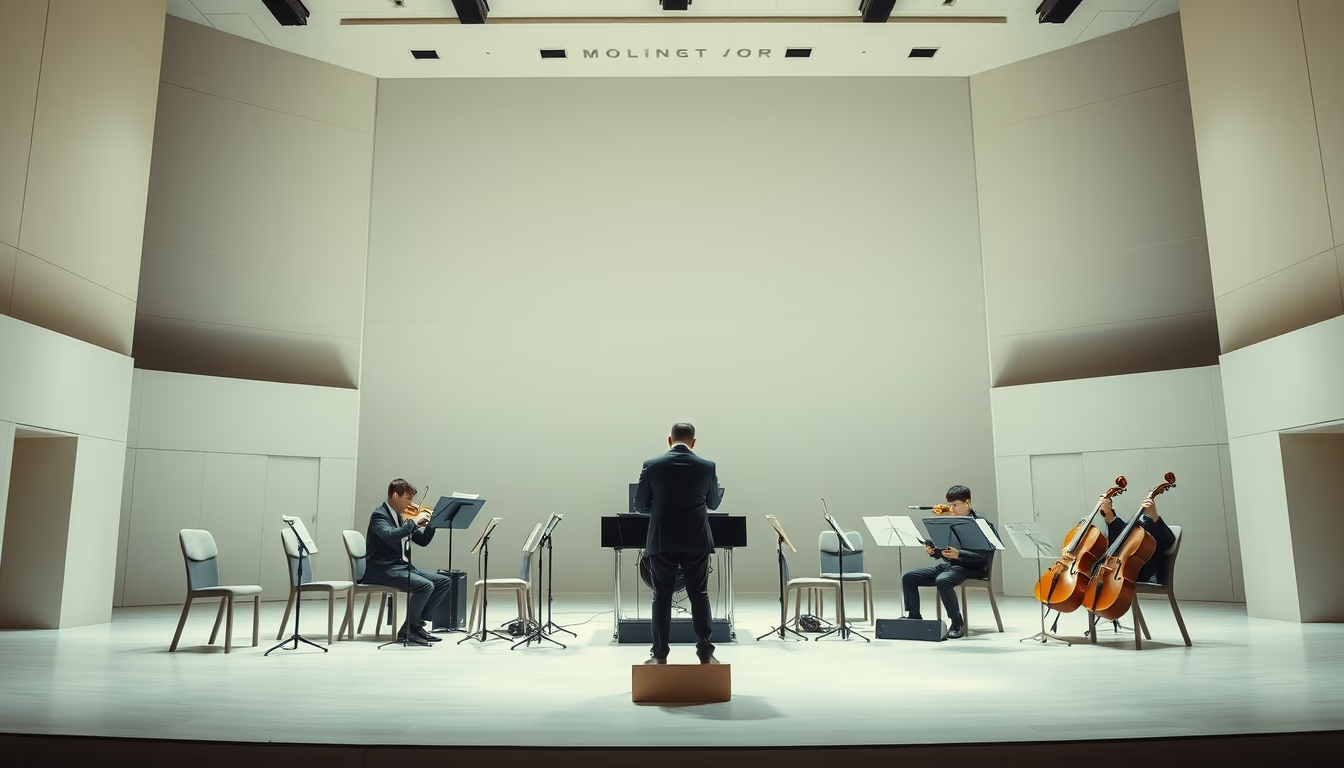
Empty orchestra stage, highlighting the acoustic architecture and minimalist design that characterize modern concert halls.
About this subject
An orchestra stage is designed to provide optimal acoustics and visibility for the audience. In modern concert halls, design follows minimalist principles, with smooth surfaces and materials like wood and concrete that aid sound reflection. The empty stage reveals the structural complexity behind a performance: the arrangement of musicians' seats, the raised floor, and suspended sound reflectors.
The acoustics of an orchestra stage are meticulously calculated. The shell-shaped backdrop around the stage, often adjustable, allows sound to project uniformly. Iconic examples include the Berlin Philharmonie, with its central stage surrounded by the audience, and Sala São Paulo in Brazil, which adapted a former train station to achieve exceptional acoustics.
Interestingly, maintaining an empty stage is an important part of the preparation ritual. Technicians test lighting and sound, while musicians rehearse in silence to feel the space. The minimalism of the empty stage is not absence but potential: every architectural detail is there to be activated by music.
In Brazil, venues like Theatro Municipal do Rio de Janeiro and Teatro Amazonas have ornate stages, contrasting with contemporary minimalism. The current trend seeks to balance tradition with functionality, using movable acoustic panels and floors that absorb unwanted vibrations.
Frequently Asked Questions
Why does an orchestra stage have a shell shape?
The acoustic shell around the stage helps project sound evenly to the audience, preventing the music from dissipating into the ceiling or walls. It also allows musicians to hear each other better.
What is the difference between a modern and a traditional orchestra stage?
Modern stages tend to be minimalist, with adjustable panels and materials that enhance acoustics, while traditional stages (like in historic theaters) are more ornate and fixed, prioritizing aesthetics over sound flexibility.
What happens on an empty stage before a concert?
Technicians conduct sound and light checks, tune instruments, and arrange sheet music. Musicians may warm up individually. It is a moment of technical preparation and focus before the performance.
Direct URL
https://pub-c7d6a6ea828543ac903a74a341ccb2e1.r2.dev/imagens/orchestra-empty-stage-minimalist-composition-p6.avifHow to credit
Include a visible link back to UtilizAí. Copy one of the snippets below:
<a href="https://xn--utiliza-eza.com/en/midia/imagens/orchestra-empty-stage-minimalist-composition-p6">Orchestra empty stage</a> by <a href="https://xn--utiliza-eza.com">UtilizAí</a>, licensed under <a href="https://creativecommons.org/licenses/by/4.0/">CC BY 4.0</a>.
[Orchestra empty stage](https://xn--utiliza-eza.com/en/midia/imagens/orchestra-empty-stage-minimalist-composition-p6) by [UtilizAí](https://xn--utiliza-eza.com), CC BY 4.0
License: CC-BY-4.0