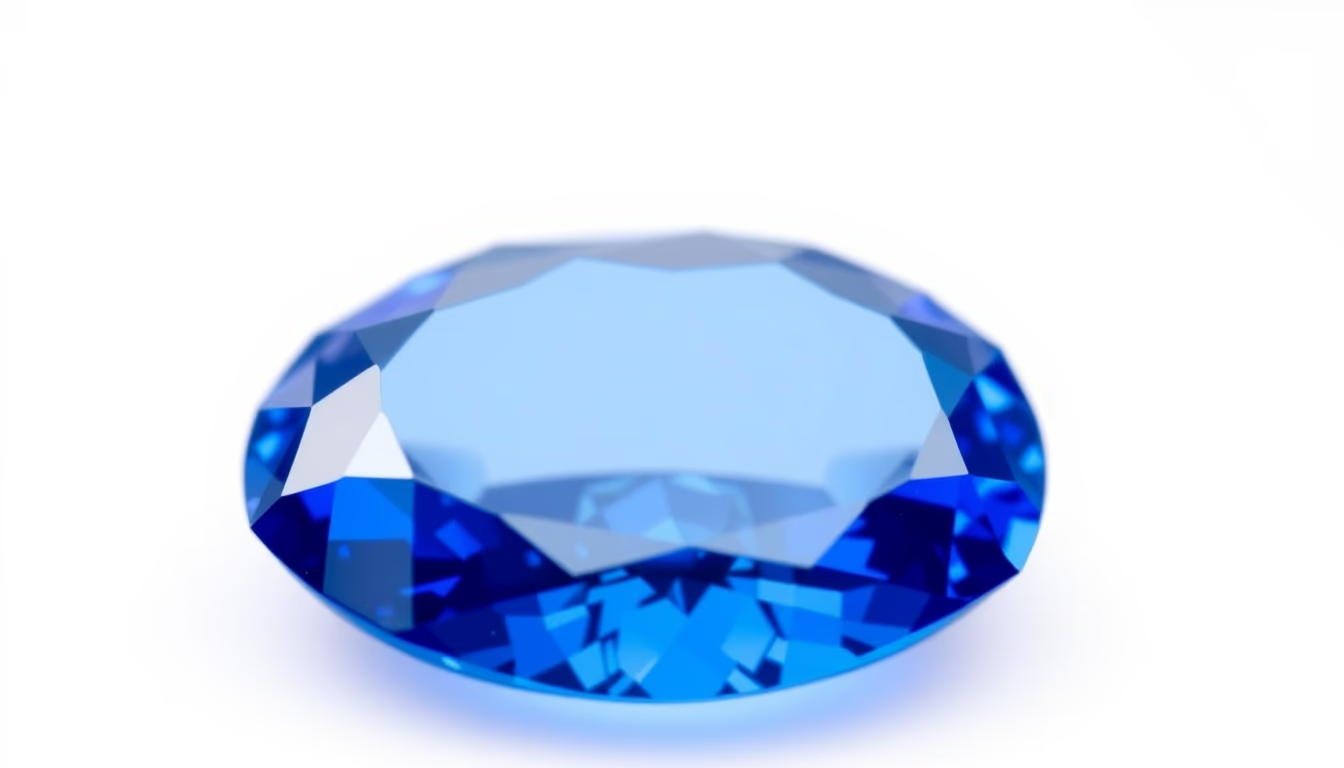
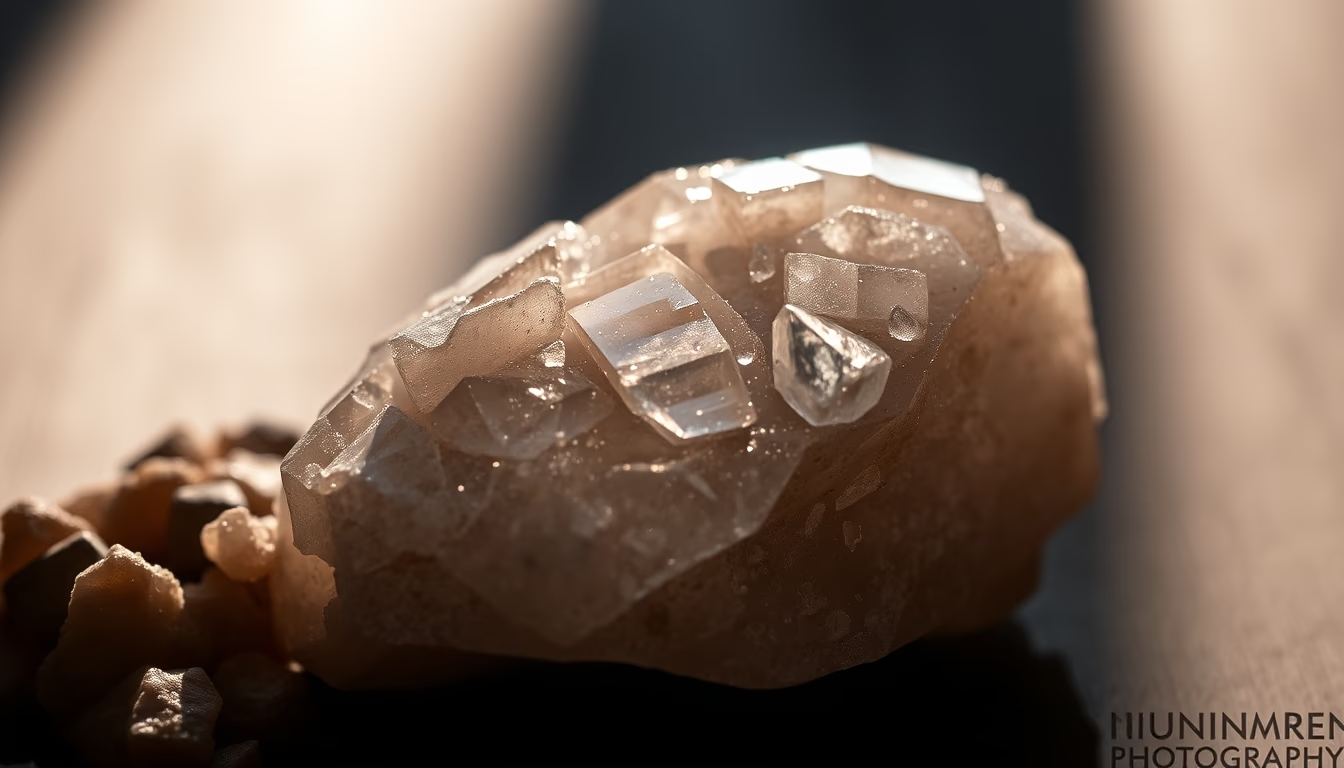
Opal play of color
1344×768 · AVIF · CC BY 4.0

Opala exibe um fenômeno óptico chamado jogo de cores, causado pela difração da luz em suas esferas de sílica hidratada.
Sobre o tema
O jogo de cores é a característica mais distintiva das opalas preciosas. Esse fenômeno óptico ocorre quando a luz branca atravessa microesferas de sílica dispostas em uma rede tridimensional regular, difratando-se e separando-se nas cores do espectro. O tamanho e a uniformidade dessas esferas determinam a intensidade e a variedade cromática observada. Opalas que não possuem essa estrutura ordenada são classificadas como comuns ou potch, sem brilho iridescente.
Geologicamente, as opalas se formam a partir de soluções de sílica que preenchem cavidades em rochas sedimentares, como arenitos e basaltos. Os depósitos mais famosos estão na Austrália, especialmente nas regiões de Lightning Ridge (opalas negras) e Coober Pedy (opalas brancas). Outras fontes importantes incluem a Etiópia (opalas de Welo), o México (opalas de fogo) e o Brasil (Pedro II, no Piauí). Cada localidade produz opalas com características únicas de cor e transparência.
Culturalmente, a opala tem sido valorizada desde a antiguidade. Os romanos a consideravam símbolo de pureza e esperança, enquanto na Idade Média era associada a boa sorte e criatividade. A Austrália a adotou como gema nacional em 1993. Um fato curioso é que a opala pode conter entre 3% e 20% de água em sua estrutura, o que a torna sensível a mudanças bruscas de temperatura e umidade. Por isso, joias com opala requerem cuidados especiais, como evitar exposição prolongada ao calor ou a produtos químicos.
Existem diversas variedades de opala com jogo de cores: a opala negra (com base escura que realça as cores), a opala branca (fundo leitoso), a opala cristal (transparente) e a opala de fogo (tons alaranjados a vermelhos). O jogo de cores pode exibir flashes de verde, azul, vermelho, amarelo e violeta, sendo a opala com predominância de vermelho considerada a mais rara e valiosa.
Perguntas frequentes
O que causa o jogo de cores na opala?
O jogo de cores é causado pela difração da luz ao passar por microesferas de sílica organizadas em uma estrutura tridimensional regular. O tamanho das esferas determina as cores observadas.
Onde são encontradas as opalas com jogo de cores?
Os principais depósitos estão na Austrália (Lightning Ridge, Coober Pedy), Etiópia, México e Brasil (Pedro II, Piauí). Cada local produz opalas com características distintas.
A opala pode perder o jogo de cores com o tempo?
Sim, se a opala perder água por ressecamento ou sofrer choques térmicos, a estrutura das esferas pode se desorganizar, diminuindo ou eliminando o jogo de cores. Cuidados adequados preservam o fenômeno.
URL direta
https://pub-c7d6a6ea828543ac903a74a341ccb2e1.r2.dev/imagens/opal-play-of-color-travel-photography-p9.avifComo creditar
Inclua um link visível de volta pro UtilizAí. Copie um dos snippets abaixo:
<a href="https://xn--utiliza-eza.com/midia/imagens/opal-play-of-color-travel-photography-p9">Opal play of color</a> by <a href="https://xn--utiliza-eza.com">UtilizAí</a>, licensed under <a href="https://creativecommons.org/licenses/by/4.0/">CC BY 4.0</a>.
[Opal play of color](https://xn--utiliza-eza.com/midia/imagens/opal-play-of-color-travel-photography-p9) by [UtilizAí](https://xn--utiliza-eza.com), CC BY 4.0
Licença: CC-BY-4.0