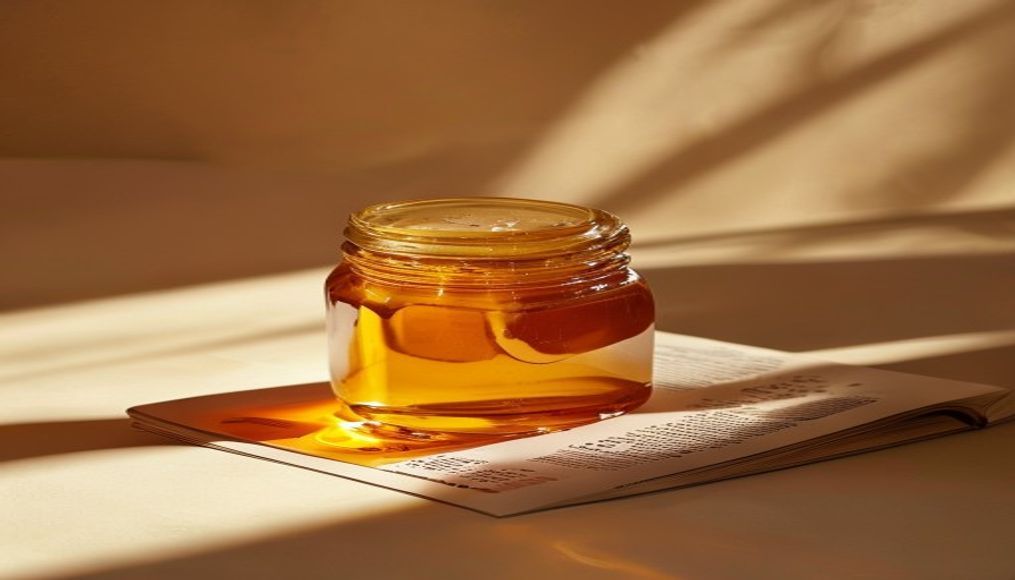
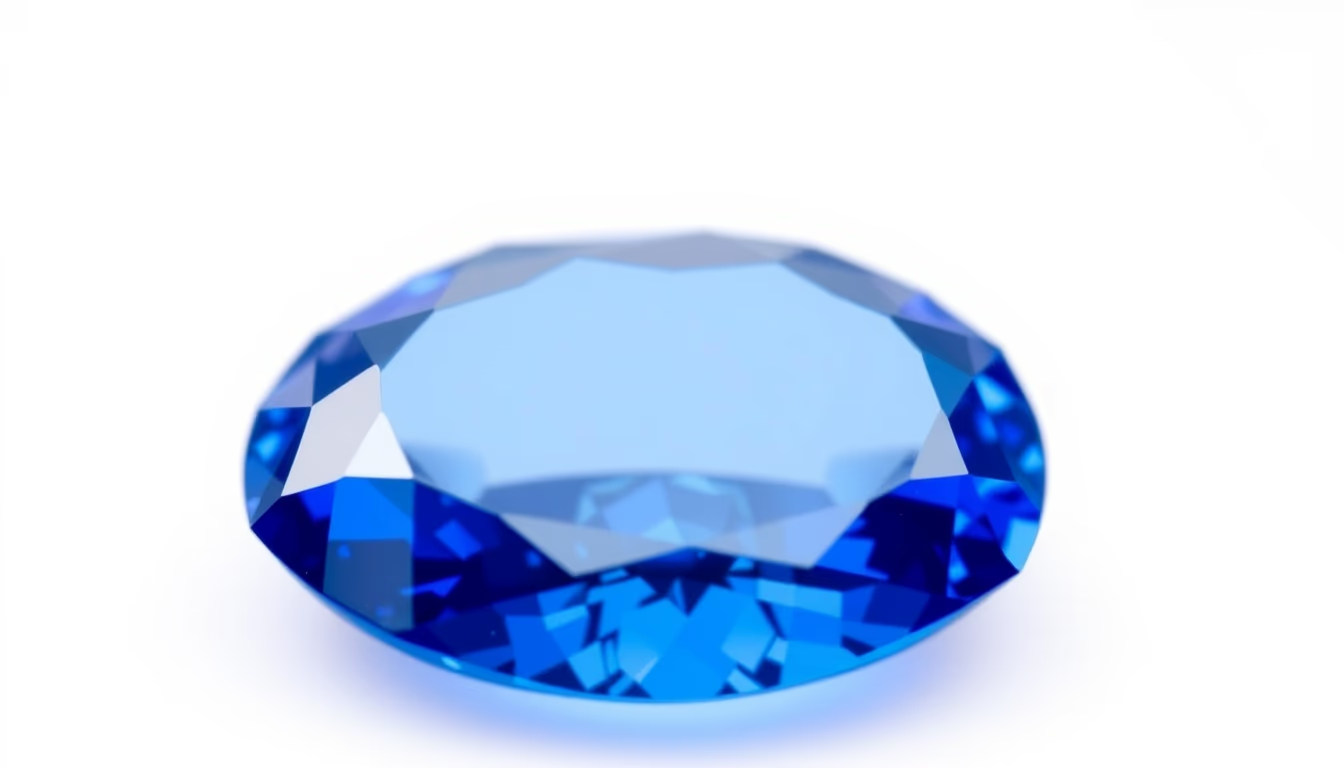
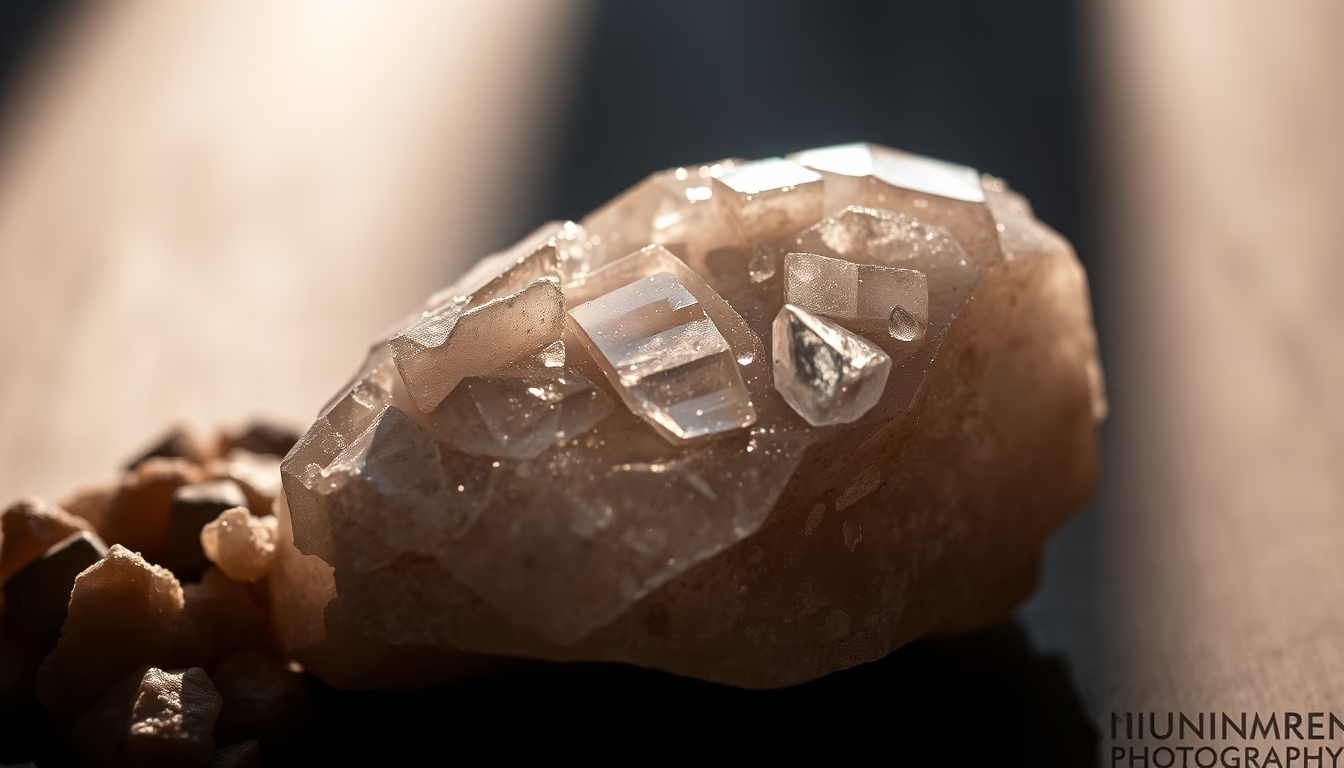
Opal play of color
1344×768 · AVIF · CC BY 4.0

Opal's play of color is a rare optical phenomenon caused by light diffraction within silica microspheres, making each gemstone unique.
About this subject
Opal's play of color is a distinctive optical phenomenon that sets it apart from most other gemstones. It occurs when light interacts with a regular arrangement of silica spheres within the stone's internal structure, causing diffraction and producing a spectrum of colors that shift with movement or changing light sources. The quality and intensity of the play of color depend on the size and uniformity of these spheres, as well as the angle of illumination. Precious opals display this effect, while common opals do not.
The most renowned sources of precious opal are in Australia, which supplies about 95% of the world's high-quality material. Key mining areas include Lightning Ridge (famous for black opal), Coober Pedy (white opal), and Andamooka (matrix opal). Ethiopian opals, particularly from the Welo region, have become popular since their discovery in the 2000s, often exhibiting vivid reds and oranges. In Brazil, opal deposits are found in the states of Piauí and Rio Grande do Sul, though they are less abundant.
Historically, opal has been both admired and feared. Ancient Romans valued it as a symbol of purity and hope, while medieval Europeans sometimes considered it unlucky, associating its changing colors with deception. Today, it is the birthstone for October and is cherished for its uniqueness: no two opals have precisely the same color pattern. Due to its moderate hardness (5.5, 6.5 on Mohs scale) and water content (up to 20%), opal requires gentle care to prevent cracking or crazing, a phenomenon where fine fractures develop over time.
From a scientific perspective, the play of color in opal is a natural example of a photonic crystal, a structure that manipulates light at the submicrometer scale. Researchers study opal to understand colloidal self-assembly and develop synthetic analogs for optical devices. Synthetic opals, created since the 1970s, replicate the play of color but can be distinguished by their too-consistent sphere arrangement and lack of natural inclusions. The gem also has industrial applications, such as in temperature and pressure sensors, due to its responsive lattice structure.
Frequently Asked Questions
How does opal's play of color develop?
The play of color occurs when light passes through a regular arrangement of silica microspheres inside the opal. These spheres diffract light, separating it into spectral colors, similar to a rainbow effect.
What is the difference between precious opal and common opal?
Precious opal displays the play of color, while common opal (or 'potch') does not exhibit this phenomenon and is usually opaque or milky. Both are composed of hydrated silica, but the internal structure of precious opal is more ordered.
Does opal require special care?
Yes, because it is relatively soft and contains water, opal can crack or lose its luster if exposed to high heat, dryness, or impacts. Avoid ultrasonic or steam cleaning; use a damp cloth and mild soap instead.
Direct URL
https://pub-c7d6a6ea828543ac903a74a341ccb2e1.r2.dev/imagens/opal-play-of-color-studio-editorial-portrait-p2.avifHow to credit
Include a visible link back to UtilizAí. Copy one of the snippets below:
<a href="https://xn--utiliza-eza.com/en/midia/imagens/opal-play-of-color-studio-editorial-portrait-p2">Opal play of color</a> by <a href="https://xn--utiliza-eza.com">UtilizAí</a>, licensed under <a href="https://creativecommons.org/licenses/by/4.0/">CC BY 4.0</a>.
[Opal play of color](https://xn--utiliza-eza.com/en/midia/imagens/opal-play-of-color-studio-editorial-portrait-p2) by [UtilizAí](https://xn--utiliza-eza.com), CC BY 4.0
License: CC-BY-4.0