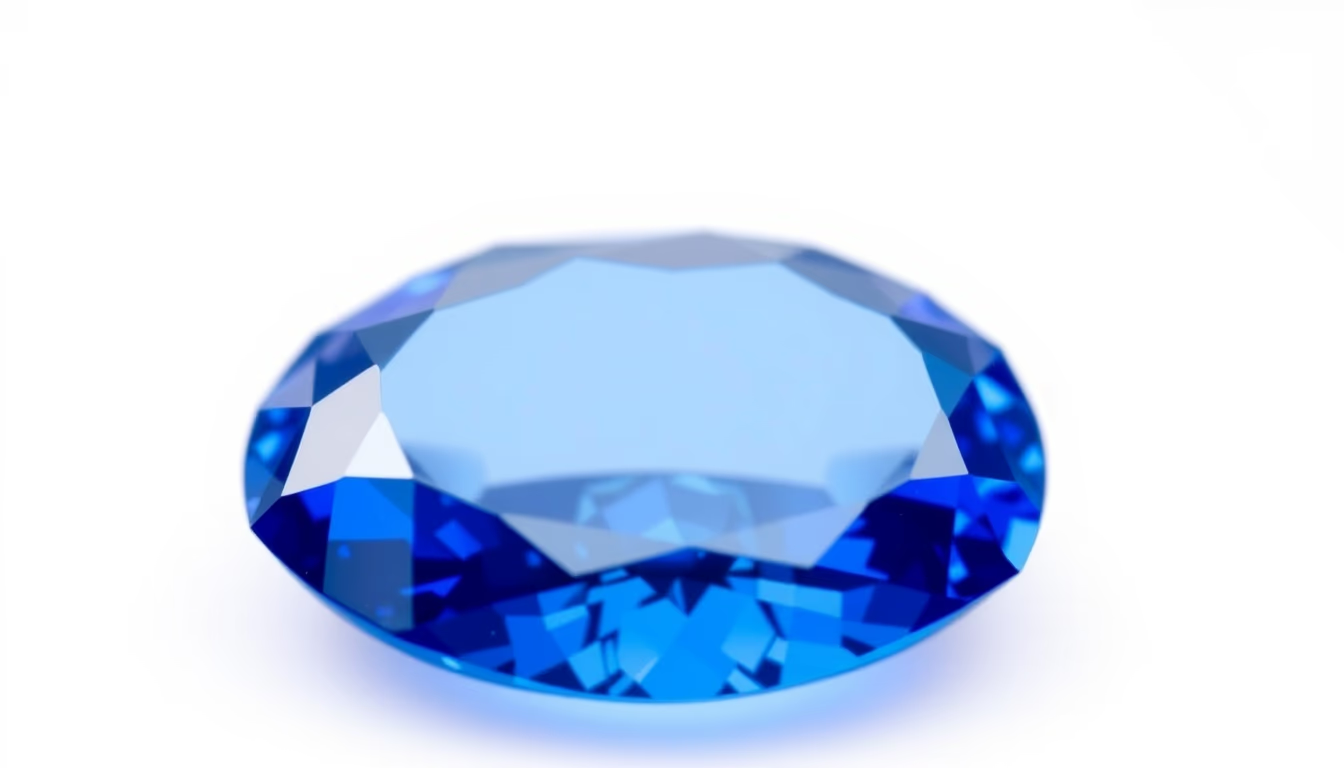
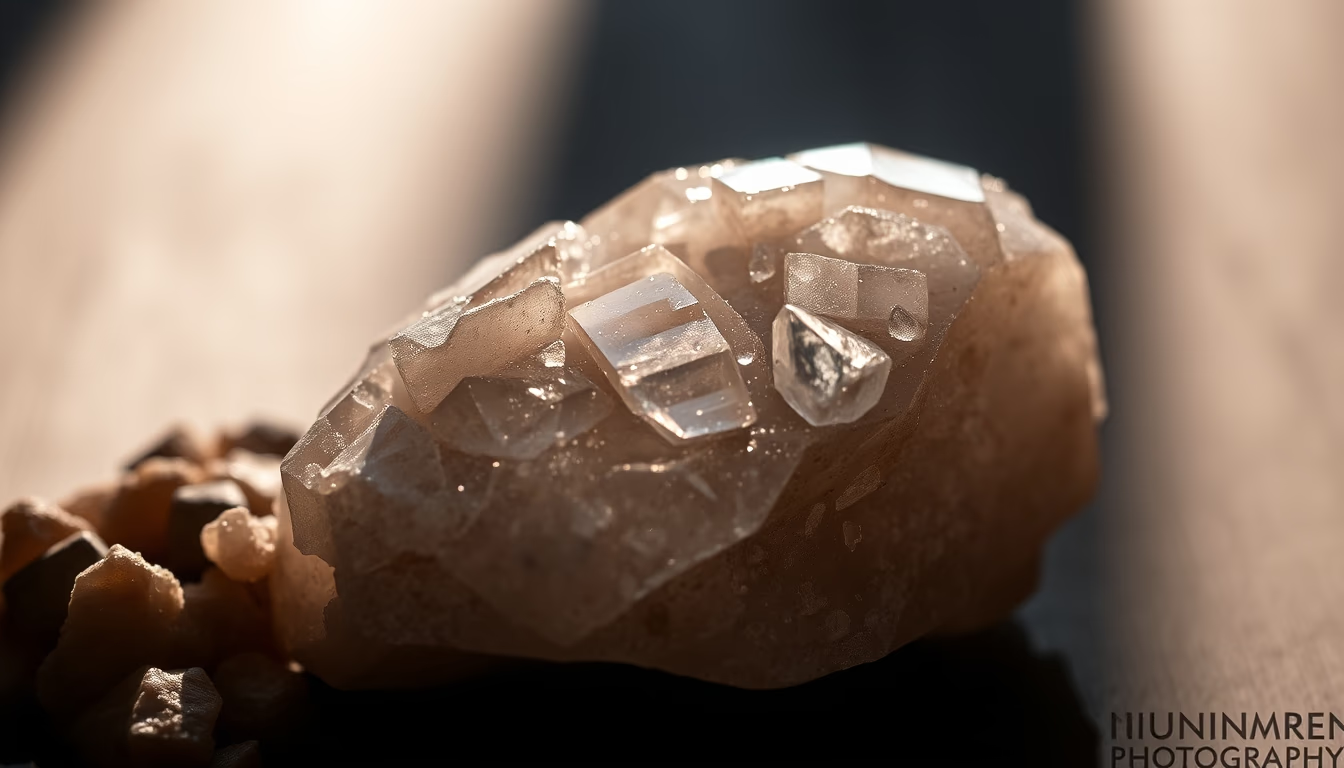
Opal play of color
1344×768 · AVIF · CC BY 4.0
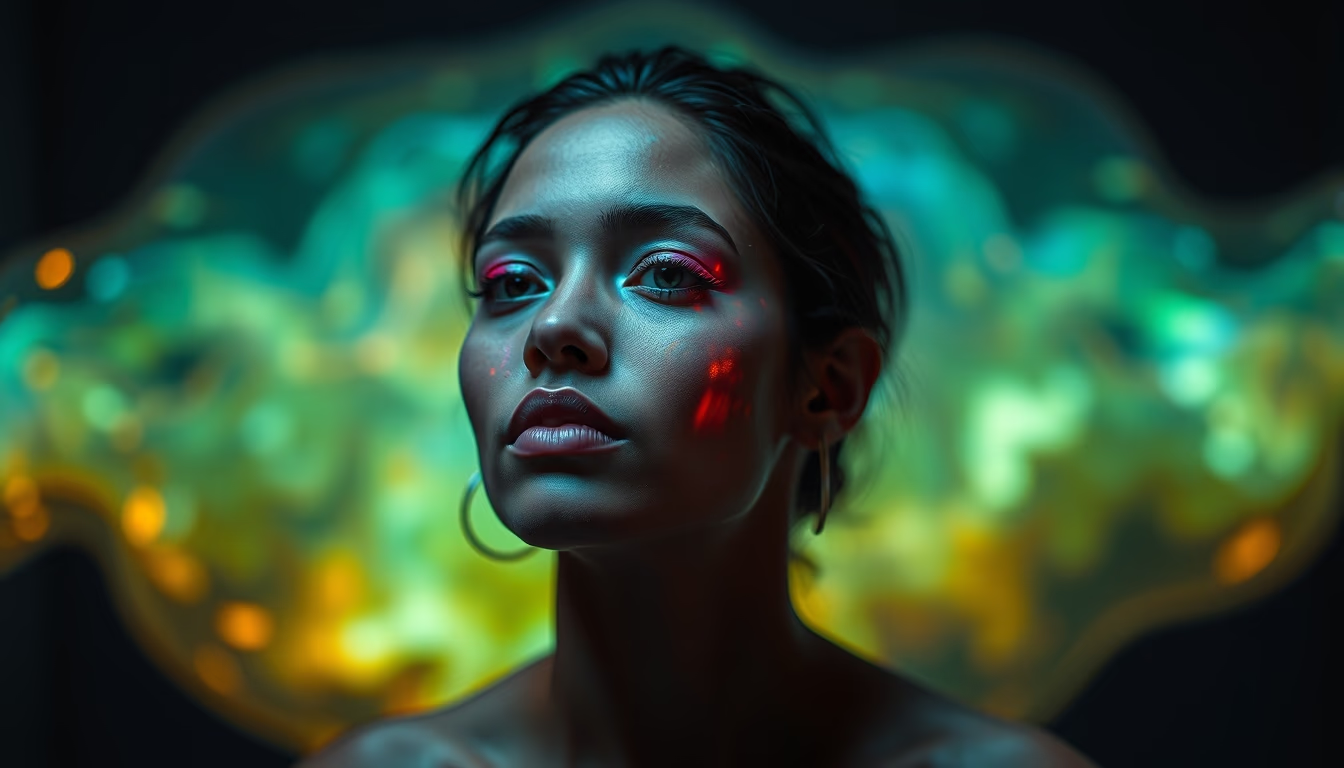
Opals display a visual phenomenon called 'play of color', caused by light diffraction within their internal structure of silica spheres.
About this subject
Opals are gemstones formed from silica hydrogels that deposit in rock cavities over millions of years. The play of color, which can display the full visible spectrum, occurs when white light passes through silica spheres arranged in a three-dimensional grid. The spacing between these spheres determines which wavelengths are diffracted, creating color flashes that shift with the viewing angle. The most prized opals come from Australia, particularly fields such as Lightning Ridge, Coober Pedy, and Andamooka, where geological conditions allowed the formation of precious opals with vibrant patterns. Opal is the national gemstone of Australia and is also mined in Mexico, Ethiopia, Brazil, and the United States. In Brazil, the opal from Piauí stands out for its bluish color. Its relatively low hardness (5.5 to 6.5 on the Mohs scale) requires special care, such as avoiding impacts and exposure to extreme temperatures, which can cause cracking. The term 'hydrophane' refers to opals that become translucent when immersed in water, a reversible phenomenon.
Frequently Asked Questions
How to tell a real opal from a synthetic one?
Synthetic opals usually show a more regular and repetitive color pattern, while natural opals display irregularities. Also, synthetic opals lack typical inclusions or fluorescence under UV light. A gemologist can use microscopy and spectroscopy to confirm.
Why do some opals lose their brilliance over time?
Opals can dehydrate if exposed to dry air or excessive heat, causing cracking and loss of brilliance. Storing them in a humid environment or with slightly damp cotton helps maintain hydration. Avoid thermal shocks and chemicals.
What is the rarest and most valuable opal in the world?
The black opal from Lightning Ridge, Australia, is considered the rarest and most valuable, especially with patterns like 'rainbow' or 'painting'. Another rare variety is the Mexican fire opal matrix, with intense red fire.
Direct URL
https://pub-c7d6a6ea828543ac903a74a341ccb2e1.r2.dev/imagens/opal-play-of-color-fine-art-photography-p6.avifHow to credit
Include a visible link back to UtilizAí. Copy one of the snippets below:
<a href="https://xn--utiliza-eza.com/en/midia/imagens/opal-play-of-color-fine-art-photography-p6">Opal play of color</a> by <a href="https://xn--utiliza-eza.com">UtilizAí</a>, licensed under <a href="https://creativecommons.org/licenses/by/4.0/">CC BY 4.0</a>.
[Opal play of color](https://xn--utiliza-eza.com/en/midia/imagens/opal-play-of-color-fine-art-photography-p6) by [UtilizAí](https://xn--utiliza-eza.com), CC BY 4.0
License: CC-BY-4.0