Oort cloud comets
1344×768 · AVIF · CC BY 4.0

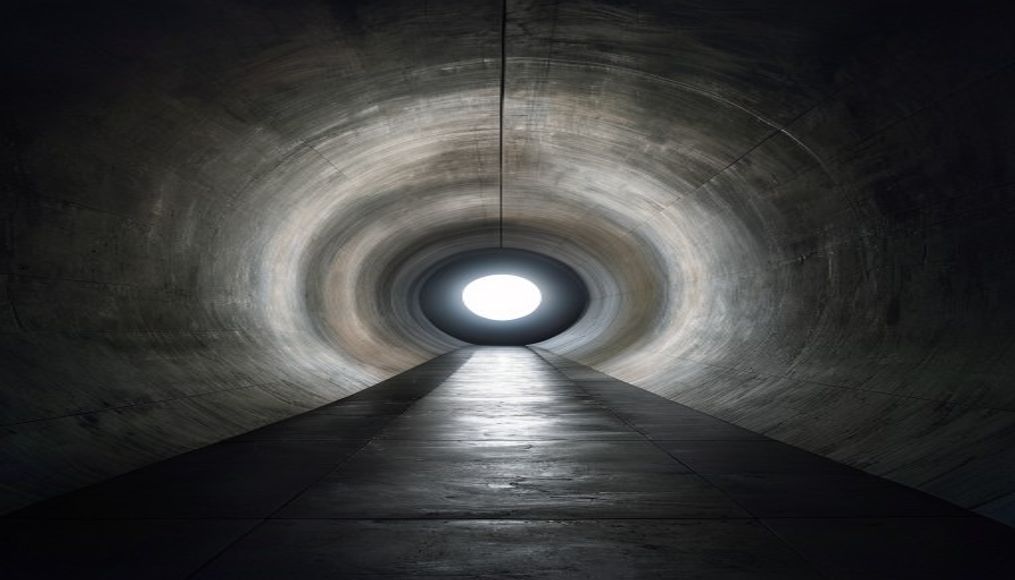
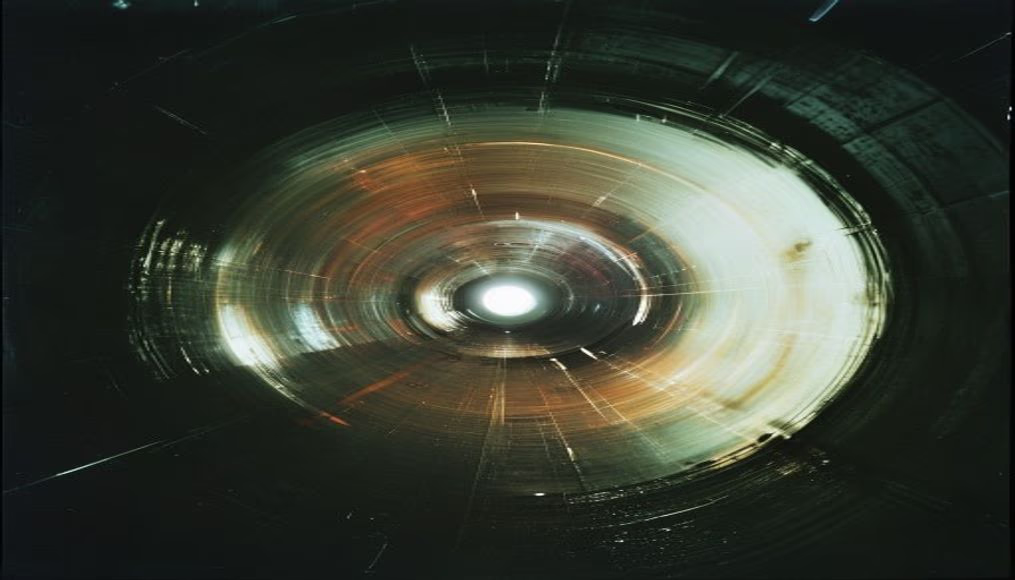
The Oort cloud is a spherical region of icy bodies at the edge of the Solar System, source of long-period comets.
About this subject
The Oort cloud is a hypothetical spherical cloud of trans-Neptunian objects that surrounds the Solar System at distances between 5,000 and 100,000 astronomical units (AU) from the Sun. Proposed by Dutch astronomer Jan Oort in 1950, it explains the origin of long-period comets, those with orbits exceeding 200 years. Unlike the Kuiper Belt, which is closer and contains objects like Pluto and Eris, the Oort cloud is divided into two regions: an inner disk-shaped part and an outer spherical, more extensive shell. It is estimated to contain trillions of cometary nuclei, with diameters ranging from a few meters to tens of kilometers.
These objects remain frozen and virtually inert until gravitational perturbations from nearby stars, galactic tides, or the passage of the Sun through interstellar clouds deflect them into the inner Solar System. As they approach the Sun, heat sublimates their ices, forming the characteristic coma and tail we identify as comets. Famous examples like Hale-Bopp and Hyakutake originated in the Oort cloud. ESA's Rosetta mission studied comet 67P/Churyumov-Gerasimenko, which may also hail from the Oort cloud, though its origin is debated.
Although never directly observed due to immense distance and the faintness of the objects, the Oort cloud is widely accepted by the scientific community. Probes like Voyager 1 and 2 may one day cross it, but it will take thousands of years to traverse. The study of comets is crucial for understanding the primordial composition of the Solar System, as they preserve materials from its formation 4.6 billion years ago. The Oort cloud also serves as a natural laboratory for planetary migration processes and interactions with the interstellar medium.
Frequently Asked Questions
What is the Oort cloud?
It is a spherical cloud of icy bodies surrounding the Solar System, located between 5,000 and 100,000 AU from the Sun, considered the source of long-period comets.
Has the Oort cloud been observed directly?
No, not directly, because its objects are small and very distant. Its existence is inferred from the orbits of long-period comets that enter the inner Solar System.
What is the difference between the Oort cloud and the Kuiper belt?
The Kuiper belt is closer (30-50 AU), disk-shaped, and source of short-period comets. The Oort cloud is spherical, much farther, and gives rise to long-period comets.
Direct URL
https://pub-c7d6a6ea828543ac903a74a341ccb2e1.r2.dev/imagens/oort-cloud-comets-long-exposure-p11.avifHow to credit
Include a visible link back to UtilizAí. Copy one of the snippets below:
<a href="https://xn--utiliza-eza.com/en/midia/imagens/oort-cloud-comets-long-exposure-p11">Oort cloud comets</a> by <a href="https://xn--utiliza-eza.com">UtilizAí</a>, licensed under <a href="https://creativecommons.org/licenses/by/4.0/">CC BY 4.0</a>.
[Oort cloud comets](https://xn--utiliza-eza.com/en/midia/imagens/oort-cloud-comets-long-exposure-p11) by [UtilizAí](https://xn--utiliza-eza.com), CC BY 4.0
License: CC-BY-4.0