Olympic flags stadium
1344×768 · AVIF · CC BY 4.0
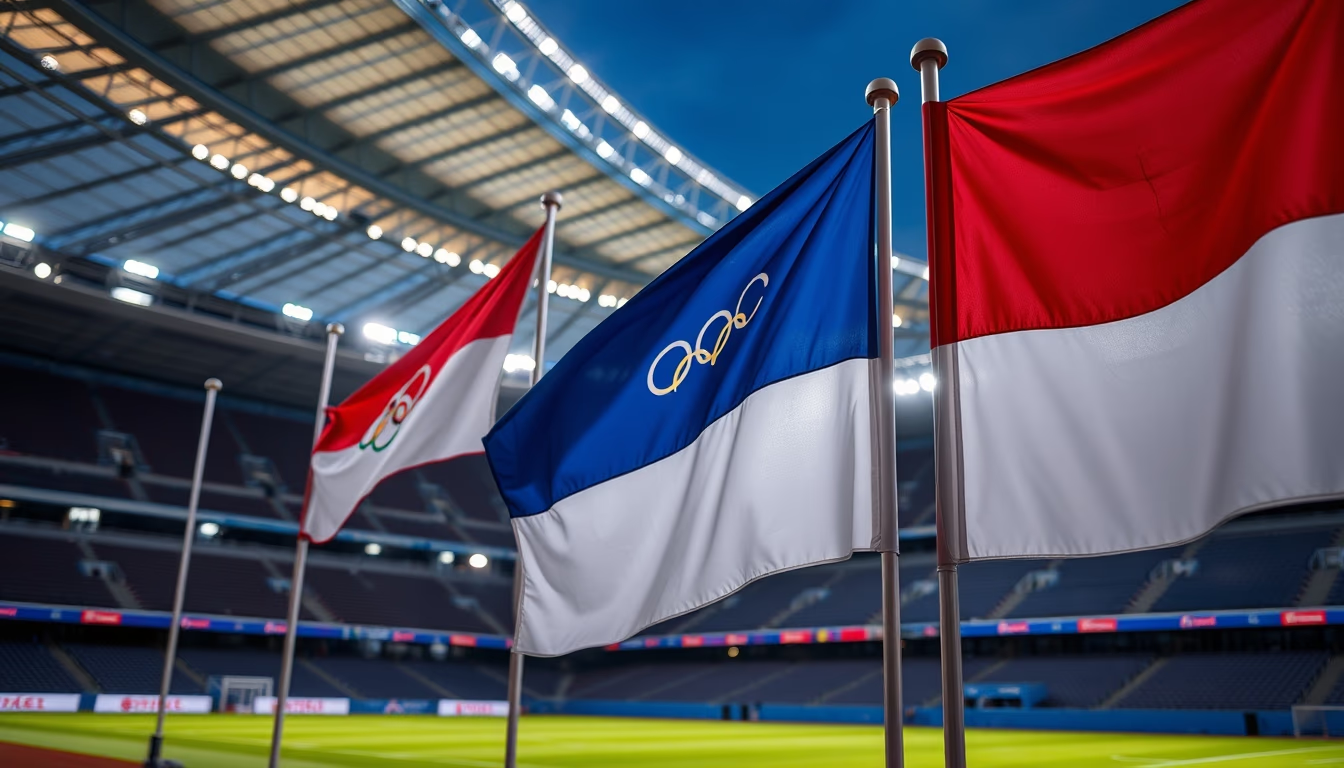
Olympic flags hoisted in stadiums symbolize the union of the five continents and the tradition of the Olympic Games since 1914.
About this subject
The Olympic flag, with its five interlocking rings, was designed by Pierre de Coubertin in 1914 and first raised at the 1920 Antwerp Games. The rings represent the union of the five inhabited continents, while the colors (red, blue, green, yellow, and black) were chosen because at least one appears on every national flag. In stadiums, the flag is hoisted during the opening ceremony and remains until the closing, when it is handed over to the next host city.
Traditionally, the Olympic flag is accompanied by the Olympic anthem and oaths taken by athletes and judges. A new flag is made for each edition, but the original 1914 flag is a historical relic. The protocol also includes the International Olympic Committee (IOC) flag, featuring the symbol and the Olympic flame. The hoisting occurs on a central mast, symbolizing fair competition and peace.
Beyond the Games, the Olympic flag is used at events like the Youth Olympics and Winter Games. The tradition of carrying the flag during the parade of nations reinforces the event's global identity. Interestingly, the flag was stolen in 2000 in Sydney but recovered. Today, its presence in stadiums is one of the most recognizable icons in the sports world.
Frequently Asked Questions
What do the five Olympic rings represent?
The five interlocking rings represent the union of the five inhabited continents: Africa, America, Asia, Europe, and Oceania. The colors were chosen because at least one appears on every national flag.
Since when has the Olympic flag been hoisted in stadiums?
The flag was first used at the 1920 Antwerp Games, although it was created in 1914. Since then, it has become a central symbol of the opening and closing ceremonies.
What happens to the Olympic flag after the Games?
At the end of each edition, the flag is handed over to the mayor of the next host city during the closing ceremony. A new flag is made for each Games, but the original 1914 flag is preserved as a historical artifact.
Direct URL
https://pub-c7d6a6ea828543ac903a74a341ccb2e1.r2.dev/imagens/olympic-flags-stadium-studio-still-life-fresh11.avifHow to credit
Include a visible link back to UtilizAí. Copy one of the snippets below:
<a href="https://xn--utiliza-eza.com/en/midia/imagens/olympic-flags-stadium-studio-still-life-fresh11">Olympic flags stadium</a> by <a href="https://xn--utiliza-eza.com">UtilizAí</a>, licensed under <a href="https://creativecommons.org/licenses/by/4.0/">CC BY 4.0</a>.
[Olympic flags stadium](https://xn--utiliza-eza.com/en/midia/imagens/olympic-flags-stadium-studio-still-life-fresh11) by [UtilizAí](https://xn--utiliza-eza.com), CC BY 4.0
License: CC-BY-4.0