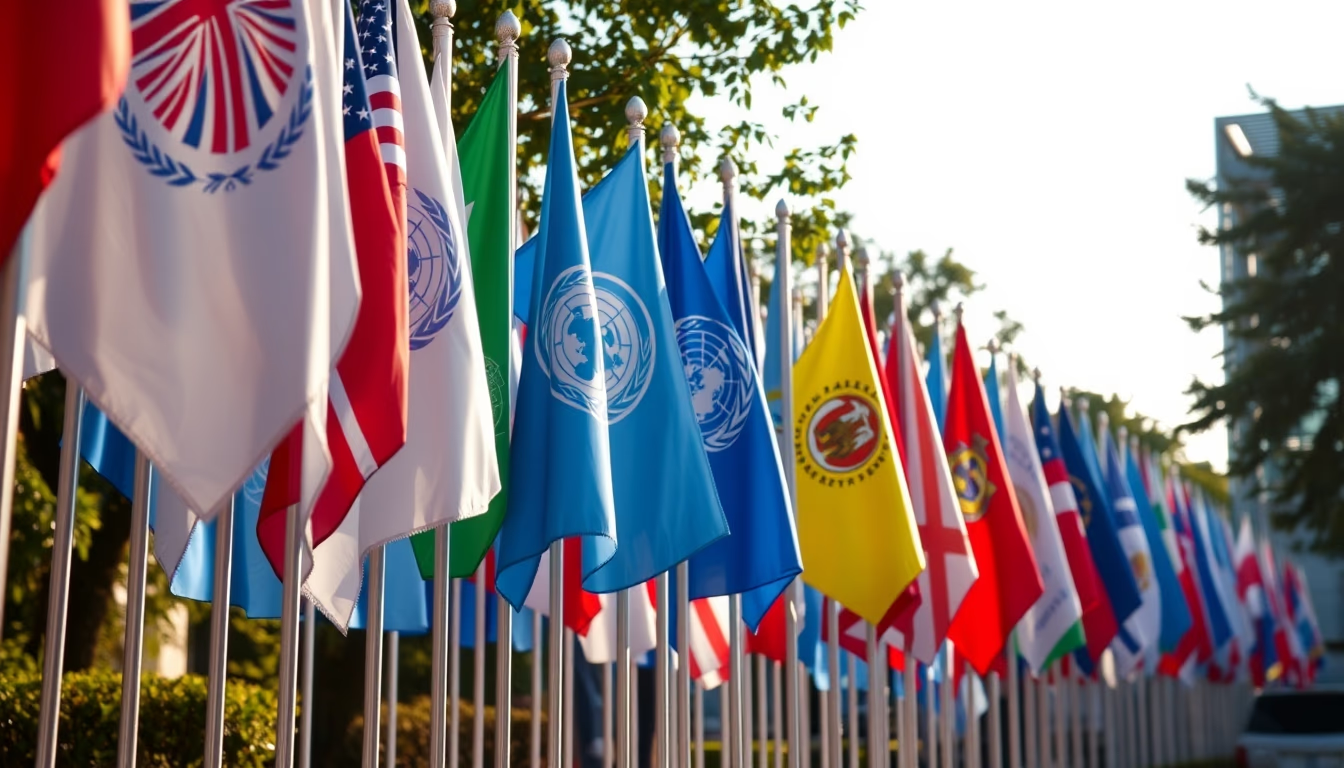
Olympic flags stadium
1344×768 · AVIF · CC BY 4.0

Olympic flags flutter in a stadium during a ceremony, symbolizing the union of continents and the Olympic spirit.
About this subject
The Olympic flags are among the most recognizable symbols of the modern Olympic Games. The official flag, featuring five interlocking rings on a white background, was created by Baron Pierre de Coubertin in 1913 and first hoisted in 1920 at the Antwerp Games in Belgium. Each ring represents a continent: Africa, the Americas, Asia, Europe, and Oceania. The colors, blue, yellow, black, green, and red, were chosen because at least one of them appears on every national flag of the time. The white background symbolizes peace.
During the Games, stadiums display not only the Olympic flag but also the flags of all participating nations. The flag-raising ceremonies take place at the opening and closing ceremonies, followed by the national anthems of the winners. Tradition includes the Olympic oath taken by an athlete, a judge, and a coach holding the flag. After the Games, the Olympic flag is passed to the next host city, symbolizing the event's continuity.
Furthermore, the Olympic flag remains hoisted throughout the entire period of the Games, from opening to closing. In some editions, such as the Winter Games, adaptations are made to reflect the seasonal context. The image of flags fluttering in a stadium evokes the spirit of peaceful competition and global unity that the Games represent. The presence of the flags also serves as a reminder of the Olympic values: excellence, friendship, and respect.
Frequently Asked Questions
What do the Olympic rings mean?
The five interlocking rings represent the five continents (the Americas, Europe, Africa, Asia, and Oceania) united by Olympism. The colors were chosen because at least one of them appears on every national flag of the time.
Why is the Olympic flag hoisted in stadiums?
It symbolizes the unity of athletes from all over the world and is one of the most important symbols of the modern Olympic Games. It is hoisted during the opening and closing ceremonies and remains throughout the Games.
Does the Olympic flag change each edition?
No, the official flag has been the same since 1913. Only the flags of participating countries are added. The Olympic flag is fixed and is passed to the next host city at the closing ceremony.
Direct URL
https://pub-c7d6a6ea828543ac903a74a341ccb2e1.r2.dev/imagens/olympic-flags-stadium-cinematic-wide-shot-fresh18.avifHow to credit
Include a visible link back to UtilizAí. Copy one of the snippets below:
<a href="https://xn--utiliza-eza.com/en/midia/imagens/olympic-flags-stadium-cinematic-wide-shot-fresh18">Olympic flags stadium</a> by <a href="https://xn--utiliza-eza.com">UtilizAí</a>, licensed under <a href="https://creativecommons.org/licenses/by/4.0/">CC BY 4.0</a>.
[Olympic flags stadium](https://xn--utiliza-eza.com/en/midia/imagens/olympic-flags-stadium-cinematic-wide-shot-fresh18) by [UtilizAí](https://xn--utiliza-eza.com), CC BY 4.0
License: CC-BY-4.0