Olives in clay jar
1344×768 · AVIF · CC BY 4.0
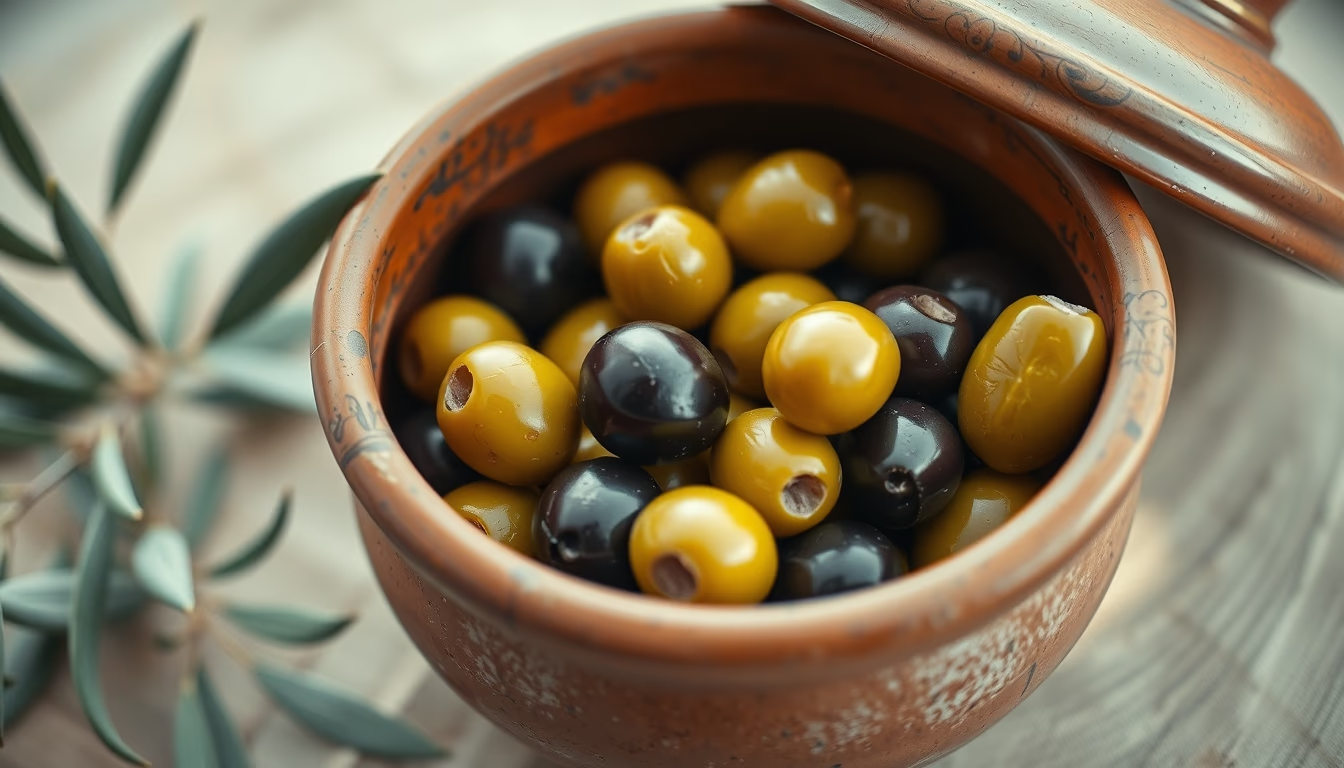
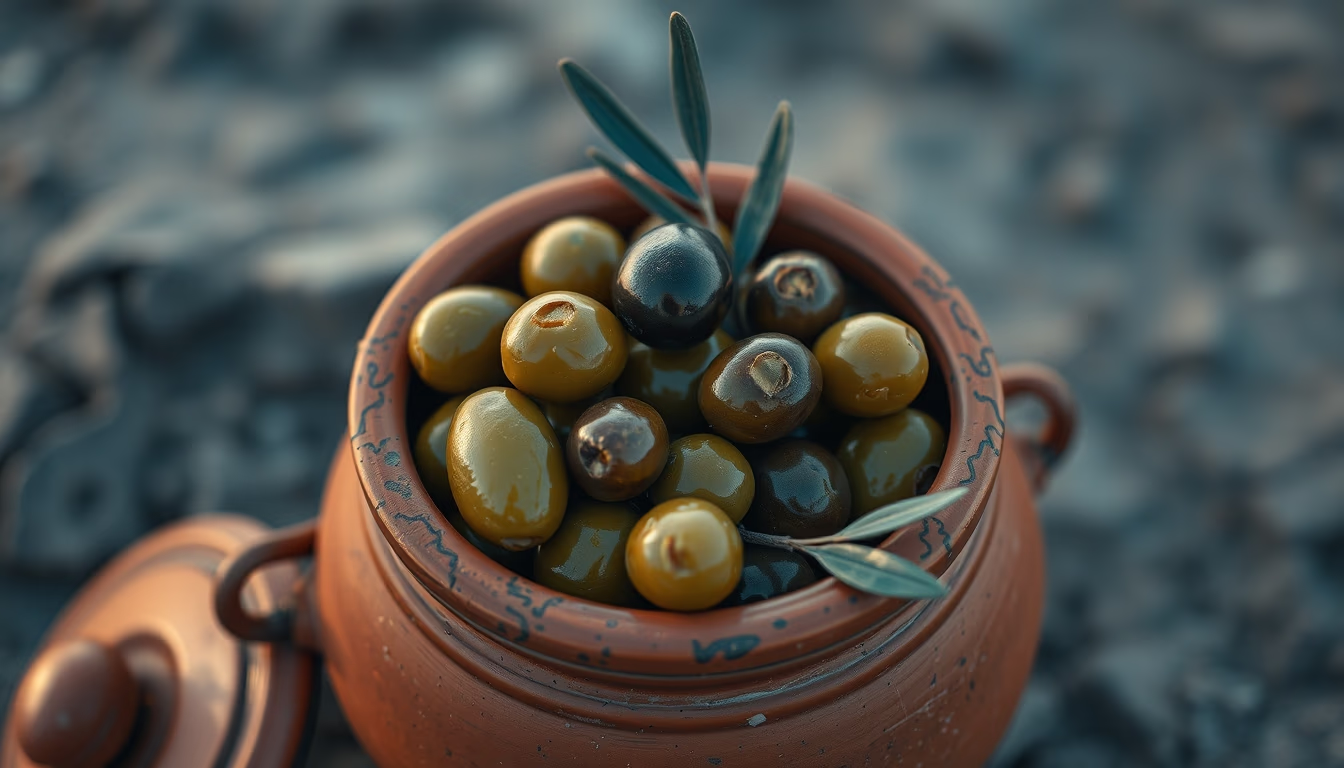
Olives preserved in clay jars are a traditional fermentation method that maintains flavor and nutrients for months.
About this subject
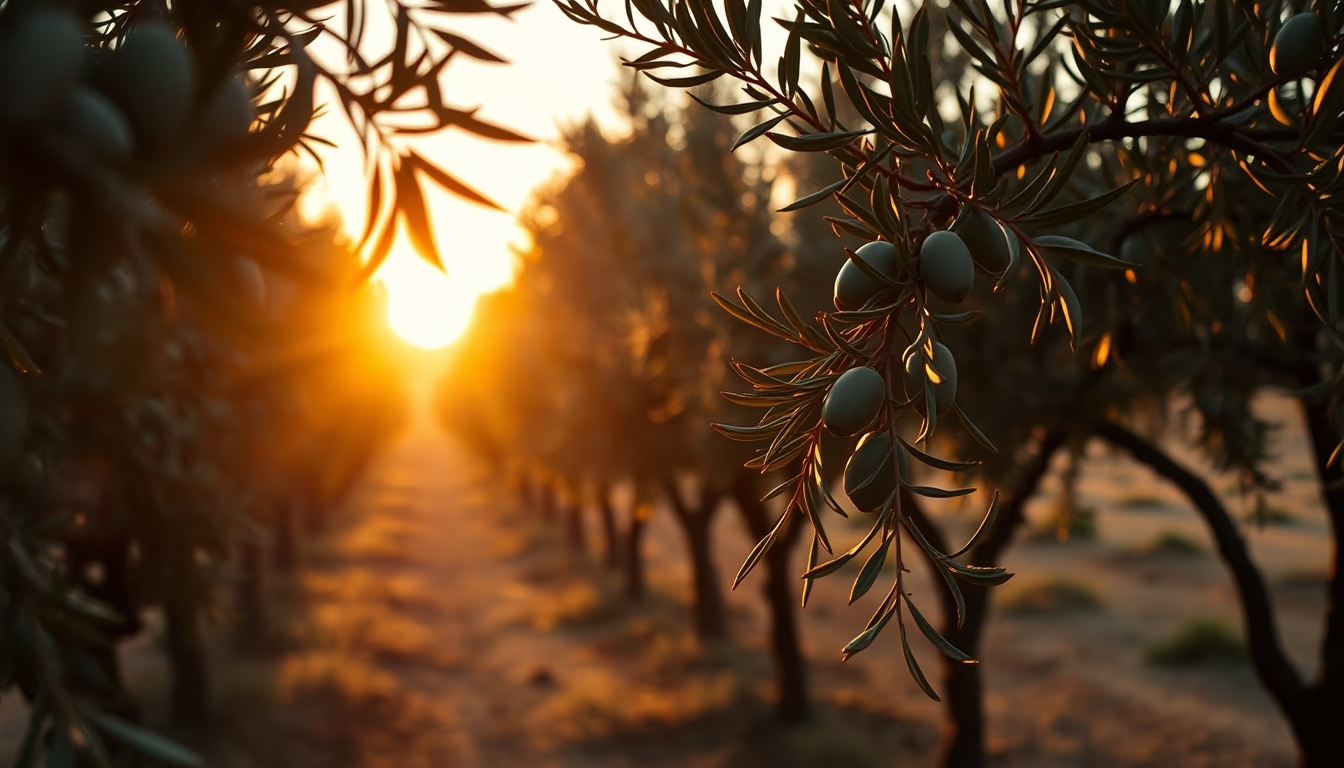
Olives, the fruit of the olive tree (Olea europaea), have been cultivated for millennia around the Mediterranean Basin. The process of curing them in clay jars is an ancient technique dating back to Ancient Greece and the Roman Empire. Unlike metal brine containers, porous clay allows gentle gas exchange, promoting beneficial microorganisms that enhance flavor and reduce the natural bitterness of oleuropein.
Clay jars, often called amphorae or talhas, are made from natural clay fired at low temperatures to maintain permeability. In southern Europe and North Africa, they are still used in small artisanal productions. Lactic fermentation takes place inside the jar, where olives are submerged in salt water or brine with herbs like thyme and rosemary. This method requires no chemical additives and preserves the antioxidant properties of olives, rich in vitamin E and polyphenols.
Interestingly, olive color varies by ripeness: green olives are harvested before full maturation, while black olives ripen completely on the tree. The clay jar process can last from a few weeks to several months, yielding a firm texture and complex flavor. Archaeological evidence shows clay amphorae were used to transport olives and olive oil across the Mediterranean over 3,000 years ago, highlighting the durability of this preservation method.
In Brazil, olive production is concentrated in the south, especially Rio Grande do Sul, where Italian and Spanish immigrants brought clay fermentation techniques. Though less common today, the method is experiencing a revival at organic fairs and as a slow food practice, valuing authentic taste and sustainability.
Frequently Asked Questions
How long does it take to ferment olives in a clay jar?
The process can take 4 to 12 weeks, depending on olive size, ambient temperature, and salt concentration. Fermentation is slower than in glass or plastic containers.
What is the difference between green and black olives?
Green olives are harvested before full ripeness, while black olives ripen on the tree. Color indicates not only variety but also fat content and flavor: green olives are firmer and more bitter, black ones softer and sweeter.
Can I reuse the clay jar for another fermentation?
Yes, provided the jar is thoroughly cleaned and sterilized (e.g., with boiling water). Porous clay can absorb flavors, so avoid mixing different types without proper cleaning.
Direct URL
https://pub-c7d6a6ea828543ac903a74a341ccb2e1.r2.dev/imagens/olives-in-clay-jar-fish-eye-wide-angle-p7.avifHow to credit
Include a visible link back to UtilizAí. Copy one of the snippets below:
<a href="https://xn--utiliza-eza.com/en/midia/imagens/olives-in-clay-jar-fish-eye-wide-angle-p7">Olives in clay jar</a> by <a href="https://xn--utiliza-eza.com">UtilizAí</a>, licensed under <a href="https://creativecommons.org/licenses/by/4.0/">CC BY 4.0</a>.
[Olives in clay jar](https://xn--utiliza-eza.com/en/midia/imagens/olives-in-clay-jar-fish-eye-wide-angle-p7) by [UtilizAí](https://xn--utiliza-eza.com), CC BY 4.0
License: CC-BY-4.0