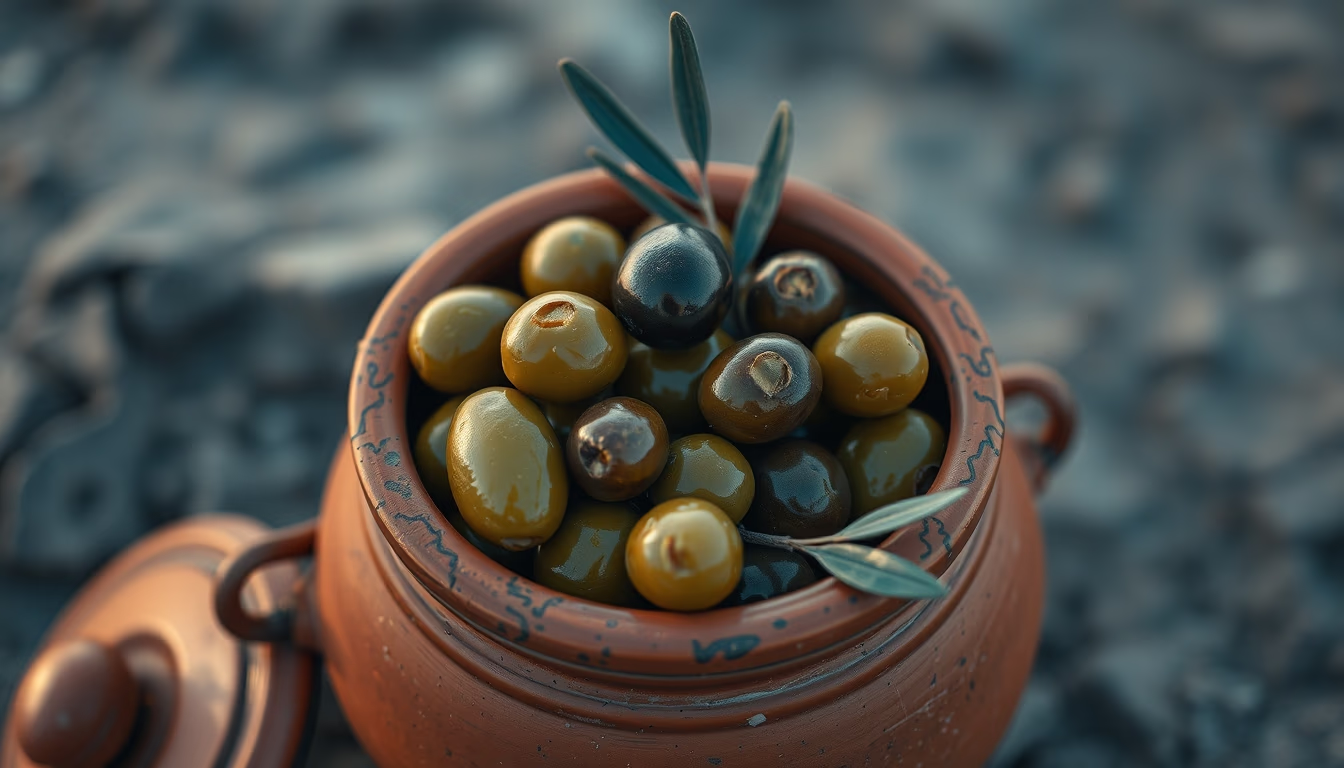
Olive press traditional stone
1344×768 · AVIF · CC BY 4.0

Traditional stone olive press: learn about the operation and history of this ancient equipment essential for extra virgin olive oil production.
About this subject
The traditional stone olive press is one of the oldest tools used in olive oil production, dating back to the Bronze Age in the Mediterranean. It consists of a circular base made of granite or basalt and a vertical stone wheel, operated by animal or human traction, crushing olives into a paste that is then pressed to extract the oil. This method, known as the screw or lever press system, was described by classical authors like Pliny the Elder and remained virtually unchanged for millennia.
The Mediterranean region accounts for about 95% of the world's olive production, with countries such as Spain, Italy, Greece, and Portugal leading. In Brazil, olive oil production is recent but growing in the South and Southeast. Stone presses are still found in historical farms and museums, preserving an artisanal technique that gives olive oil unique sensory characteristics, such as fruity flavor and low acidity.
Interestingly, the stone press may extract up to 80% of the oil contained in olives, while modern continuous methods achieve over 90%. Nevertheless, stone-pressed oil is prized by connoisseurs for retaining phenolic compounds and natural antioxidants. In some Italian regions, such as Tuscany and Apulia, production with stone presses is protected by controlled designation of origin (DOC).
Currently, UNESCO recognizes the production of olive oil in traditional mills as intangible cultural heritage in countries like Italy and Greece. The revival of interest in ancient methods has led small producers to restore stone presses, combining tradition with rural tourism. Visitors can observe the complete process, from manual harvesting to pressing, in wine and food tourism experiences in the Mediterranean and also on Brazilian properties focused on agritourism.
Frequently Asked Questions
How does a traditional stone olive press work?
A stone press uses a vertical wheel rotating over a circular base to crush olives. The resulting paste is placed in bags and pressed by a screw or lever, releasing oil that is separated from water by decantation.
What is the difference between stone-pressed and industrial olive oil?
Stone-pressed oil is cold-extracted without chemical solvents, retaining more antioxidants and flavor. Industrial methods use continuous centrifugation at higher temperatures, which can reduce beneficial compounds but increase yield.
Where can I see a stone press in operation in Brazil?
In Brazil, properties in Rio Grande do Sul, Santa Catarina, and São Paulo offer guided tours with demonstrations of restored stone presses. Examples include Vinícola Salvati (RS) and Fazenda Santa Helena (SP).
Direct URL
https://pub-c7d6a6ea828543ac903a74a341ccb2e1.r2.dev/imagens/olive-press-traditional-stone-lo-fi-disposable-camera-p7.avifHow to credit
Include a visible link back to UtilizAí. Copy one of the snippets below:
<a href="https://xn--utiliza-eza.com/en/midia/imagens/olive-press-traditional-stone-lo-fi-disposable-camera-p7">Olive press traditional stone</a> by <a href="https://xn--utiliza-eza.com">UtilizAí</a>, licensed under <a href="https://creativecommons.org/licenses/by/4.0/">CC BY 4.0</a>.
[Olive press traditional stone](https://xn--utiliza-eza.com/en/midia/imagens/olive-press-traditional-stone-lo-fi-disposable-camera-p7) by [UtilizAí](https://xn--utiliza-eza.com), CC BY 4.0
License: CC-BY-4.0