Olive harvest baskets
1344×768 · AVIF · CC BY 4.0
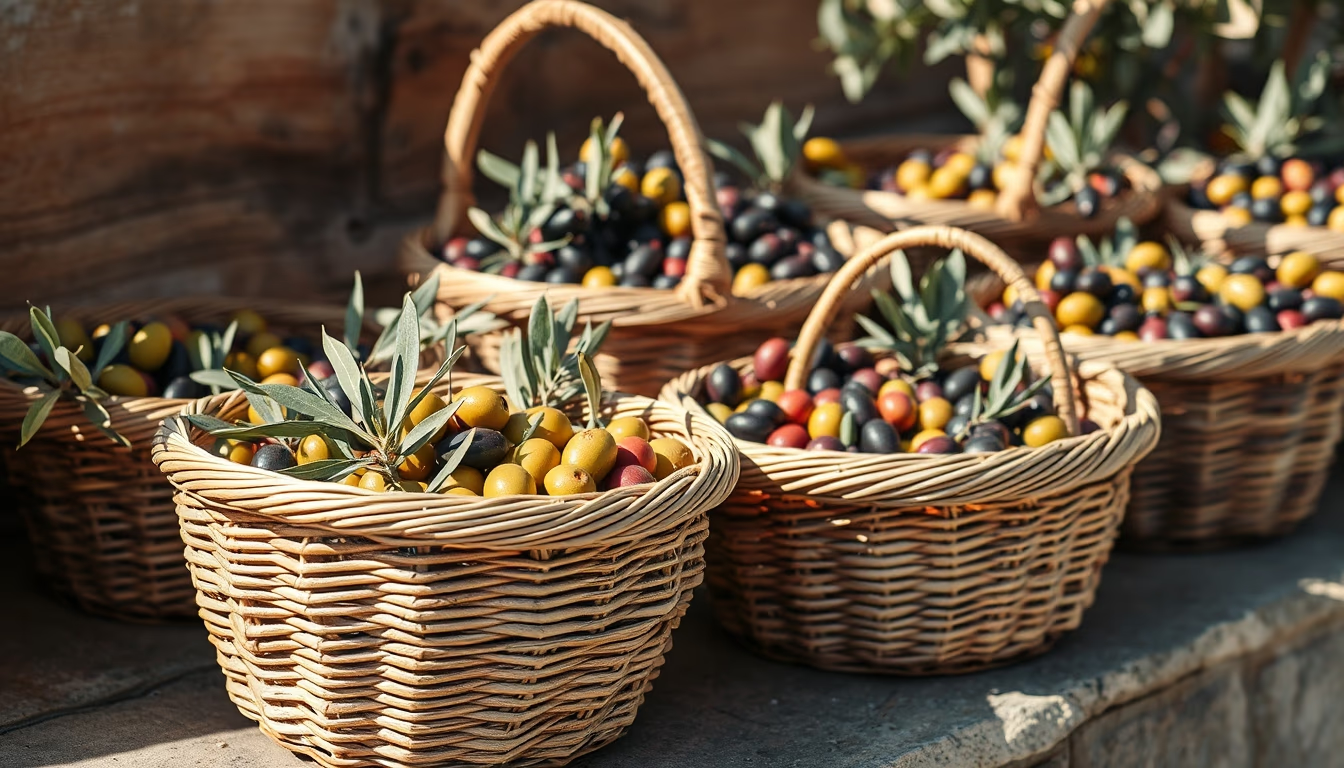
Handwoven olive harvest baskets are essential tools in olive farming, blending tradition and efficiency in fruit collection.
About this subject
Olive harvest baskets have been used for millennia in the Mediterranean region, traditionally made from natural materials such as wicker, bamboo, and straw. These containers are designed to allow airflow, preventing olives from bruising or fermenting during transport. In countries like Portugal, Italy, and Greece, each region developed specific models: Italian "ceste" have high handles for hanging on branches, while Greek "kofini" are cylindrical with flat bottoms for stacking.
The manual harvesting process still prevails in steep or traditional olive groves. Workers use combs or sticks to knock olives onto tarps or directly into baskets. The advantage of baskets over nets is selectivity: harvesters can instantly remove leaves and twigs, reducing later cleaning. Moreover, minimal contact with the ground preserves oil quality, as fallen olives tend to oxidize and develop off-flavors.
Culturally, harvest baskets are symbols of Mediterranean rural identity. At festivals like Portugal's "Festa da Oliveira," artisans display hand-woven baskets and teach centuries-old techniques. Artisanal production also provides supplemental income in inland communities, such as Italy's Tuscany region, where craftsmen's cooperatives keep the tradition alive. However, the use of injection-molded plastic baskets has grown in recent decades due to their lightness, durability, and ease of sanitization.
Sustainability has driven a return to natural materials. Wicker and bamboo baskets are biodegradable and have a lower carbon footprint than plastic ones. Some organic producers require traditional baskets to avoid microplastic contamination in the oil. Despite increasing mechanization with shakers and harvesters, baskets remain indispensable for selective harvesting of table olives and for maintaining historic groves.
Frequently Asked Questions
What is the best material for olive harvest baskets?
It depends on the use. Wicker and bamboo are biodegradable and traditional, ideal for organic oil. Plastic is more durable and easier to clean but may generate microplastics. For table olives, wicker or straw baskets are recommended as they do not damage the skin.
How to preserve olives during harvest?
Olives should be kept in a shaded, well-ventilated area, preferably in thin layers in the baskets. Avoid stacking too high or exposing them to direct sunlight for long periods, as this accelerates oxidation and loss of oil quality.
What is the difference between a basket and a net for olive harvesting?
A basket is used for selective picking, allowing manual separation of leaves and twigs. A net (or tarp) is spread on the ground to collect all dropped olives at once. The basket offers more control, while the net is faster for large volumes.
Direct URL
https://pub-c7d6a6ea828543ac903a74a341ccb2e1.r2.dev/imagens/olive-harvest-baskets-magazine-editorial-p1.avifHow to credit
Include a visible link back to UtilizAí. Copy one of the snippets below:
<a href="https://xn--utiliza-eza.com/en/midia/imagens/olive-harvest-baskets-magazine-editorial-p1">Olive harvest baskets</a> by <a href="https://xn--utiliza-eza.com">UtilizAí</a>, licensed under <a href="https://creativecommons.org/licenses/by/4.0/">CC BY 4.0</a>.
[Olive harvest baskets](https://xn--utiliza-eza.com/en/midia/imagens/olive-harvest-baskets-magazine-editorial-p1) by [UtilizAí](https://xn--utiliza-eza.com), CC BY 4.0
License: CC-BY-4.0