Neuromorphic chip
1344×768 · AVIF · CC BY 4.0
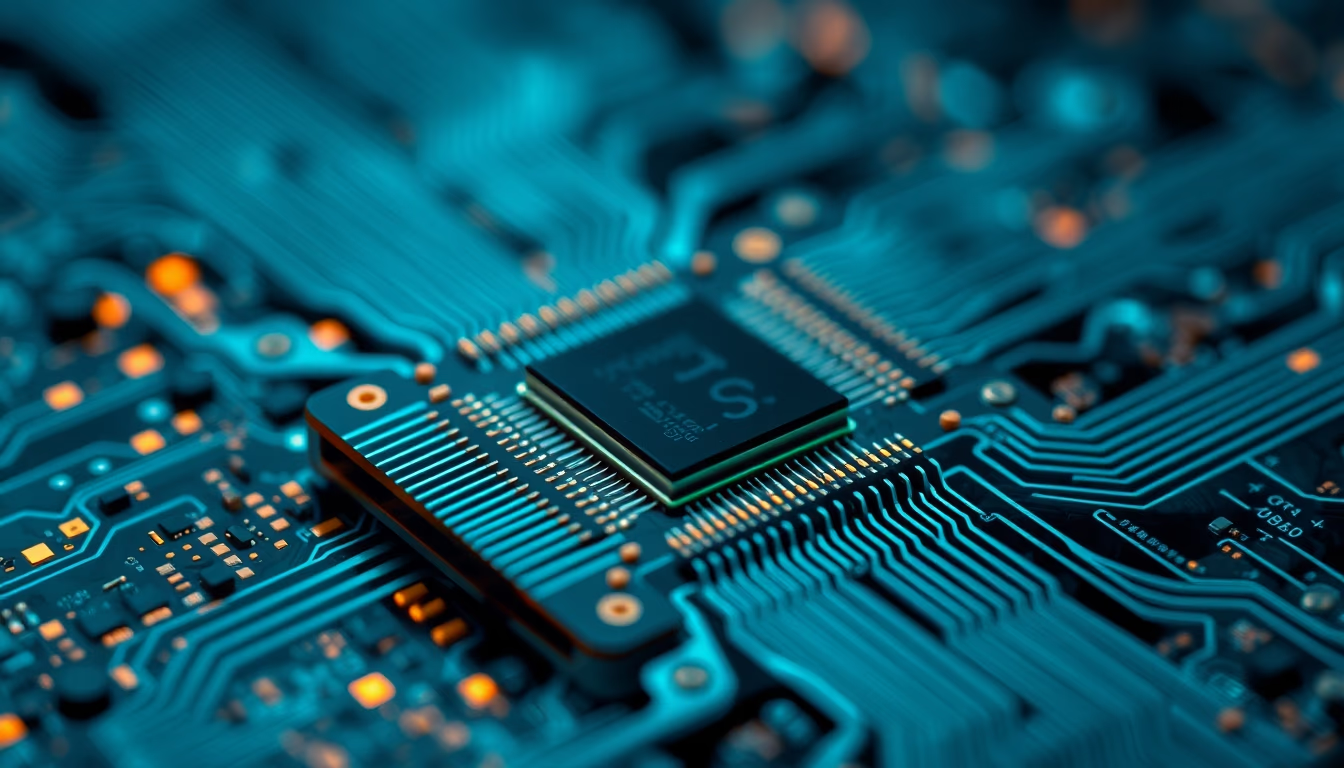
Neuromorphic chip mimics neural architecture in silicon, enabling low-power parallel processing for artificial intelligence applications.
About this subject
A neuromorphic chip is a processor designed to emulate the functioning of the human brain, using circuits that simulate neurons and synapses. This neuroscience-inspired approach was proposed by Carver Mead in the 1980s but gained momentum recently with advances in artificial intelligence. Unlike traditional processors based on the von Neumann architecture, which separate memory and processing and execute instructions sequentially, neuromorphic chips operate in a massively parallel and asynchronous manner, consuming orders of magnitude less energy for tasks like pattern recognition and learning.
Currently, notable projects include IBM's TrueNorth, which integrates 4,096 cores with 1 million neurons and 256 million programmable synapses, and Intel's Loihi, which uses a spiking model for event-driven processing. Loihi can learn in real time with local synaptic plasticity without relying on external computing. The BrainScaleS project from Heidelberg University replicates neural dynamics directly in analog hardware, achieving processing speeds up to 10,000 times faster than the brain.
Applications are vast, including autonomous robotics, where they can process sensors and motor controls with minimal latency, computer vision for self-driving cars, wearable medical monitoring devices, and brain-computer interfaces. Their low power consumption makes them ideal for edge computing, enabling local processing without cloud dependency. Despite potential, challenges such as unconventional programming, large-scale fabrication, and integration with classic digital systems still limit widespread adoption.
Future research aims to bring hardware even closer to the brain, with deep neural networks implemented directly in silicon and memristors for synaptic storage. With the growth of AI and the Internet of Things, neuromorphic chips represent a paradigm shift in computing, promising unprecedented efficiency and learning capabilities.
Frequently Asked Questions
What differentiates a neuromorphic chip from a regular processor?
Neuromorphic chips mimic synapses and neurons, processing in parallel with extremely low power consumption, unlike von Neumann architectures.
What are the main examples of neuromorphic chips?
Examples include IBM's TrueNorth, Intel's Loihi, and BrainScaleS in Europe, each with different implementation approaches.
What applications benefit from neuromorphic computing?
Applications such as pattern recognition, autonomous robotics, sensor signal processing, and energy-constrained embedded systems.
Direct URL
https://pub-c7d6a6ea828543ac903a74a341ccb2e1.r2.dev/imagens/neuromorphic-chip-fine-art-photography-p9.avifHow to credit
Include a visible link back to UtilizAí. Copy one of the snippets below:
<a href="https://xn--utiliza-eza.com/en/midia/imagens/neuromorphic-chip-fine-art-photography-p9">Neuromorphic chip</a> by <a href="https://xn--utiliza-eza.com">UtilizAí</a>, licensed under <a href="https://creativecommons.org/licenses/by/4.0/">CC BY 4.0</a>.
[Neuromorphic chip](https://xn--utiliza-eza.com/en/midia/imagens/neuromorphic-chip-fine-art-photography-p9) by [UtilizAí](https://xn--utiliza-eza.com), CC BY 4.0
License: CC-BY-4.0