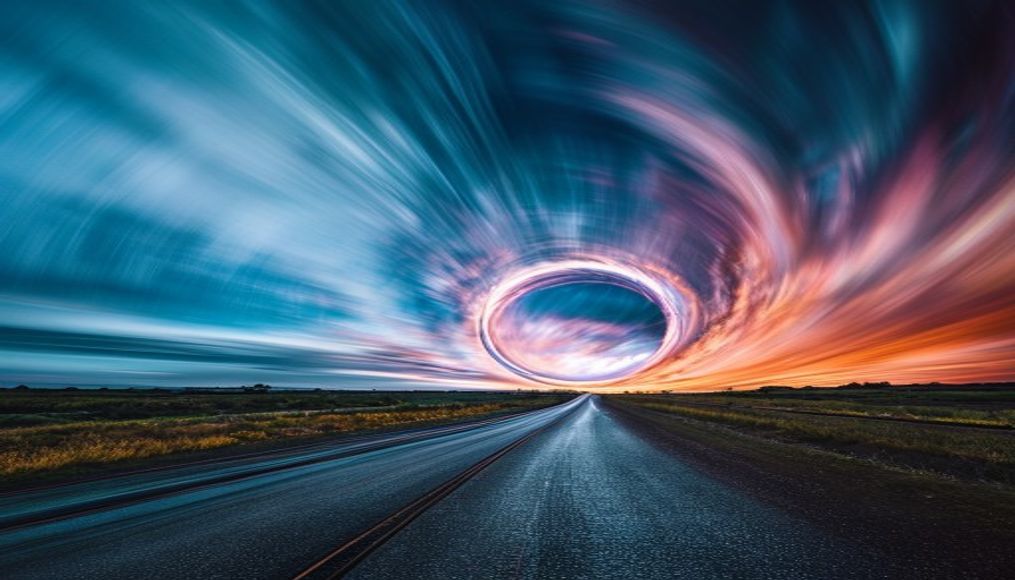
Neptune deep blue storms
1344×768 · AVIF · CC BY 4.0
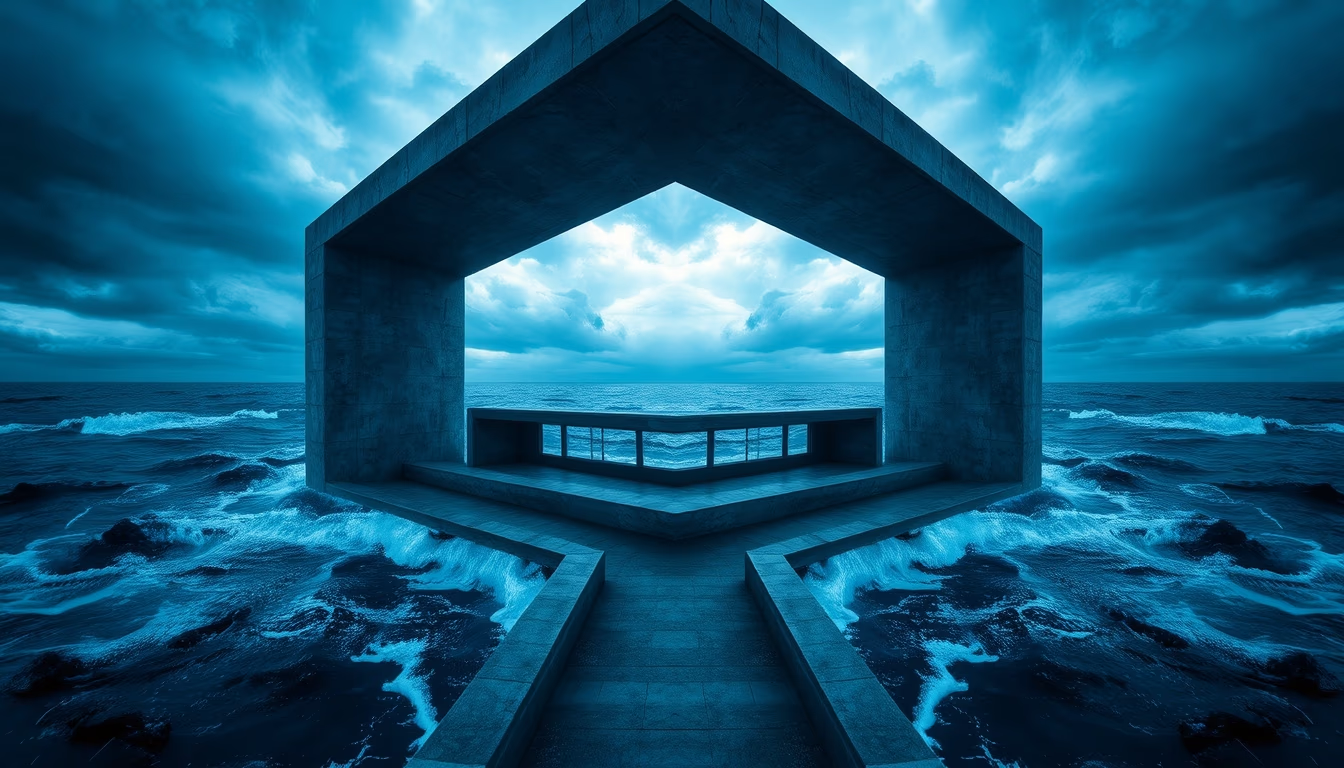
Neptune, the most distant planet in the Solar System, displays dynamic storms in its deep blue atmosphere, revealing extreme weather phenomena.
About this subject
Neptune, the eighth planet from the Sun, is known for its intense blue color, caused by methane absorbing red light in its atmosphere. Its storms, such as the Great Dark Spot observed by Voyager 2 in 1989, are high-pressure systems similar to terrestrial hurricanes but with winds reaching up to 2,100 km/h, the fastest in the Solar System. These storms are transient, typically lasting a few Earth years, appearing and disappearing at mid-latitudes.
Neptune's atmosphere is composed mostly of hydrogen and helium, with traces of methane, water, and ammonia. The strong atmospheric activity is driven by the planet's internal heat, which radiates more energy than it receives from the Sun. Observations from the Hubble Space Telescope since the 1990s have shown that Neptune's storms vary in size and location, with some forming in the southern hemisphere and others in the north. In 2018, Hubble detected a new large dark spot in the northern hemisphere, accompanied by bright clouds of methane ice crystals.
In addition to dark spots, Neptune has bright, thin bands of clouds that move rapidly, indicating a turbulent atmosphere. The planet's axial tilt (28.32 degrees) contributes to seasonal variations, with each season lasting about 40 Earth years. The Voyager 2 mission was the only one to visit the planet, in 1989, providing the most detailed images to date. Future missions, such as proposed orbiters, may reveal more about these extreme phenomena.
Frequently Asked Questions
Why is Neptune blue?
Neptune's deep blue color comes from methane in its atmosphere absorbing red light. Methane reflects blue light, giving the planet its characteristic hue.
What are Neptune's most famous storms?
The most famous is the Great Dark Spot, discovered by Voyager 2 in 1989. Other dark spots have been observed by Hubble, such as the one in 2018 in the northern hemisphere.
Are Neptune's winds really the fastest in the Solar System?
Yes, Neptune's winds can reach up to 2,100 km/h, faster than those on any other planet, including Jupiter and Saturn.
Direct URL
https://pub-c7d6a6ea828543ac903a74a341ccb2e1.r2.dev/imagens/neptune-deep-blue-storms-architectural-photography-p11.avifHow to credit
Include a visible link back to UtilizAí. Copy one of the snippets below:
<a href="https://xn--utiliza-eza.com/en/midia/imagens/neptune-deep-blue-storms-architectural-photography-p11">Neptune deep blue storms</a> by <a href="https://xn--utiliza-eza.com">UtilizAí</a>, licensed under <a href="https://creativecommons.org/licenses/by/4.0/">CC BY 4.0</a>.
[Neptune deep blue storms](https://xn--utiliza-eza.com/en/midia/imagens/neptune-deep-blue-storms-architectural-photography-p11) by [UtilizAí](https://xn--utiliza-eza.com), CC BY 4.0
License: CC-BY-4.0