Mushroom farm dark
1344×768 · AVIF · CC BY 4.0
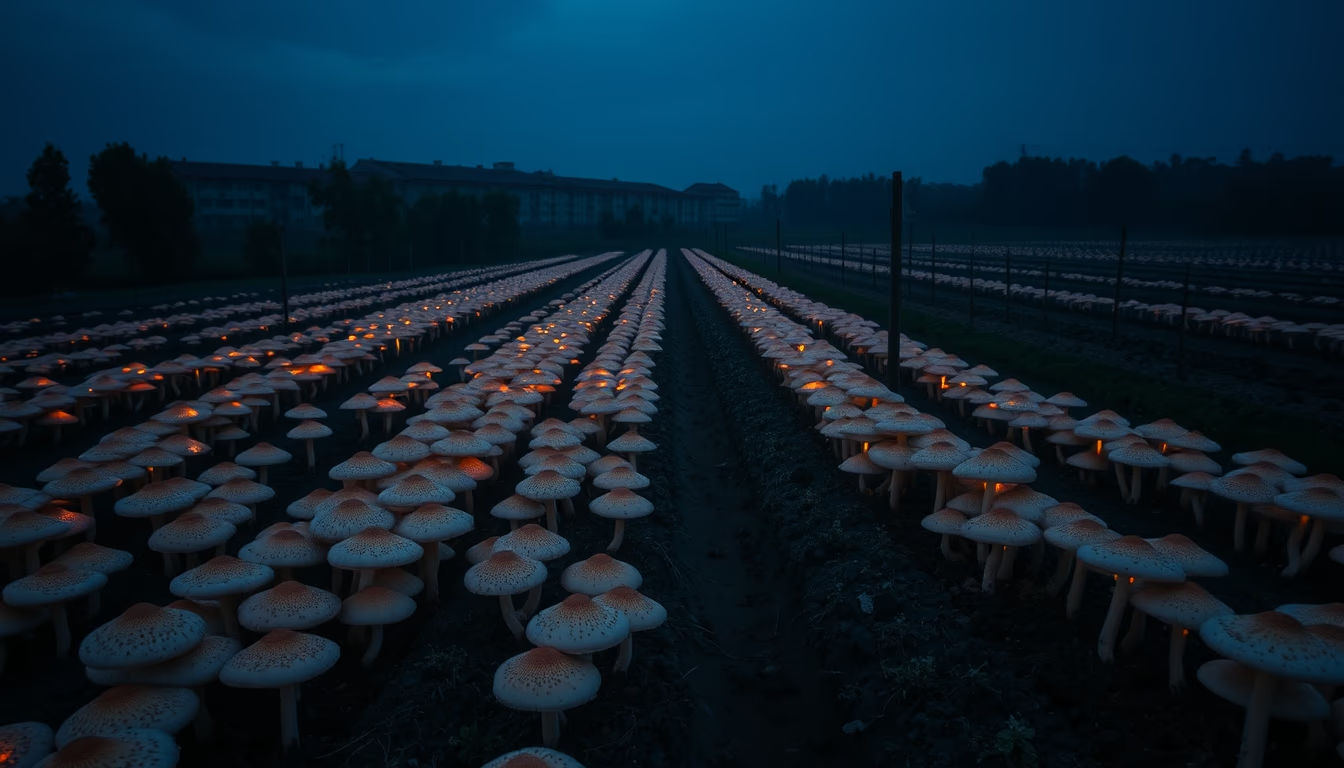
Cultivo de cogumelos em ambientes controlados: técnicas, importância econômica e peculiaridades da produção global.
Sobre o tema
O cultivo de cogumelos é uma prática agrícola milenar que ganhou escala industrial nas últimas décadas. Diferente de plantas verdes, os cogumelos não realizam fotossíntese e dependem de substratos orgânicos como palha, serragem ou composto. A produção mundial ultrapassa 10 milhões de toneladas anuais, com destaque para China (responsável por mais de 80% do total), seguida por Estados Unidos, Países Baixos e Polônia.
As fazendas modernas operam em galpões climatizados ou em espaços subterrâneos (antigas minas, cavernas) que oferecem escuridão e umidade estáveis. O cultivo em ambiente escuro é comum para espécies como champignon, shiitake e shitake. A escuridão não é absoluta: algumas espécies precisam de pouca luz indireta, mas a maioria se desenvolve melhor sem luz direta, pois a luz pode inibir o crescimento do micélio ou alterar a coloração.
No Brasil, a produção de cogumelos é relativamente pequena, cerca de 15 mil toneladas ao ano, mas vem crescendo devido ao aumento do consumo de alimentos saudáveis e proteicos. A cogumelicultura brasileira se concentra em São Paulo, Paraná e Minas Gerais, com destaque para o champignon de Paris e o shimeji. O cultivo em ambiente escuro e controlado reduz a incidência de pragas e permite colheitas o ano todo.
Curiosidades: o cogumelo não é um vegetal, mas sim o corpo frutífero de um fungo. O maior produtor mundial por metro quadrado são os Países Baixos, que alcançam rendimentos de até 35 kg/m². Em sistemas de baixa tecnologia, a produção pode ser feita em tambores, barris ou até mesmo em troncos de árvores, método tradicional japonês para shiitake.
Perguntas frequentes
Por que cogumelos são cultivados no escuro?
A maioria dos cogumelos não precisa de luz para crescer, e a escuridão ajuda a manter a umidade, evita a desidratação e inibe o desenvolvimento de algas e concorrentes. Algumas espécies, como o champignon, são cultivadas em total escuridão para obter coloração branca e textura firme.
Quais são os principais substratos usados no cultivo de cogumelos?
Os substratos variam conforme a espécie: palha de trigo ou arroz para champignon, serragem de madeira para shiitake, e misturas de compostagem (como esterco e gesso) para cogumelos comestíveis. O substrato precisa ser pasteurizado para eliminar microrganismos indesejados.
O cultivo de cogumelos é sustentável?
Sim, pois utiliza resíduos agroindustriais (palha, serragem, cascas) como substrato, transformando subprodutos em alimento de alto valor proteico. Além disso, o micélio pode ajudar na biorremediação de solos contaminados. A pegada hídrica é baixa comparada a outras proteínas.
URL direta
https://pub-c7d6a6ea828543ac903a74a341ccb2e1.r2.dev/imagens/mushroom-farm-dark-aerial-drone-shot-p2.avifComo creditar
Inclua um link visível de volta pro UtilizAí. Copie um dos snippets abaixo:
<a href="https://xn--utiliza-eza.com/midia/imagens/mushroom-farm-dark-aerial-drone-shot-p2">Mushroom farm dark</a> by <a href="https://xn--utiliza-eza.com">UtilizAí</a>, licensed under <a href="https://creativecommons.org/licenses/by/4.0/">CC BY 4.0</a>.
[Mushroom farm dark](https://xn--utiliza-eza.com/midia/imagens/mushroom-farm-dark-aerial-drone-shot-p2) by [UtilizAí](https://xn--utiliza-eza.com), CC BY 4.0
Licença: CC-BY-4.0