Movie projector running 8mm
1344×768 · AVIF · CC BY 4.0
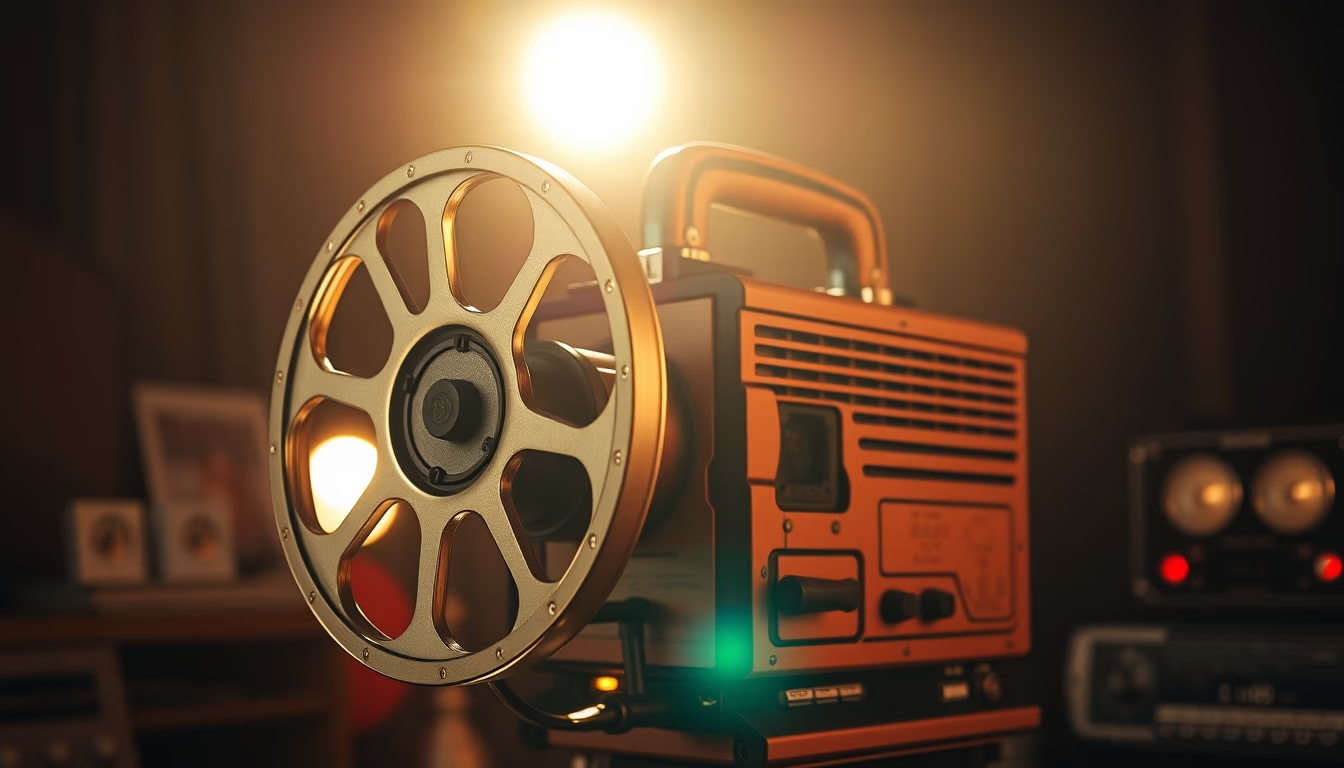
8mm film projector, the device that popularized home movies in the 20th century, featuring a reel mechanism and projection lens.
About this subject
The 8mm film projector was introduced by Kodak in 1932, shortly after the Cine-Kodak Eight camera, making movie-making affordable for families and hobbyists. Unlike the professional 16mm format, 8mm used a narrower film that fit into smaller reels, allowing recordings of up to 30 minutes (at 16 frames per second). The projector displayed images through an intermittent claw mechanism, where each frame briefly stopped in front of the lens to create motion illusion.
In Brazil, the 8mm format was adopted by experimental filmmakers and families to record birthdays, vacations, and weddings. From the 1950s to the 1970s, these projectors were common in living rooms, paired with portable screens and mechanical sound, silent models required live music or narration. The iconic Kodak Brownie 8mm projector is remembered for its durability and simple design. Today, nostalgia for 8mm resurges in fine art photography, where film grain and imperfections are valued as vintage aesthetics.
Technically, an 8mm projector has key components: a claw that advances the film, a manual focus projection lens, a high-wattage tungsten lamp (usually 150, 300 watts), and a cooling fan. Many models also included automatic rewind. Projection quality depended on lens cleanliness and film condition; over time, scratches and dust accumulated, contributing to the cherished "home movie" look.
Frequently Asked Questions
How does an 8mm film projector work?
The projector advances the film frame by frame using a claw mechanism, projecting light through each frame as it momentarily stops. A shutter interrupts light between frames to avoid blurring, and a lens enlarges the image onto the screen.
What is the difference between 8mm and Super 8 film?
Super 8, introduced in 1965, has a wider sprocket hole and a 50% larger image area than standard 8mm, giving better resolution. Super 8 also came in cartridges that eliminated manual film loading.
Why are 8mm projectors used in fine art photography?
Artists value the grainy texture, flicker, and analog imperfections that evoke nostalgia and the materiality of home movies. This contrasts with digital sharpness and is used in installations and performances to trigger emotional memories.
Direct URL
https://pub-c7d6a6ea828543ac903a74a341ccb2e1.r2.dev/imagens/movie-projector-running-8mm-fine-art-photography-p6.avifHow to credit
Include a visible link back to UtilizAí. Copy one of the snippets below:
<a href="https://xn--utiliza-eza.com/en/midia/imagens/movie-projector-running-8mm-fine-art-photography-p6">Movie projector running 8mm</a> by <a href="https://xn--utiliza-eza.com">UtilizAí</a>, licensed under <a href="https://creativecommons.org/licenses/by/4.0/">CC BY 4.0</a>.
[Movie projector running 8mm](https://xn--utiliza-eza.com/en/midia/imagens/movie-projector-running-8mm-fine-art-photography-p6) by [UtilizAí](https://xn--utiliza-eza.com), CC BY 4.0
License: CC-BY-4.0