Motherboard atx detail
1344×768 · AVIF · CC BY 4.0
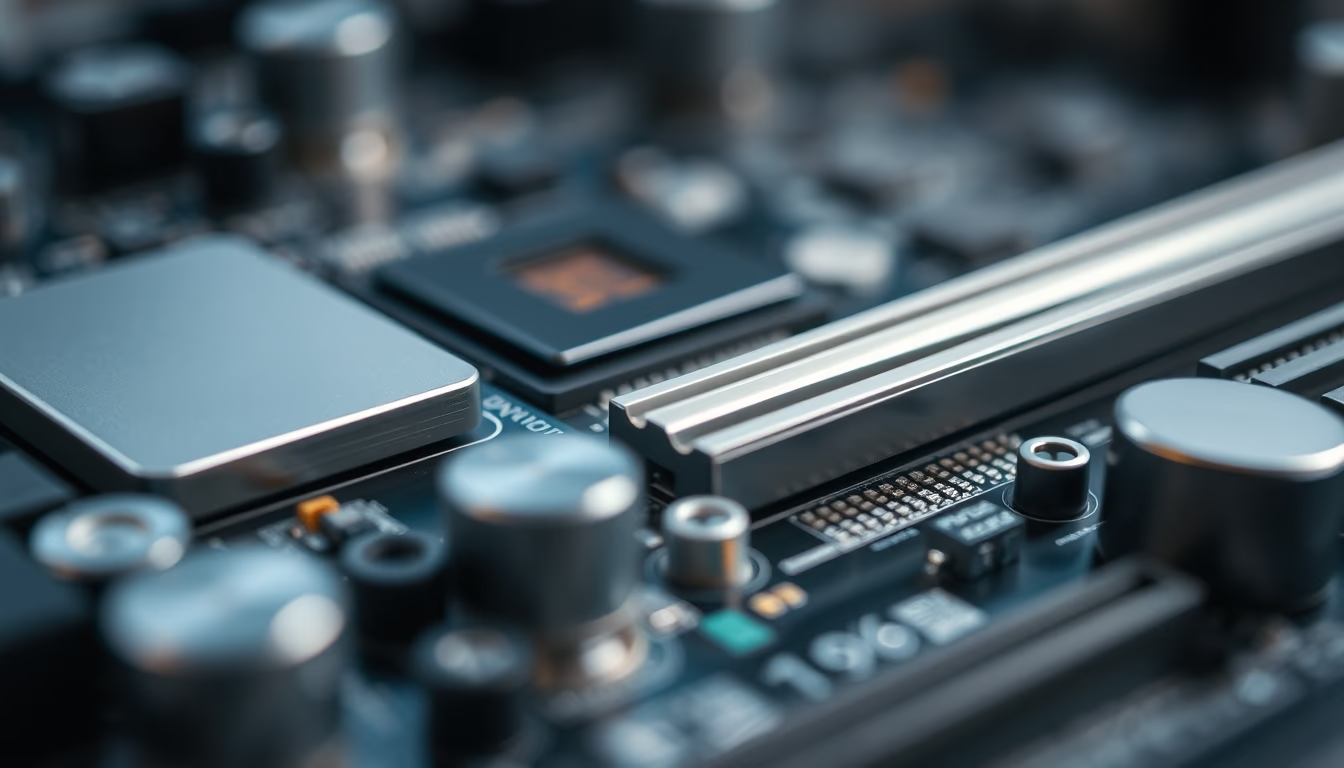
Placa-mãe ATX: o padrão dominante em desktops, com slots de expansão, conectores e circuitos que definem a arquitetura do computador.
Sobre o tema
A placa-mãe ATX (Advanced Technology Extended) é um formato introduzido pela Intel em 1995 para substituir o padrão AT. Com dimensões de 305 mm x 244 mm, ela se tornou o padrão mais comum em computadores desktop. O layout ATX posiciona o soquete da CPU próximo aos conectores de alimentação e memória, otimizando o roteamento de trilhas e a dissipação de calor.
Os componentes visíveis em um detalhe de placa-mãe ATX incluem capacitores eletrolíticos e sólidos, reguladores de tensão (VRM), slots PCIe, soquetes de memória RAM e o chipset. Cada trilha de cobre no PCB é projetada para minimizar interferências eletromagnéticas e garantir integridade de sinal em altas frequências. A alimentação principal é fornecida por um conector de 24 pinos (antigamente 20 pinos), enquanto a CPU recebe energia adicional via conectores de 4 ou 8 pinos.
A evolução das placas-mãe ATX acompanhou o aumento de consumo energético e a necessidade de interfaces mais rápidas. Modelos modernos incluem suporte a PCIe 5.0, DDR5 e USB-C Thunderbolt. O formato ATX também permitiu a padronização de gabinetes e fontes, favorecendo a compatibilidade entre fabricantes. Apesar do surgimento de padrões menores como Micro-ATX e Mini-ITX, a ATX continua sendo a escolha para máquinas de alto desempenho, estações de trabalho e servidores de entrada.
Curiosamente, o nome Advanced Technology Extended remete à arquitetura IBM PC/AT, mas a implementação Intel trouxe inovações como o conector de painel frontal simplificado e a remoção de jumpers para configuração de CPU. Hoje, as placas-mãe contam com sensores térmicos, controladores RGB e BIOS UEFI com interface gráfica.
Perguntas frequentes
O que significa ATX em uma placa-mãe?
ATX significa Advanced Technology Extended, um padrão de formato de placa-mãe criado pela Intel em 1995. Ele define dimensões, posicionamento de componentes e conectores para garantir compatibilidade entre gabinetes e fontes de alimentação.
Quais as dimensões de uma placa-mãe ATX?
Uma placa-mãe ATX tem 305 mm de largura por 244 mm de altura (12 x 9,6 polegadas). É maior que Micro-ATX (244 x 244 mm) e Mini-ITX (170 x 170 mm).
Qual a diferença entre ATX e Micro-ATX?
A principal diferença é o tamanho e o número de slots de expansão. ATX padrão tem 7 slots PCIe, enquanto Micro-ATX tem 4. Micro-ATX é menor e mais barato, mas com menos portas e capacidade de upgrade.
URL direta
https://pub-c7d6a6ea828543ac903a74a341ccb2e1.r2.dev/imagens/motherboard-atx-detail-macro-closeup-p10.avifComo creditar
Inclua um link visível de volta pro UtilizAí. Copie um dos snippets abaixo:
<a href="https://xn--utiliza-eza.com/midia/imagens/motherboard-atx-detail-macro-closeup-p10">Motherboard atx detail</a> by <a href="https://xn--utiliza-eza.com">UtilizAí</a>, licensed under <a href="https://creativecommons.org/licenses/by/4.0/">CC BY 4.0</a>.
[Motherboard atx detail](https://xn--utiliza-eza.com/midia/imagens/motherboard-atx-detail-macro-closeup-p10) by [UtilizAí](https://xn--utiliza-eza.com), CC BY 4.0
Licença: CC-BY-4.0