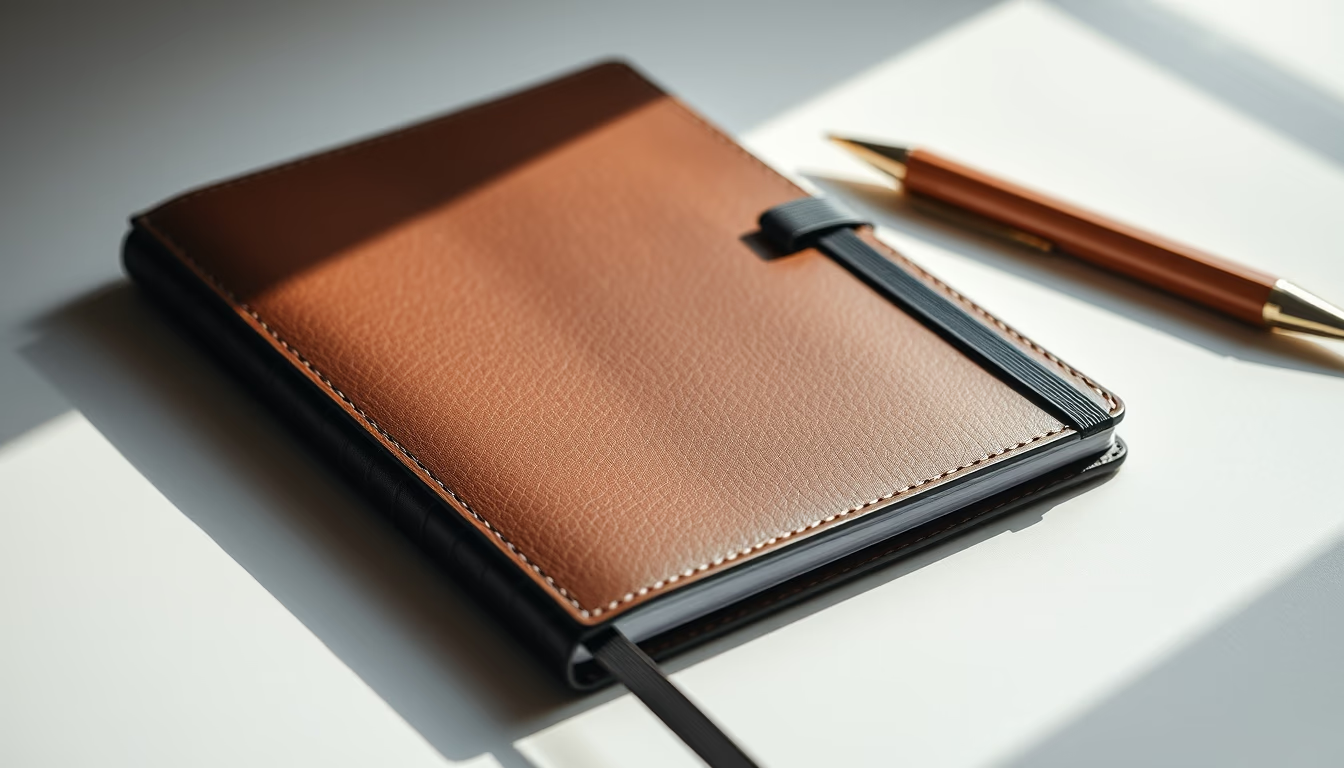
Moleskine notebook leather
1344×768 · AVIF · CC BY 4.0
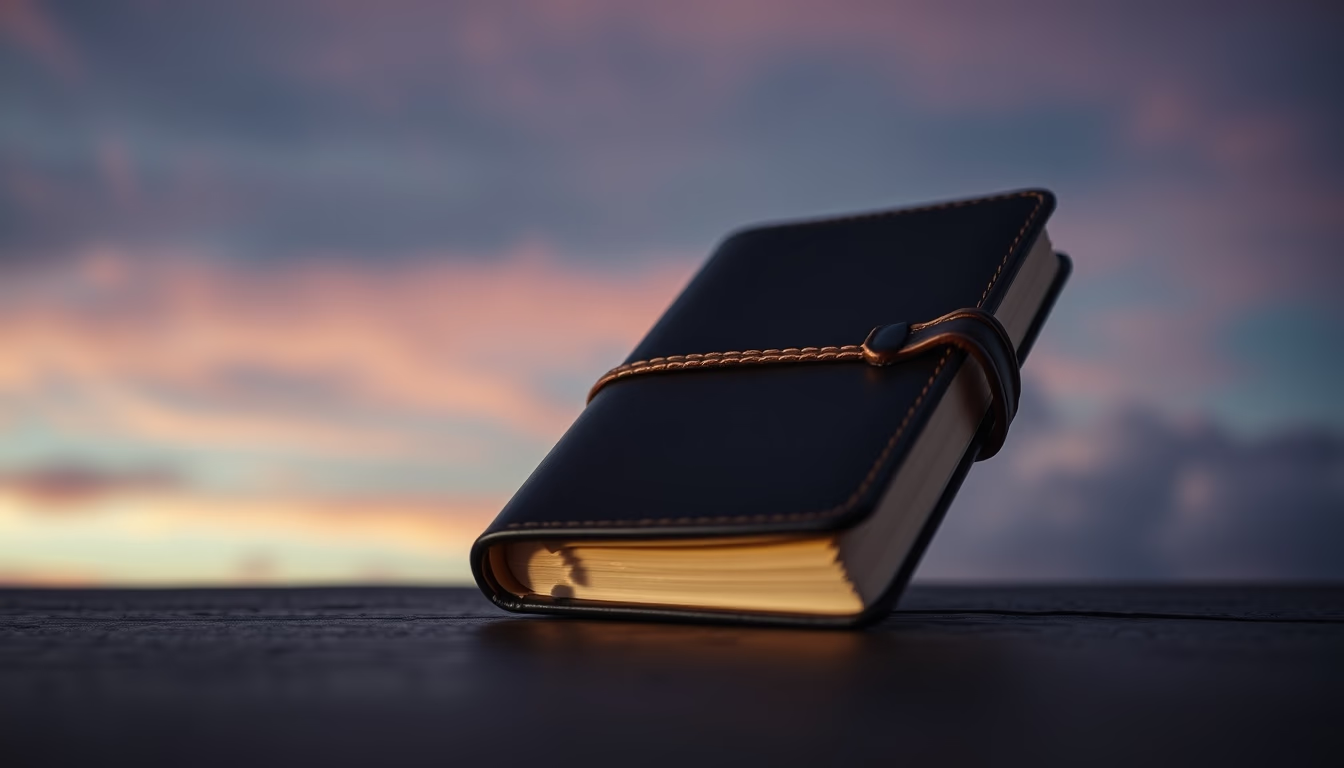
The leather-bound Moleskine notebook is an icon of functional design, associated with traveling writers and creative culture since the 19th century.
About this subject
The Moleskine notebook traces its origins to small French bookbinders of the late 19th century, who produced hardcover notebooks with an elastic closure. These notebooks were popular among artists and intellectuals, such as Vincent van Gogh and Pablo Picasso, who used them for sketches and notes. Original production ceased in the 1950s, but the brand was relaunched in 1997 by a Milanese company, retaining the classic design: black leather cover, visible stitching, inner pocket, and ribbon bookmark. The format is inspired by the notebooks used by 19th-century travelers, who needed a durable and portable support to record their journeys. Today, Moleskine produces a vast range of notebooks and accessories, maintaining its association with creativity and nomadic life. The leather cover is not just aesthetic: it protects the pages and provides durability, ideal for heavy daily use. The brand also uses acid-free paper that resists yellowing, preserving notes for decades. Despite being a global product, Moleskine has become a status symbol among creative professionals, writers, and students, often seen as an essential item for those who value handwriting in a digital world.
Frequently Asked Questions
What is the origin of the Moleskine notebook?
The original Moleskine was produced by small French bookbinders in the late 19th century. It became popular among artists like Van Gogh and Picasso, but production ceased in the 1950s. The brand was relaunched in 1997 by a Milanese company in Italy.
Is the leather Moleskine made of genuine leather?
Yes, the cover of classic Moleskine notebooks is made of genuine leather, usually calf or cowhide. The brand also offers versions in other materials, such as coated cardboard, but the traditional model uses leather.
Is Moleskine paper suitable for fountain pens?
It depends on the weight. Standard Moleskine uses 70 g/m² paper, which may cause bleed-through with very liquid inks. For fountain pens, the 'Moleskine Cahier' line with 90 g/m² or special editions with thicker paper are recommended.
Direct URL
https://pub-c7d6a6ea828543ac903a74a341ccb2e1.r2.dev/imagens/moleskine-notebook-leather-long-exposure-fresh8.avifHow to credit
Include a visible link back to UtilizAí. Copy one of the snippets below:
<a href="https://xn--utiliza-eza.com/en/midia/imagens/moleskine-notebook-leather-long-exposure-fresh8">Moleskine notebook leather</a> by <a href="https://xn--utiliza-eza.com">UtilizAí</a>, licensed under <a href="https://creativecommons.org/licenses/by/4.0/">CC BY 4.0</a>.
[Moleskine notebook leather](https://xn--utiliza-eza.com/en/midia/imagens/moleskine-notebook-leather-long-exposure-fresh8) by [UtilizAí](https://xn--utiliza-eza.com), CC BY 4.0
License: CC-BY-4.0