Minimalist japanese house
1344×768 · AVIF · CC BY 4.0
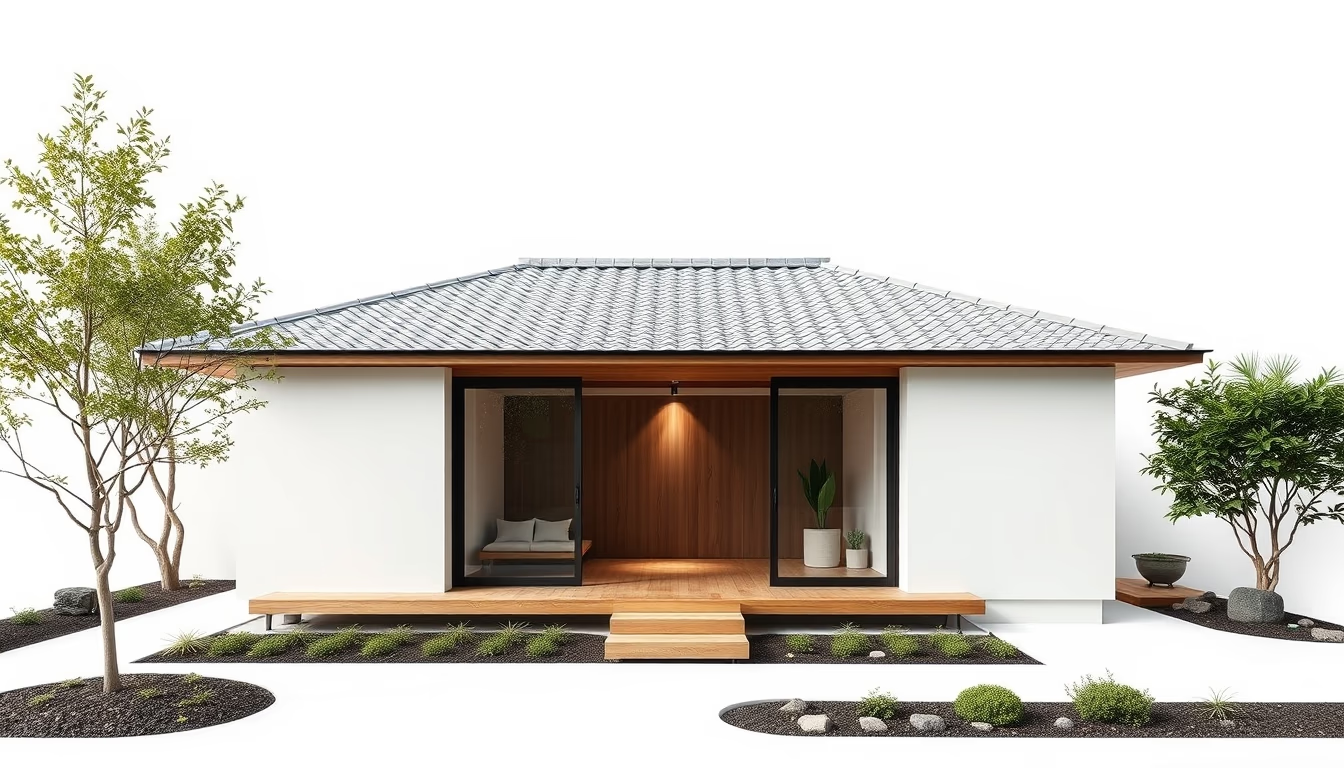
Casas japonesas minimalistas combinam simplicidade funcional com elementos tradicionais, criando espaços serenos e integrados à natureza.
Sobre o tema
A arquitetura minimalista japonesa, conhecida como "minka" ou "sukiya-zukuri" em suas vertentes, tem raízes profundas no conceito estético do "ma", o vazio significativo que valoriza o espaço negativo. Diferente do minimalismo ocidental, que muitas vezes privilegia formas geométricas puras, o minimalismo japonês incorpora materiais naturais como madeira, papel de arroz (washi) e pedra, além de elementos como o genkan (entrada recuada) e o engawa (varanda coberta que conecta interior e exterior). Um exemplo emblemático é a Casa Tóquio de Ryue Nishizawa, que explora a transparência e a fluidez dos ambientes.
Casas tradicionais japonesas priorizam a relação com o jardim. O uso de portas deslizantes (shoji e fusuma) permite reconfigurar os cômodos, adaptando-os a diferentes usos ao longo do dia. A iluminação difusa e a paleta de cores neutras, tons de bege, marrom, cinza e verde musgo, reforçam a sensação de calma. Tatames modulares (medida padrão de 1,82 m) e nichos decorativos (tokonoma) são características que persistem mesmo em projetos contemporâneos.
Atualmente, arquitetos como Kengo Kuma e Tadao Ando reinterpretam esses princípios com concreto aparente e vidro, mas mantendo a essência: simplicidade, uso de luz natural e integração com a paisagem. A casa minimalista japonesa não é apenas estética; reflete valores culturais como o wabi-sabi (beleza na imperfeição) e o mottainai (avesso ao desperdício). Mesmo em áreas urbanas densas, soluções como pátios internos e jardins zen minimizam o impacto visual e maximizam a sensação de amplitude.
Perguntas frequentes
O que caracteriza uma casa japonesa minimalista?
Ela prioriza linhas simples, materiais naturais (madeira, papel, pedra), espaços abertos e integração com a natureza. Elementos como tatames, portas deslizantes e jardins internos são comuns.
Qual a diferença entre minimalismo japonês e ocidental?
O minimalismo japonês valoriza o vazio (ma) e a imperfeição (wabi-sabi), usando tons naturais e texturas. O ocidental tende a formas geométricas e cores neutras mais artificiais.
Quais arquitetos são referência em casas japonesas minimalistas?
Tadao Ando, Kengo Kuma, Ryue Nishizawa e Shigeru Ban são expoentes que combinam tradição e modernidade em projetos residenciais no Japão e no mundo.
URL direta
https://pub-c7d6a6ea828543ac903a74a341ccb2e1.r2.dev/imagens/minimalist-japanese-house-commercial-product-photography-p2.avifComo creditar
Inclua um link visível de volta pro UtilizAí. Copie um dos snippets abaixo:
<a href="https://xn--utiliza-eza.com/midia/imagens/minimalist-japanese-house-commercial-product-photography-p2">Minimalist japanese house</a> by <a href="https://xn--utiliza-eza.com">UtilizAí</a>, licensed under <a href="https://creativecommons.org/licenses/by/4.0/">CC BY 4.0</a>.
[Minimalist japanese house](https://xn--utiliza-eza.com/midia/imagens/minimalist-japanese-house-commercial-product-photography-p2) by [UtilizAí](https://xn--utiliza-eza.com), CC BY 4.0
Licença: CC-BY-4.0