Mercury surface craters
1344×768 · AVIF · CC BY 4.0
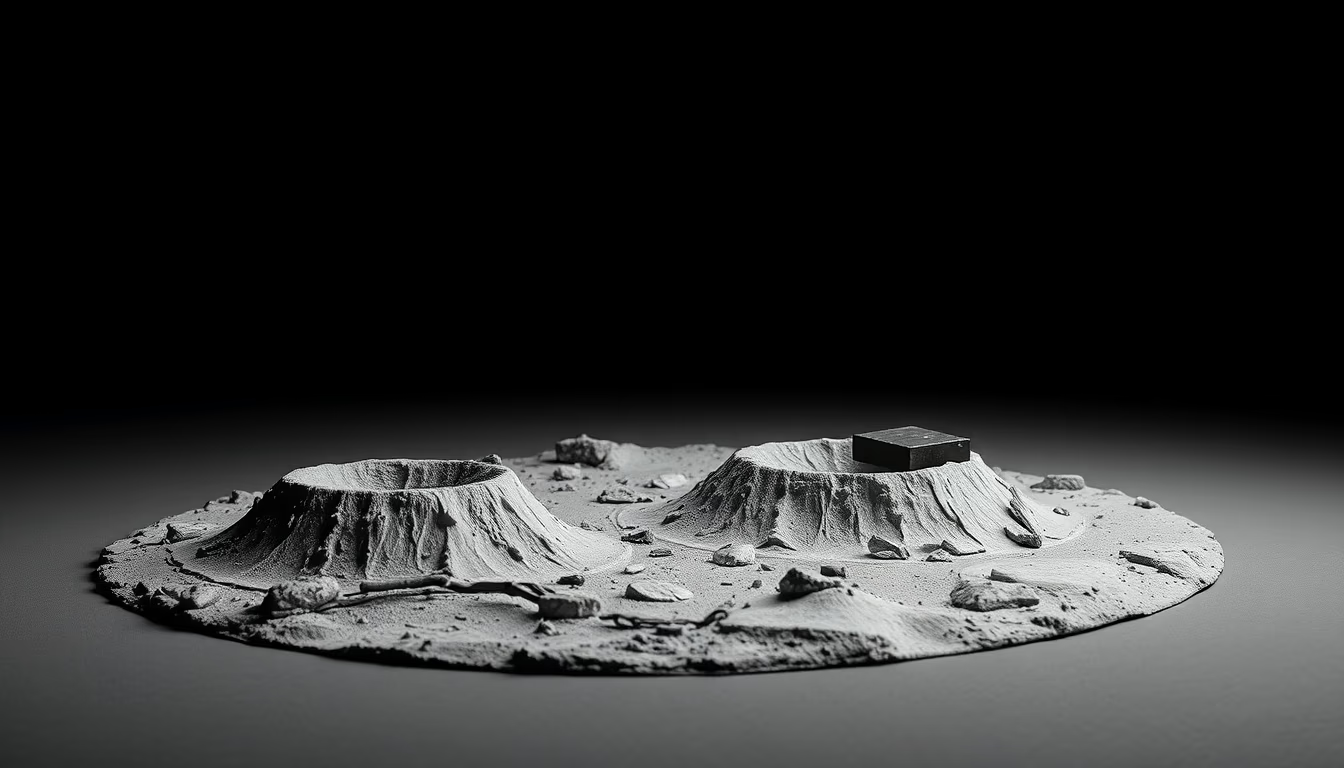
The craters on Mercury's surface reveal billions of years of impacts, offering essential clues about the geological history of the closest planet to the Sun.
About this subject
Mercury's surface, the smallest planet in the Solar System and the closest to the Sun, is densely covered with impact craters, the result of billions of years of bombardment by asteroids and comets. Unlike the Moon, Mercury's craters exhibit unique features due to its relatively high surface gravity (0.38 g) and negligible atmosphere. The craters range from simple small bowls to enormous structures like the Caloris Basin, about 1,550 km in diameter, one of the largest impact basins in the Solar System. This basin was formed by a colossal impact and later filled with lava, creating smooth plains known as volcanic plains.
The crater density on Mercury allows scientists to date different surface regions. Older areas, such as the highlands, have more craters, while younger volcanic plains are less cratered. The surface is estimated to be about 4 billion years old, with intense bombardment occurring early in Solar System history. Interestingly, Mercury has 'ghost craters', ancient impact structures that have been filled by lava but are still visible as faint rings. This indicates a complex history of volcanism and tectonism.
Unlike the Moon, Mercury's craters have sharper rims and less degradation due to the absence of water or wind erosion. NASA's MESSENGER mission (2011, 2015) mapped the entire surface and discovered unusual features like shallow 'hollows', possibly formed by sublimation of volatile minerals. Additionally, the planet undergoes global contraction, resulting in thrust scarps that cut across craters, highlighting internal geological dynamics. Studying Mercury's craters is key to understanding the evolution of rocky planets and the bombardment history of the inner Solar System.
Frequently Asked Questions
Why does Mercury have so many craters?
Mercury's surface is very old, about 4 billion years, and it has virtually no atmosphere to break up asteroids and comets. This results in a nearly complete record of impacts since the formation of the Solar System.
What is the largest crater on Mercury?
The largest crater is the Caloris Basin, approximately 1,550 km in diameter. It was formed by a massive impact and later filled with lava, creating a large smooth plain.
How do Mercury's craters differ from those on the Moon?
Mercury's craters generally have sharper rims and are less degraded because there is no erosion by water or wind. Additionally, Mercury has 'hollows' (shallow depressions) not found on the Moon, likely due to sublimation of volatile minerals.
Direct URL
https://pub-c7d6a6ea828543ac903a74a341ccb2e1.r2.dev/imagens/mercury-surface-craters-studio-still-life-p0.avifHow to credit
Include a visible link back to UtilizAí. Copy one of the snippets below:
<a href="https://xn--utiliza-eza.com/en/midia/imagens/mercury-surface-craters-studio-still-life-p0">Mercury surface craters</a> by <a href="https://xn--utiliza-eza.com">UtilizAí</a>, licensed under <a href="https://creativecommons.org/licenses/by/4.0/">CC BY 4.0</a>.
[Mercury surface craters](https://xn--utiliza-eza.com/en/midia/imagens/mercury-surface-craters-studio-still-life-p0) by [UtilizAí](https://xn--utiliza-eza.com), CC BY 4.0
License: CC-BY-4.0