Meeting room glass
1344×768 · AVIF · CC BY 4.0
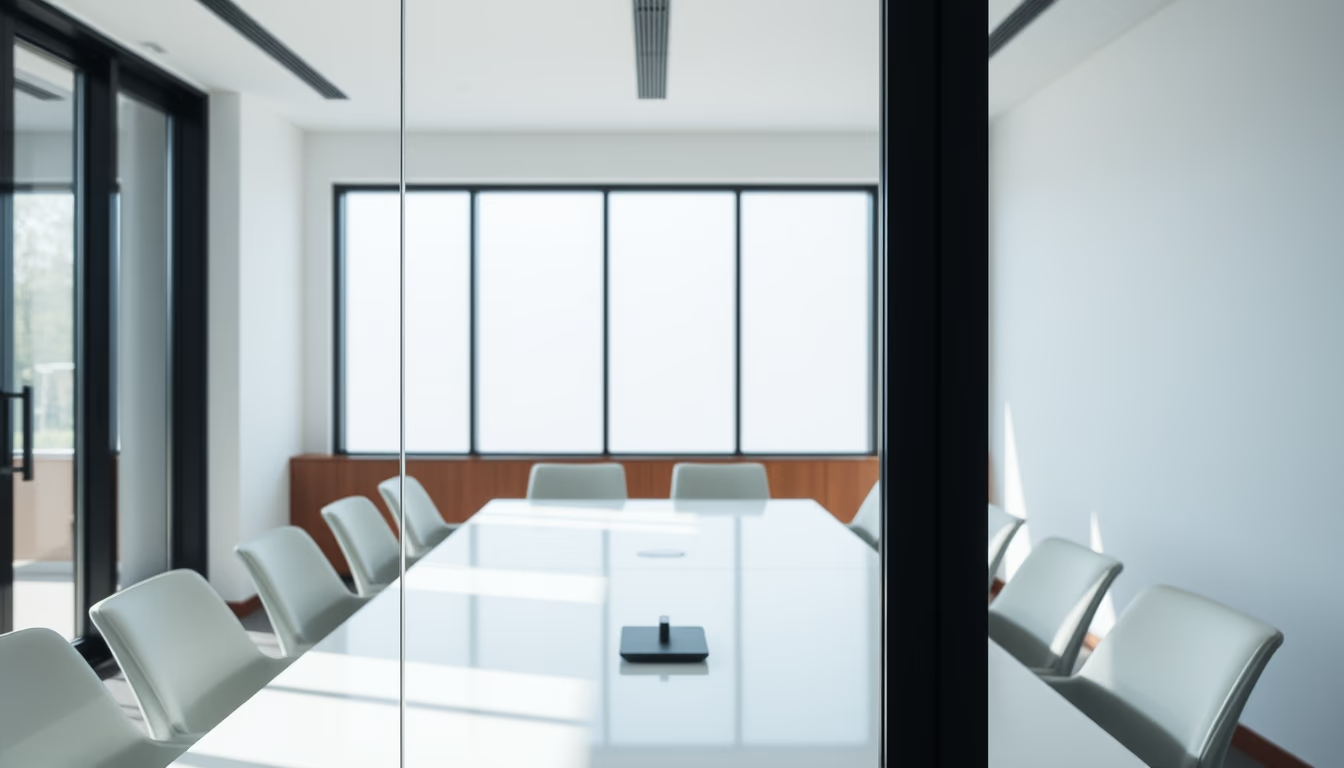
Glass-walled meeting rooms are icons of modern corporate architecture, offering visual transparency and controlled acoustics.
About this subject
Glass-walled meeting rooms have become a standard in contemporary offices, especially from the 2010s onward, driven by the open space concept and the need for natural light. Unlike opaque partitions, glass allows light to flow through the environment, reducing electricity consumption and improving employee well-being. Studies from Harvard Business Review indicate that exposure to natural light can increase productivity by up to 15%.
Acoustics are managed with laminated or double glazing, which can block up to 40 dB of noise. Many rooms feature adhesive films for privacy, switching to opaque with an electric switch (smart glass technology), or internal blinds. In Brazilian offices, such as those in tech hubs in São Paulo and Campinas, 12 mm tempered glass is common, paired with silicone structural glazing systems.
Culturally, transparency symbolizes open and collaborative management, contrasting with old closed offices. Companies like Google and Nubank have adopted this design to reinforce values of transparency and innovation. Additionally, glass rooms facilitate visual security oversight and allow teams to see if a room is occupied without interrupting a meeting.
Technically, the glass used is float, laminated, or tempered, with thickness between 8 and 16 mm. For acoustic insulation, double glazing (6 mm + 6 mm air gap + 6 mm) is used. Smart glass uses liquid crystals or suspended particles that align with electric current, altering transparency. This technology is becoming more affordable and is expected to be a trend in 2026, according to interior design reports.
Frequently Asked Questions
How does smart glass work in meeting rooms?
Smart glass uses liquid crystals or suspended particles that align with an electric current, making the glass transparent. When the current is turned off, the particles scatter and the glass becomes opaque, providing instant privacy without curtains or blinds.
What is the ideal glass thickness for sound insulation in meeting rooms?
For good sound insulation, double glazing with 6 mm panes and a 6 mm air gap (total about 18 mm) is recommended. This setup reduces external noise by an average of 35 to 40 dB.
What are the advantages of glass rooms over traditional walls?
Main advantages include: more natural light, sense of spaciousness, lower electricity costs, easier visual supervision, and conveying a transparent, collaborative organizational culture.
Direct URL
https://pub-c7d6a6ea828543ac903a74a341ccb2e1.r2.dev/imagens/meeting-room-glass-minimalist-composition-p1.avifHow to credit
Include a visible link back to UtilizAí. Copy one of the snippets below:
<a href="https://xn--utiliza-eza.com/en/midia/imagens/meeting-room-glass-minimalist-composition-p1">Meeting room glass</a> by <a href="https://xn--utiliza-eza.com">UtilizAí</a>, licensed under <a href="https://creativecommons.org/licenses/by/4.0/">CC BY 4.0</a>.
[Meeting room glass](https://xn--utiliza-eza.com/en/midia/imagens/meeting-room-glass-minimalist-composition-p1) by [UtilizAí](https://xn--utiliza-eza.com), CC BY 4.0
License: CC-BY-4.0