Maya temple chichen
1344×768 · AVIF · CC BY 4.0
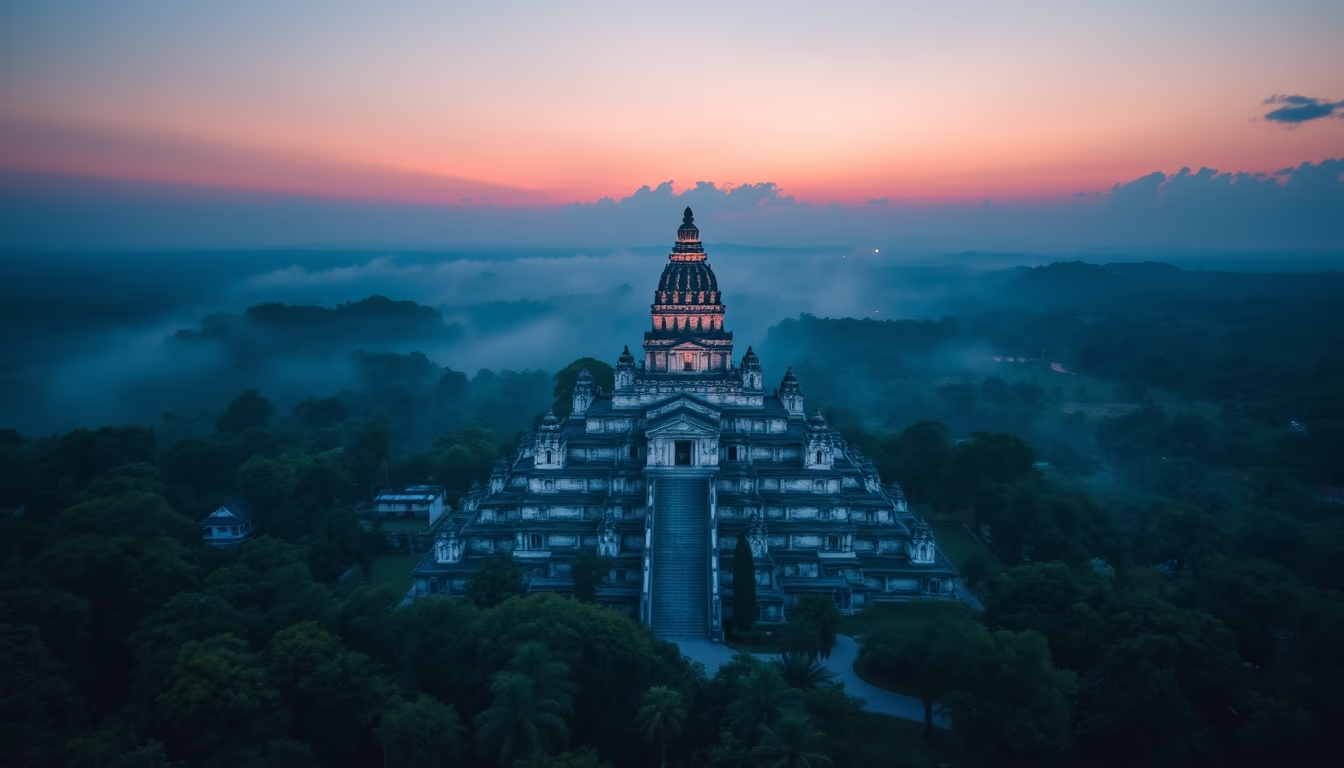
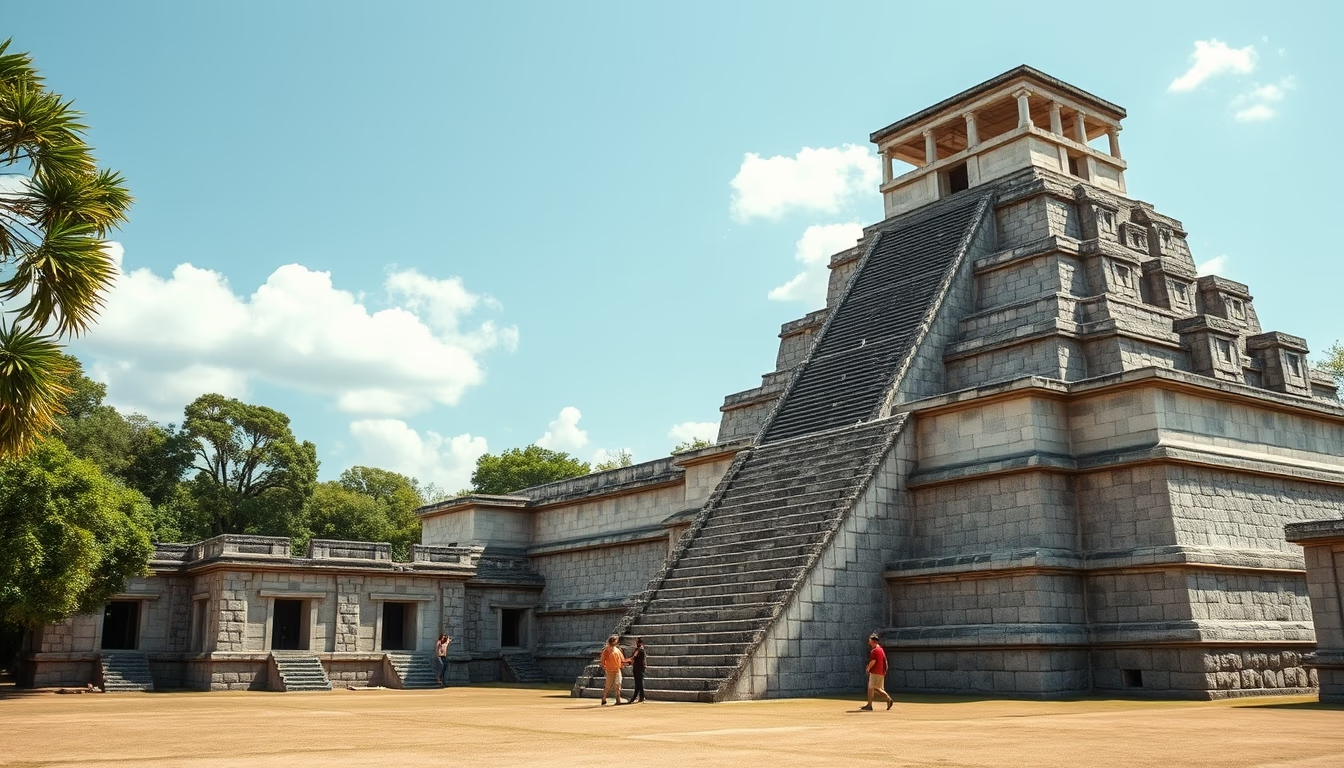
The Maya temple of Chichen Itza in Mexico is one of the most emblematic archaeological sites of the Maya civilization, known for the Pyramid of Kukulcán.
About this subject
Chichen Itza, located on the Yucatán Peninsula in Mexico, was one of the largest cities of the Maya civilization, flourishing between the 7th and 10th centuries AD. The site, declared a UNESCO World Heritage Site in 1988, is dominated by the Pyramid of Kukulcán, also known as El Castillo. This 30-meter-high structure has 365 steps, representing the days of the solar year, and was built atop an earlier pyramid, showcasing advanced architectural techniques.
One of the most striking phenomena occurs during the spring and fall equinoxes, when sunlight casts shadows forming the body of a serpent descending the northern staircase, symbolizing the god Kukulcán. This effect, combined with the site's unique acoustics, demonstrates the deep astronomical and mathematical knowledge of the Maya. Besides El Castillo, the site includes the Temple of the Warriors, the Observatory (Caracol), and the best-preserved ball court in Mesoamerica.
Chichen Itza was a political, religious, and commercial center that influenced the entire Maya region. Its architecture blends Puuc and Toltec styles, reflecting cultural exchanges with other civilizations. The city was abandoned around the 13th century, and the reasons are still debated by archaeologists, possibly including severe droughts and internal conflicts. Today, it is one of Mexico's most visited tourist destinations, receiving millions of visitors annually who seek to understand the Maya legacy.
Frequently Asked Questions
What is the importance of Chichen Itza in the Maya civilization?
Chichen Itza was a crucial political, religious, and commercial center, influencing the entire Maya region with its architecture, astronomical knowledge, and cultural exchanges with other Mesoamerican civilizations.
How does the light and shadow effect work on the Pyramid of Kukulcán?
During the spring and fall equinoxes, sunlight casts shadows that form the body of a serpent descending the northern staircase, representing the god Kukulcán. The phenomenon lasts about 45 minutes and attracts thousands of visitors.
When was Chichen Itza built and by whom?
The city was built by the Maya between the 7th and 10th centuries AD, with later Toltec influences. The Pyramid of Kukulcán likely dates to the 12th century, during the Maya Postclassic period.
Direct URL
https://pub-c7d6a6ea828543ac903a74a341ccb2e1.r2.dev/imagens/maya-temple-chichen-aerial-drone-shot-p9.avifHow to credit
Include a visible link back to UtilizAí. Copy one of the snippets below:
<a href="https://xn--utiliza-eza.com/en/midia/imagens/maya-temple-chichen-aerial-drone-shot-p9">Maya temple chichen</a> by <a href="https://xn--utiliza-eza.com">UtilizAí</a>, licensed under <a href="https://creativecommons.org/licenses/by/4.0/">CC BY 4.0</a>.
[Maya temple chichen](https://xn--utiliza-eza.com/en/midia/imagens/maya-temple-chichen-aerial-drone-shot-p9) by [UtilizAí](https://xn--utiliza-eza.com), CC BY 4.0
License: CC-BY-4.0