Mars surface red dust
1344×768 · AVIF · CC BY 4.0
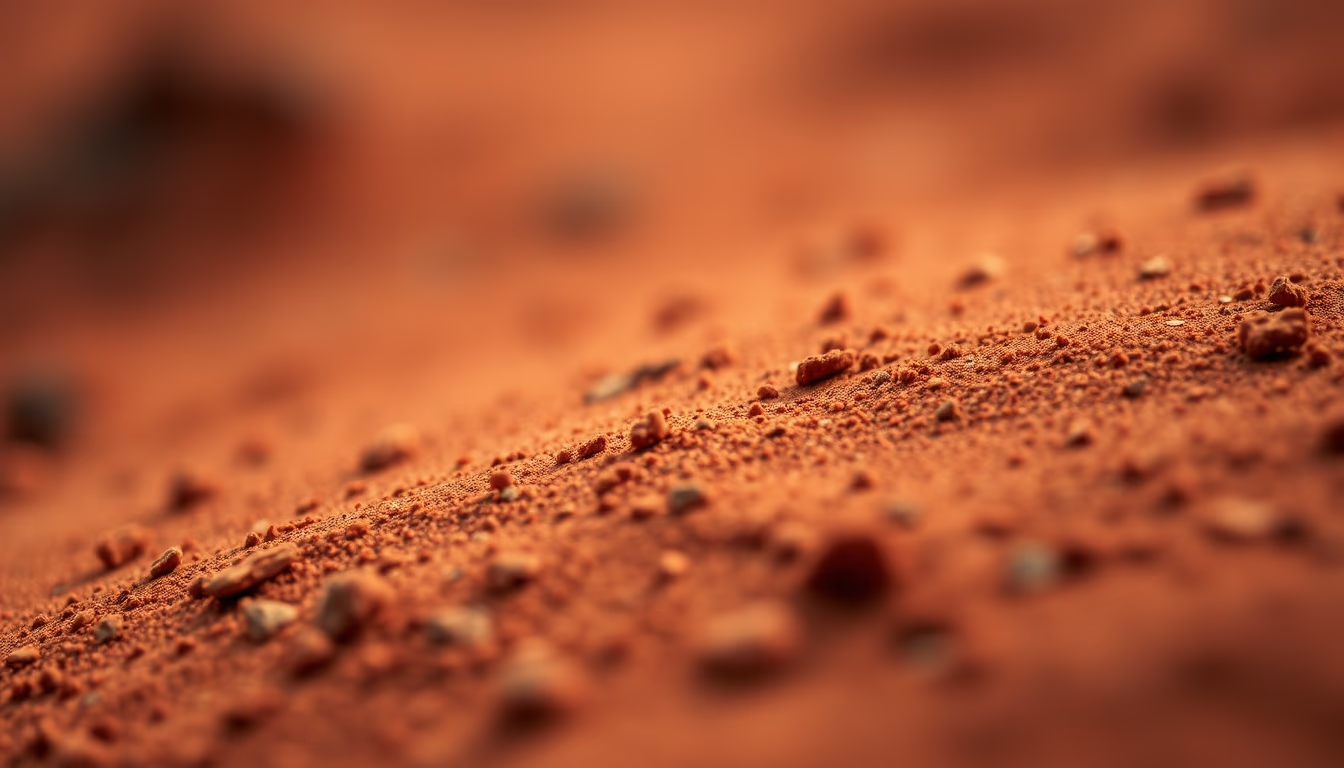
The surface of Mars is covered by dust rich in iron oxide, giving the planet its iconic reddish hue.
About this subject
The dust covering the surface of Mars is primarily composed of eroded basaltic minerals and iron oxides, especially hematite and magnetite. This composition results from billions of years of chemical and mechanical weathering, without the action of liquid water on a large scale. The presence of oxidized iron gives not only the reddish color but also subtle magnetic properties to the Martian regolith.
The fine dust, with grains of micrometer size, is easily suspended by Mars's thin atmosphere. Global dust storms, which can last for weeks, are common phenomena and dramatically alter the planet's appearance. These storms pose a challenge for robotic missions, as dust can cover solar panels and damage mechanical components, as seen with the rovers Opportunity and Spirit.
Spectroscopic studies indicate that Martian dust contains perchlorates, compounds that lower the freezing point of water and can be toxic to terrestrial microorganisms. However, the dust also preserves records of Mars's geological history, including evidence of ancient lakes and rivers. Samples collected by rovers like Perseverance are being analyzed for signs of past life.
The reddish color is not uniform: areas with fresh basalt or volcanic sand may appear darker or grayish. The dust also varies in composition with altitude and latitude, reflecting different surface alteration processes. Understanding the distribution and composition of Martian dust is essential for planning future crewed missions, as astronauts will have to deal with its inhalation and adhesion to equipment.
Frequently Asked Questions
Why is the dust on Mars red?
Martian dust is red due to the high content of iron oxide, mainly hematite. This mineral forms from the oxidation of basaltic rocks over billions of years, without abundant liquid water interference.
Is Martian dust dangerous for astronauts?
Yes, Martian dust contains perchlorates and very fine particles that can be harmful if inhaled. It is also abrasive and can damage equipment. Future missions will need efficient filtering and cleaning systems.
How do rovers deal with dust on Mars?
Rovers have solar panels with special coatings to reduce dust accumulation. Some, like Opportunity, survived dust storms that reduced power generation. The Perseverance rover uses a nuclear power source (RTG) to avoid this issue.
Direct URL
https://pub-c7d6a6ea828543ac903a74a341ccb2e1.r2.dev/imagens/mars-surface-red-dust-macro-closeup-p7.avifHow to credit
Include a visible link back to UtilizAí. Copy one of the snippets below:
<a href="https://xn--utiliza-eza.com/en/midia/imagens/mars-surface-red-dust-macro-closeup-p7">Mars surface red dust</a> by <a href="https://xn--utiliza-eza.com">UtilizAí</a>, licensed under <a href="https://creativecommons.org/licenses/by/4.0/">CC BY 4.0</a>.
[Mars surface red dust](https://xn--utiliza-eza.com/en/midia/imagens/mars-surface-red-dust-macro-closeup-p7) by [UtilizAí](https://xn--utiliza-eza.com), CC BY 4.0
License: CC-BY-4.0