Mars surface red dust
1344×768 · AVIF · CC BY 4.0
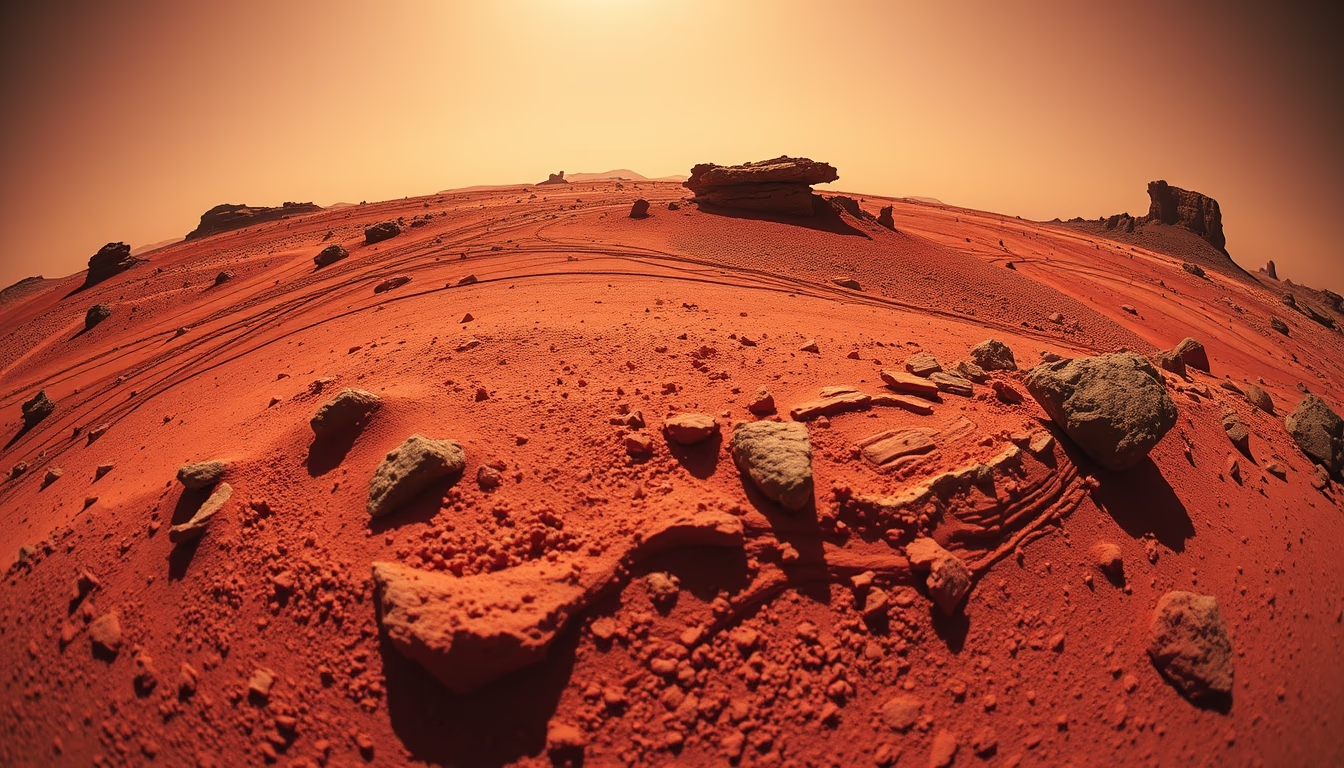
The Martian surface is covered by reddish dust rich in iron oxide, the result of billions of years of erosion and oxidation.
About this subject
Mars' characteristic red color, earning it the nickname Red Planet, comes from widespread dust composed mainly of iron oxide (rust) and other minerals. This dust covers almost the entire surface, forming a fine regolith that can reach several meters in depth. The oxidation process occurred over geological eons, as iron in volcanic rocks reacted with oxygen and water, even if scarce, creating the reddish hue.
Global dust storms are common on Mars, especially during spring and summer in the southern hemisphere. They can envelop the entire planet for weeks or months, temporarily altering the atmosphere and visibility. The dust is so fine that it remains suspended in the air for long periods, contributing to the color of the Martian sky, which sometimes appears pinkish or orange.
For exploration missions, such as the Perseverance and Curiosity rovers, dust poses a dual challenge. It accumulates on solar panels, reducing power generation capacity, and can damage sensitive instruments. On the other hand, studying the dust helps scientists understand the planet's climatic and geological history, including the possibility of liquid water in the past.
Compared to Earth dust, Martian dust is finer and highly electrostatic, clinging to surfaces like suits and equipment. Future crewed missions will need advanced filtration systems to prevent inhalation, as iron oxide particles can be harmful to human lungs.
Frequently Asked Questions
Why is Mars red?
Mars is red due to the abundance of iron oxide, or rust, in its surface dust and rocks. This oxidation process occurred over billions of years.
How do dust storms affect rovers?
Dust storms can cover rover solar panels, reducing power generation. Additionally, fine particles can infiltrate mechanical and electronic components, requiring robust designs.
Is Martian dust dangerous for astronauts?
Yes, Martian dust contains fine particles of iron oxide and other minerals that, if inhaled, can cause respiratory issues. It is also abrasive and can damage equipment.
Direct URL
https://pub-c7d6a6ea828543ac903a74a341ccb2e1.r2.dev/imagens/mars-surface-red-dust-fish-eye-wide-angle-p1.avifHow to credit
Include a visible link back to UtilizAí. Copy one of the snippets below:
<a href="https://xn--utiliza-eza.com/en/midia/imagens/mars-surface-red-dust-fish-eye-wide-angle-p1">Mars surface red dust</a> by <a href="https://xn--utiliza-eza.com">UtilizAí</a>, licensed under <a href="https://creativecommons.org/licenses/by/4.0/">CC BY 4.0</a>.
[Mars surface red dust](https://xn--utiliza-eza.com/en/midia/imagens/mars-surface-red-dust-fish-eye-wide-angle-p1) by [UtilizAí](https://xn--utiliza-eza.com), CC BY 4.0
License: CC-BY-4.0