Maritime signal flags
1344×768 · AVIF · CC BY 4.0
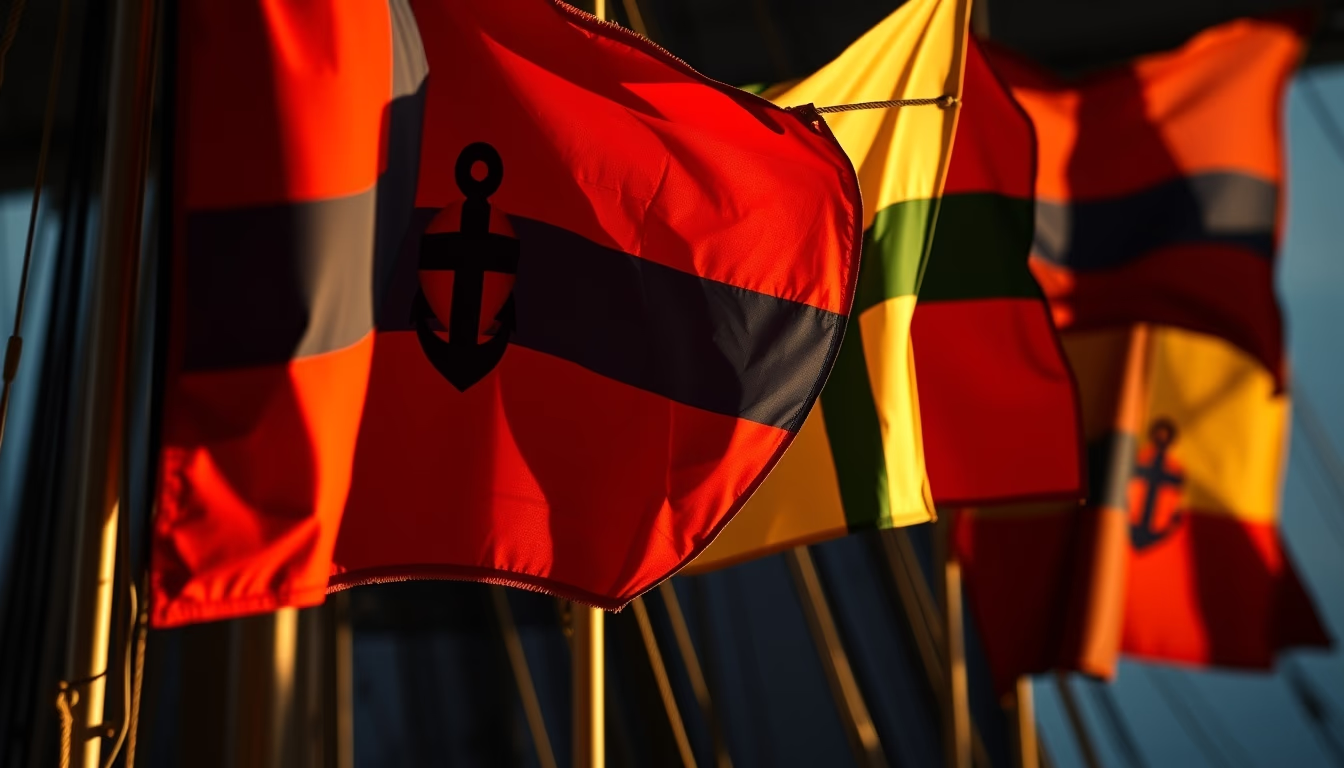
Maritime signal flags are part of the International Code of Signals, used for communication between ships and coastal stations.
About this subject
Maritime signal flags form the International Code of Signals (ICS), established in 1855 and standardized in 1931 by the International Maritime Organization. Each of the 26 letter flags represents a letter, while 10 numeral pennants indicate digits. Additional flags include three substitute flags and the answering pennant. Entire messages are conveyed through combinations of two, three, or four flags, each combination carrying a specific meaning in the code.
Historically, this system replaced local and private codes, enabling standardized communication between vessels of different nationalities. During the Age of Discovery, flags were already used for identification, but the modern code consolidated rules. Naval ships still use the system for maneuvers, such as signaling danger or need for medical assistance. For instance, the 'N' flag (blue and white checkered) combined with 'C' forms the signal for 'distress'.
Interestingly, the code also influences popular culture: the 'O' and 'S' combination (Alfa and Oscar) means 'man overboard' in nautical contexts. Beyond practical use, signal flags decorate nautical spaces and are used in yacht racing to indicate positions and warnings. The system remains relevant even with radio and satellite, as it requires no electrical power and is globally understood.
Frequently Asked Questions
How many flags make up the International Code of Signals?
The code has 26 letter flags, 10 numeral pennants, 3 substitute flags, and 1 answering pennant, totaling 40 signals.
How are flags used to form messages?
Flags are hoisted in combinations of two, three, or four. Each combination has a specific meaning in the code, representing words, phrases, or instructions.
Is the code still in use today?
Yes, especially by naval forces, merchant ships, and in yacht racing. It is also used for emergency communication when electrical systems fail.
Direct URL
https://pub-c7d6a6ea828543ac903a74a341ccb2e1.r2.dev/imagens/maritime-signal-flags-rembrandt-lighting-dramatic-shadows-fresh15.avifHow to credit
Include a visible link back to UtilizAí. Copy one of the snippets below:
<a href="https://xn--utiliza-eza.com/en/midia/imagens/maritime-signal-flags-rembrandt-lighting-dramatic-shadows-fresh15">Maritime signal flags</a> by <a href="https://xn--utiliza-eza.com">UtilizAí</a>, licensed under <a href="https://creativecommons.org/licenses/by/4.0/">CC BY 4.0</a>.
[Maritime signal flags](https://xn--utiliza-eza.com/en/midia/imagens/maritime-signal-flags-rembrandt-lighting-dramatic-shadows-fresh15) by [UtilizAí](https://xn--utiliza-eza.com), CC BY 4.0
License: CC-BY-4.0