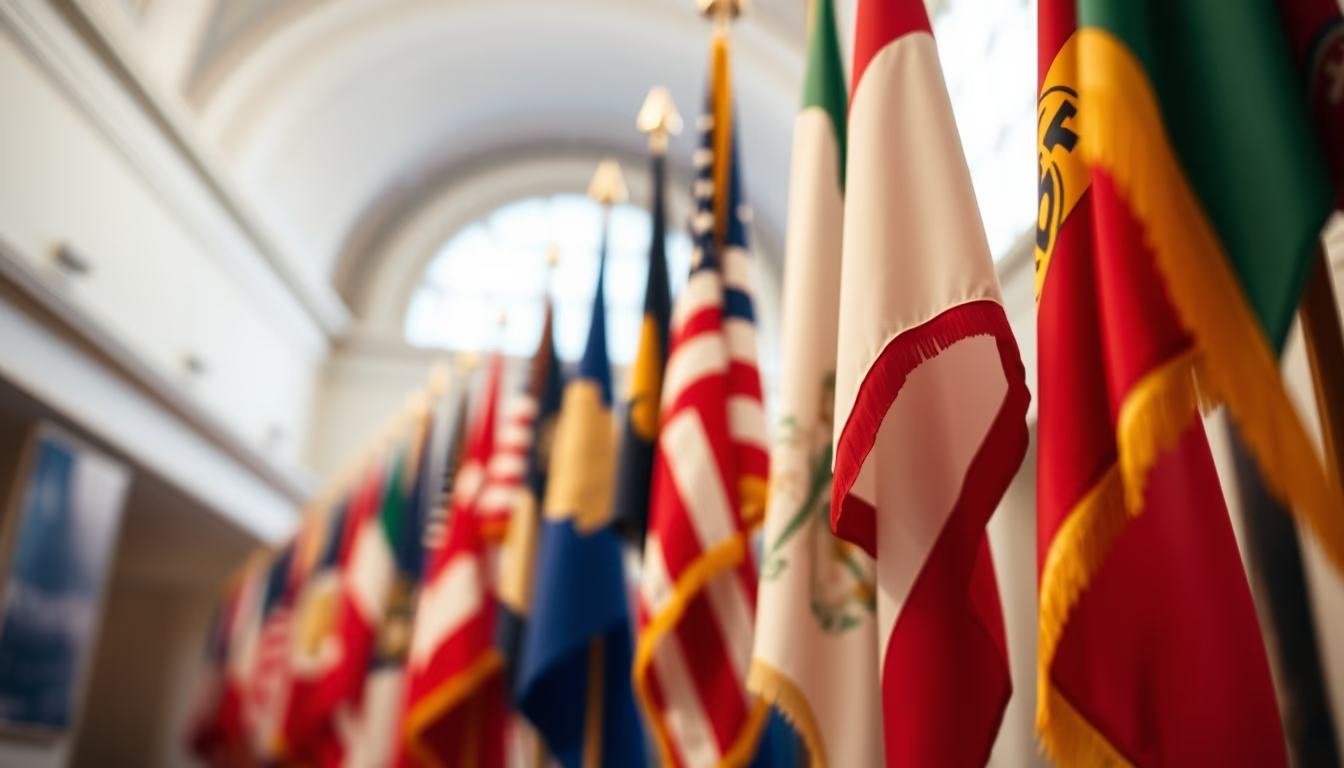
Maritime signal flags
1344×768 · AVIF · CC BY 4.0
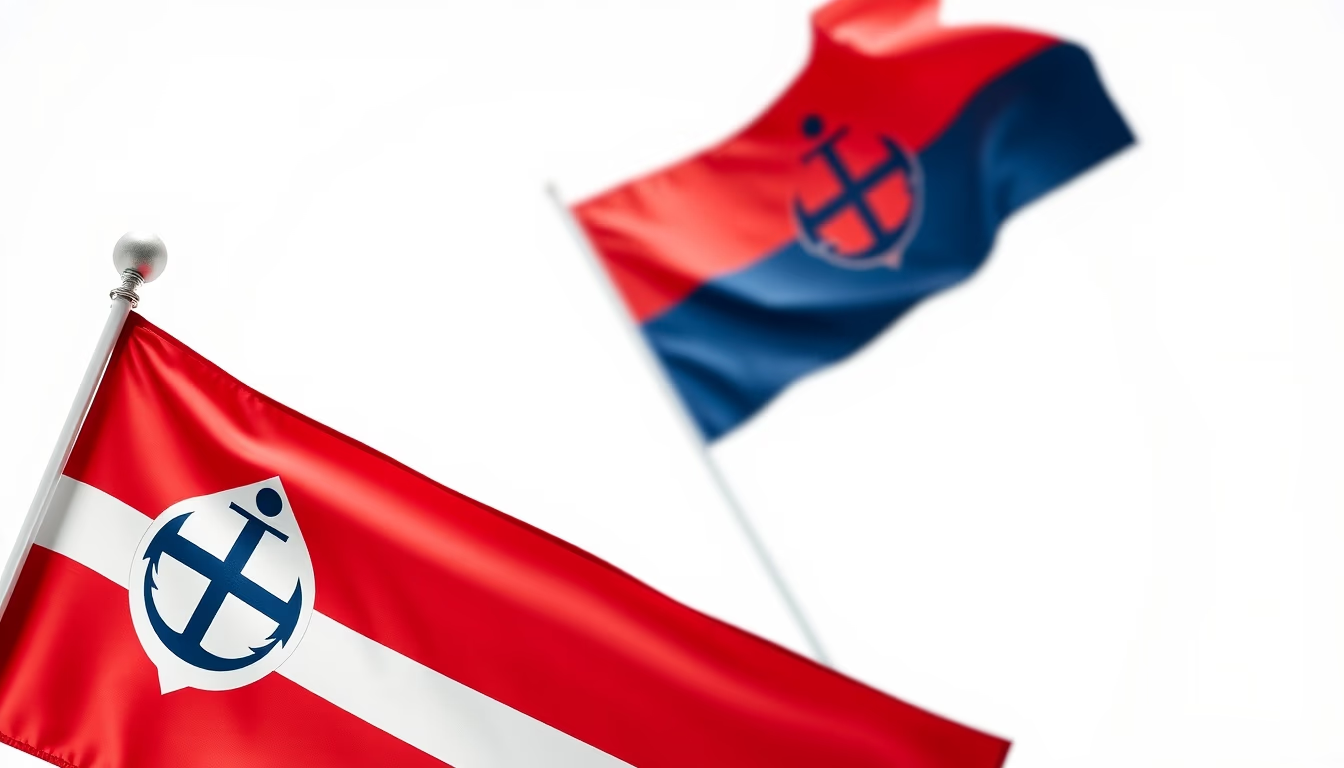
Maritime signal flags convey messages between ships and ports using a standardized international code.
About this subject
Maritime signal flags are part of the International Code of Signals (ICS), established in 1855 and revised by the International Maritime Organization (IMO). The system comprises 26 alphabetical flags, 10 numeral pendants, 3 substitutes, and 1 answering pendant. Each flag represents a letter or number; combinations form messages. For example, flag 'A' (Alfa) means 'diver in water, keep clear', and 'B' (Bravo) indicates 'carrying or discharging dangerous cargo'.
The use of flags dates back to antiquity, but the modern code enables language-independent visual communication. Besides letters, there are special flags like 'H' (Hotel) for 'pilot on board' and 'P' (Papa) for 'vessel about to proceed to sea'. Substitute flags allow repeating letters when needed. The ICS also includes one-, two-, and three-flag signals with specific meanings, such as 'NC' (Negat Charlie) for 'I am in distress and require immediate assistance'.
In Brazil, the Brazilian Navy adopts the ICS for communications among naval and merchant ships. In ports, flags indicate weather conditions, dredging, or vessel movements. Although largely replaced by radio and satellite, flags remain as a backup method and for electronic silence or ceremonial occasions. Collectors and nautical enthusiasts value complete sets; exhibitions like 'Mostra Bandeiras do Mar' at the Naval Museum in Rio de Janeiro display historical examples.
A curiosity: flag 'Z' (Zulu) means 'I require a tug', but is also famous for being hoisted at the Battle of Trafalgar by Nelson, although the signal 'England expects that every man will do his duty' used a different code. Flags are made of wool or polyester, with vivid colors for contrast: red, yellow, blue, black, and white, ensuring long-distance visibility.
Frequently Asked Questions
How many flags make up the International Code of Signals?
There are 40 flags: 26 alphabetical, 10 numeral pendants, 3 substitutes, and 1 answering pendant.
What does the 'A' flag mean in maritime code?
Flag 'A' (Alfa) means 'I have a diver down; keep well clear at low speed'.
Are signal flags still used today?
Yes, they are used as a backup method, for ceremonial purposes, and when radios are unavailable or in electronic silence. They are also common in regattas and leisure vessels.
Direct URL
https://pub-c7d6a6ea828543ac903a74a341ccb2e1.r2.dev/imagens/maritime-signal-flags-commercial-product-photography-fresh4.avifHow to credit
Include a visible link back to UtilizAí. Copy one of the snippets below:
<a href="https://xn--utiliza-eza.com/en/midia/imagens/maritime-signal-flags-commercial-product-photography-fresh4">Maritime signal flags</a> by <a href="https://xn--utiliza-eza.com">UtilizAí</a>, licensed under <a href="https://creativecommons.org/licenses/by/4.0/">CC BY 4.0</a>.
[Maritime signal flags](https://xn--utiliza-eza.com/en/midia/imagens/maritime-signal-flags-commercial-product-photography-fresh4) by [UtilizAí](https://xn--utiliza-eza.com), CC BY 4.0
License: CC-BY-4.0