Manga panels black white
1344×768 · AVIF · CC BY 4.0
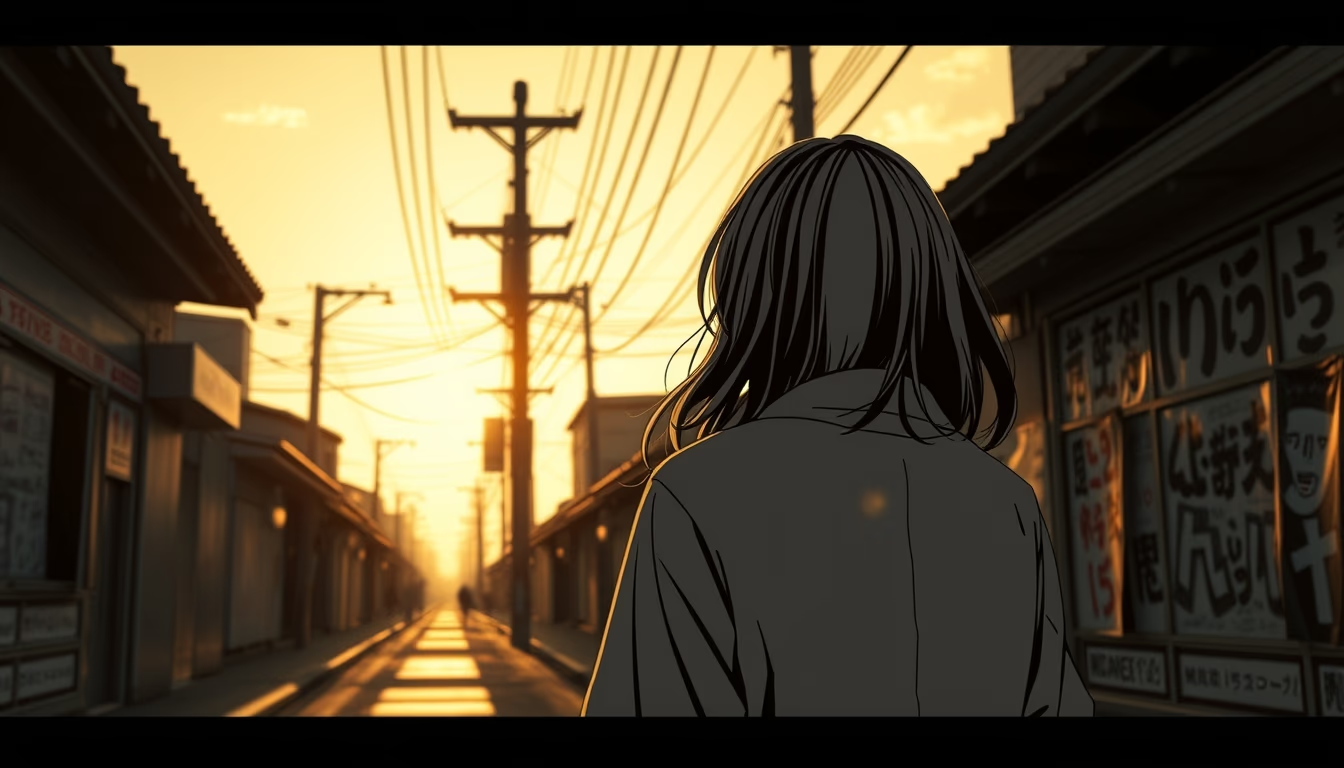
Black and white manga panels define the unique visual style of Japanese comics, combining narrative technique and artistic expression.
About this subject
Black and white manga panels are the foundation of Japanese visual storytelling. Unlike Western comics, which often use vibrant colors, manga has maintained monochrome as standard since the post-war era. This not only reduces printing costs but also speeds up the creative process for artists who must meet weekly deadlines in magazines like Shonen Jump. The result is a style that values contrast, line, and composition over chromatic appeal.
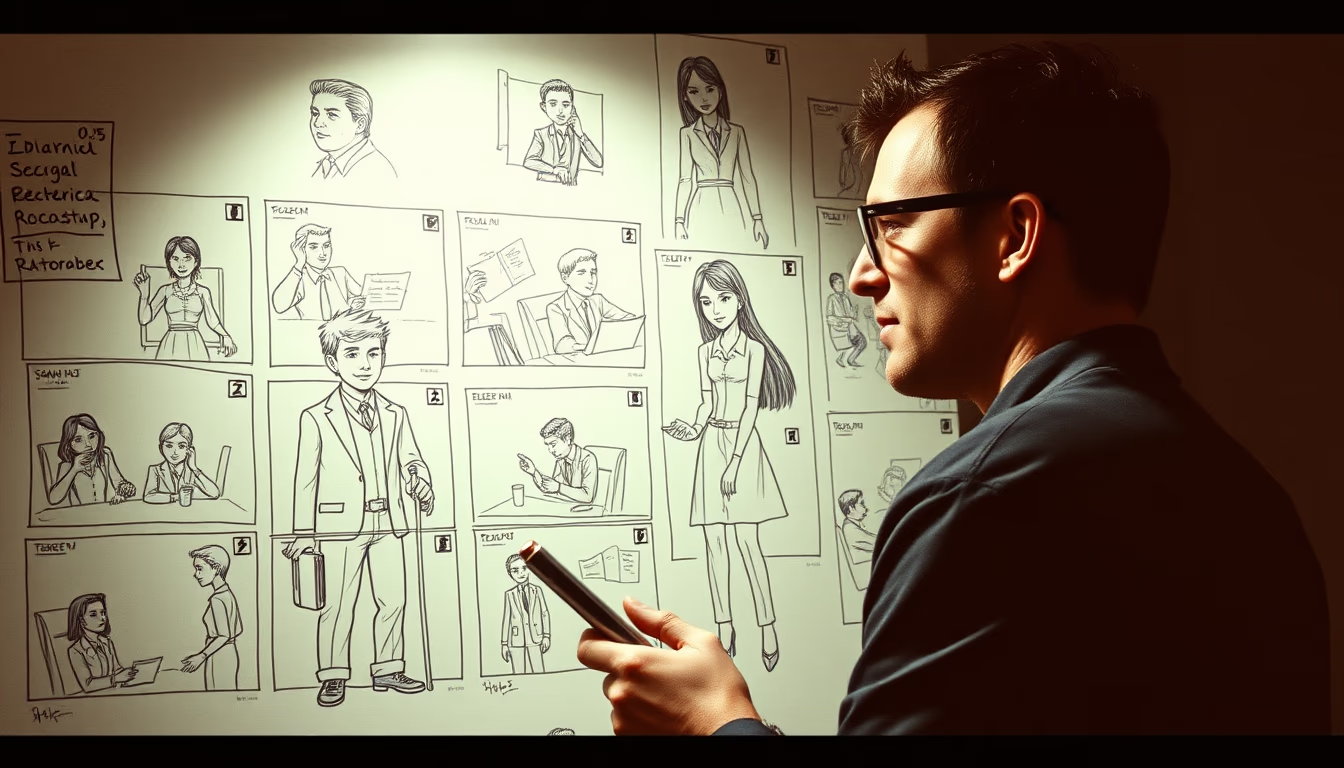
Techniques such as hatching cross lines to create shadows and textures, while screentones (adhesive films with patterns) add details like cloudy skies or patterned clothing. Variation in line thickness conveys emotion: thin lines for calmness, thick for impact. Sequential panels guide the reader's eye, controlling the narrative rhythm. The lack of color forces the mangaka to master the brain's black-and-white perception, using negative space as breathing room.
Historically, Osamu Tezuka, the 'God of Manga,' popularized the style after World War II. His series 'Astro Boy' established conventions like large, expressive eyes, which work well without color. The economy of color also influenced genres: in shonen (action), strong black enhances fights; in shojo (romance), soft screentone hues create a poetic atmosphere.
Culturally, black and white manga has transcended Japan. Works like 'Akira' and 'Dragon Ball' won global readers, proving that the lack of color does not limit immersion. Today, even with digitization, many mangakas choose B&W for tradition and artistic control. It is a symbol of the medium's identity.
Frequently Asked Questions
Why is manga printed in black and white?
For economic and traditional reasons. Monochrome printing reduces costs and enables weekly deadlines, maintaining narrative focus and artistic expression through contrast.
What techniques are used in manga panels?
Hatching for shadows, screentones for textures, line weight variation for emotion, and panel composition that controls reading rhythm.
Does black and white manga influence other arts?
Yes, it has inspired Western comics, animation, and graphic design. Works like 'Akira' and 'Dragon Ball' proved that B&W can be as immersive as color.
Direct URL
https://pub-c7d6a6ea828543ac903a74a341ccb2e1.r2.dev/imagens/manga-panels-black-white-cinematic-wide-shot-fresh9.avifHow to credit
Include a visible link back to UtilizAí. Copy one of the snippets below:
<a href="https://xn--utiliza-eza.com/en/midia/imagens/manga-panels-black-white-cinematic-wide-shot-fresh9">Manga panels black white</a> by <a href="https://xn--utiliza-eza.com">UtilizAí</a>, licensed under <a href="https://creativecommons.org/licenses/by/4.0/">CC BY 4.0</a>.
[Manga panels black white](https://xn--utiliza-eza.com/en/midia/imagens/manga-panels-black-white-cinematic-wide-shot-fresh9) by [UtilizAí](https://xn--utiliza-eza.com), CC BY 4.0
License: CC-BY-4.0