Lunar surface astronaut footprint
1344×768 · AVIF · CC BY 4.0
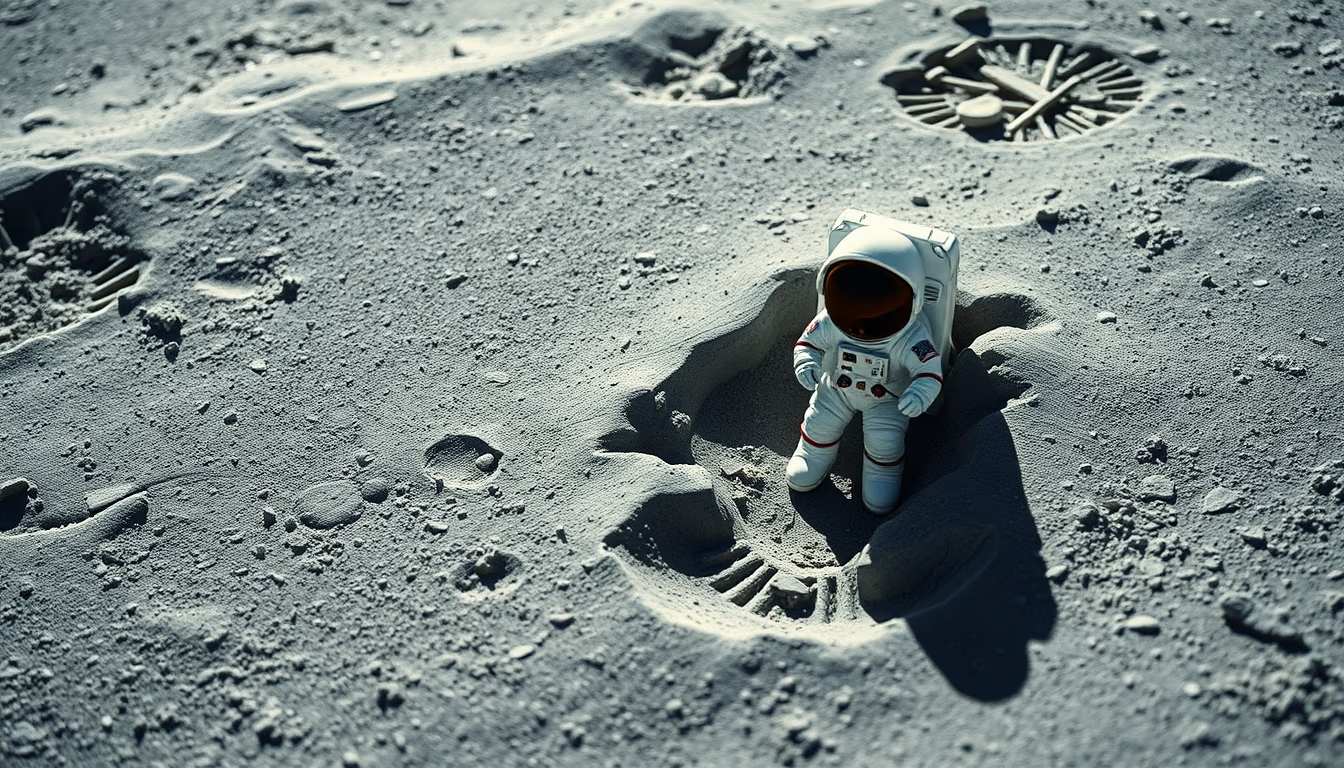
The astronaut footprint on the lunar surface is an eternal symbol of humanity's first presence on the Moon, recorded during the Apollo 11 mission in 1969.
About this subject
The footprint left by astronaut Neil Armstrong on the lunar surface is one of the most iconic images of space exploration. It was made during the Apollo 11 mission on July 20, 1969, when Armstrong became the first human to set foot on the Moon. The footprint, along with others from the same period, remains perfectly preserved due to the lack of atmosphere, wind, and water on the Moon. There is no erosion to erase these marks, meaning they could last for millions of years unless disturbed by future landings or micrometeorite impacts.
The footprint itself is a testament to the unique properties of lunar regolith. The Moon's surface is covered in a fine, powdery dust composed of tiny glass beads and rock fragments. When Armstrong stepped onto the surface, his boot compressed the dust, leaving a crisp impression with clear ridges from the boot's tread. The Apollo 11 astronauts spent about two hours walking and collecting samples, leaving dozens of footprints. Photographs taken by Buzz Aldrin show Armstrong's footprint in sharp contrast against the grey lunar landscape.
These footprints have become cultural icons, representing humanity's reach beyond Earth. They appear in countless documentaries, artworks, and educational materials. Interestingly, the footprints also serve as a reminder of the technical challenges: the spacesuit weighed about 180 pounds on Earth but only 30 pounds on the Moon due to lower gravity. The ability to leave such a clear print shows how the suit's design accounted for the different surface conditions. Future missions, such as NASA's Artemis program, plan to return to the Moon and may encounter these historic footprints, which are protected as historic sites.
Frequently Asked Questions
Why don't footprints on the Moon disappear?
Because the Moon has no atmosphere, wind, or water. Without erosion, footprints remain intact for millions of years unless covered by micrometeorite dust.
How many footprints did the Apollo 11 astronauts leave?
Neil Armstrong and Buzz Aldrin spent about two hours on the surface, leaving dozens of footprints. The most famous is Armstrong's first footprint.
Are the footprints still there today?
Yes, the footprints remain exactly as they were left in 1969. Recent lunar satellite images, such as from the Lunar Reconnaissance Orbiter, confirm that the landing sites and footprints are still visible.
Direct URL
https://pub-c7d6a6ea828543ac903a74a341ccb2e1.r2.dev/imagens/lunar-surface-astronaut-footprint-minimalist-composition-p0.avifHow to credit
Include a visible link back to UtilizAí. Copy one of the snippets below:
<a href="https://xn--utiliza-eza.com/en/midia/imagens/lunar-surface-astronaut-footprint-minimalist-composition-p0">Lunar surface astronaut footprint</a> by <a href="https://xn--utiliza-eza.com">UtilizAí</a>, licensed under <a href="https://creativecommons.org/licenses/by/4.0/">CC BY 4.0</a>.
[Lunar surface astronaut footprint](https://xn--utiliza-eza.com/en/midia/imagens/lunar-surface-astronaut-footprint-minimalist-composition-p0) by [UtilizAí](https://xn--utiliza-eza.com), CC BY 4.0
License: CC-BY-4.0