Lotus sutra japanese
1344×768 · AVIF · CC BY 4.0
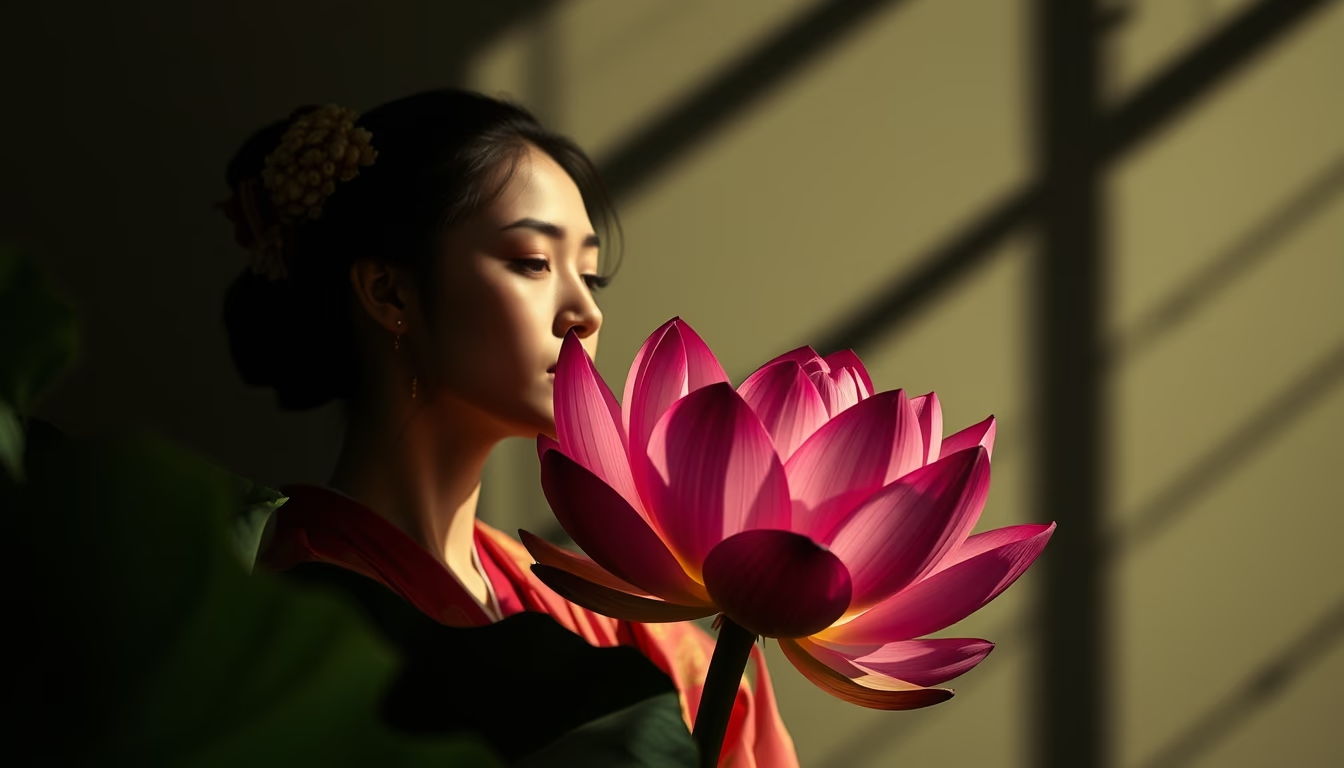
The Lotus Sutra is one of the most revered Mahayana Buddhist texts, particularly in Japan, where it shaped schools like Tendai and Nichiren.
About this subject
The Lotus Sutra (Saddharma Puṇḍarīka Sūtra) is a Mahayana Buddhist text composed between the 1st century BCE and 2nd century CE, likely in the Kashmir region. It is renowned for its parables, such as the Burning House and the Prodigal Son, which teach compassion and the universality of enlightenment. In Japan, the sutra arrived via China around the 6th century, translated into Chinese by Kumarajiva (344-413 CE), a version that became the foundation of Japanese traditions.
During the Heian period (794-1185), the Lotus Sutra gained immense prestige, especially through the monk Saichō (767-822), founder of the Tendai school, who deemed it the supreme teaching of the Buddha. Later, in the Kamakura period, the reformer Nichiren (1222-1282) placed the sutra at the core of his practice, emphasizing the recitation of its title (Nam-myoho-renge-kyo) as a path to enlightenment. To this day, the Lotus Sutra is chanted in Tendai and Nichiren temples throughout Japan.
Japanese manuscripts of the Lotus Sutra, copied in Chinese characters (kanji) and adorned with gold and silver illustrations, are artistic treasures. Many were preserved in temples such as Enryaku-ji in Kyoto or Taiseki-ji in Fujinomiya. The practice of copying the sutra (shakyō) was considered a meritorious act, and some examples contain up to 700 scroll pages. These texts are protected as cultural heritage, representing the fusion of Buddhist faith and Japanese art.
Beyond religion, the Lotus Sutra influenced Japanese literature, painting (as in emakimono narrative scrolls), and even politics. Its message that all beings can attain Buddhahood, regardless of gender, class, or ability, was revolutionary for its time. Scholarly studies indicate that the sutra also encouraged the development of schools like Jōdō (Pure Land) by emphasizing faith and devotion. Today, the Lotus Sutra continues to be read and studied globally, sustaining a tradition over a thousand years old in Japan.
Frequently Asked Questions
What is the origin of the Lotus Sutra?
The Lotus Sutra was composed between the 1st century BCE and 2nd century CE, likely in the Kashmir region of India. It was translated into Chinese by Kumarajiva in the 5th century, a version that became the basis for the Japanese tradition.
Why is the Lotus Sutra important in Japan?
The Lotus Sutra is central to the Tendai school (founded by Saichō) and the Nichiren school (founded by Nichiren). It is considered the supreme teaching of the Buddha, and its recitation, especially the title Nam-myoho-renge-kyo, is a core practice.
How did the Lotus Sutra influence Japanese art?
Manuscripts of the sutra were adorned with gold and silver illustrations, creating narrative scrolls (emakimono). The practice of copying the sutra (shakyō) produced artistic masterpieces, many preserved as cultural treasures in Japan.
Direct URL
https://pub-c7d6a6ea828543ac903a74a341ccb2e1.r2.dev/imagens/lotus-sutra-japanese-rembrandt-lighting-dramatic-shadows-fresh3.avifHow to credit
Include a visible link back to UtilizAí. Copy one of the snippets below:
<a href="https://xn--utiliza-eza.com/en/midia/imagens/lotus-sutra-japanese-rembrandt-lighting-dramatic-shadows-fresh3">Lotus sutra japanese</a> by <a href="https://xn--utiliza-eza.com">UtilizAí</a>, licensed under <a href="https://creativecommons.org/licenses/by/4.0/">CC BY 4.0</a>.
[Lotus sutra japanese](https://xn--utiliza-eza.com/en/midia/imagens/lotus-sutra-japanese-rembrandt-lighting-dramatic-shadows-fresh3) by [UtilizAí](https://xn--utiliza-eza.com), CC BY 4.0
License: CC-BY-4.0