Liquidity pool diagram on whiteboard
1344×768 · AVIF · CC BY 4.0
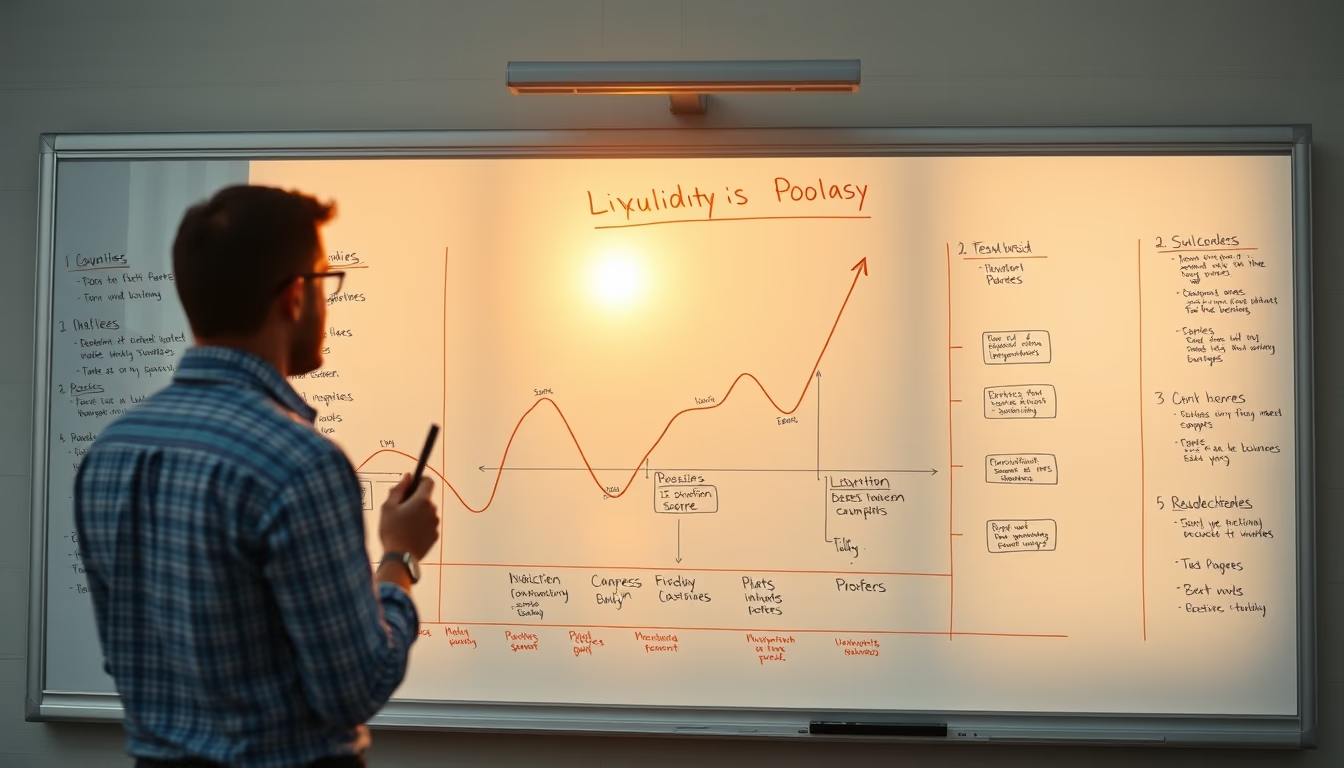
Whiteboard diagram of a liquidity pool explaining the automated market making mechanism used in DeFi.
About this subject
A liquidity pool is a collection of funds locked in a smart contract that provides liquidity for trading on decentralized exchanges (DEXs). Unlike the traditional order book model where buyers and sellers are matched directly, pools use a mathematical formula, such as x * y = k (constant), to determine prices automatically. This mechanism, known as an automated market maker (AMM), was popularized by Uniswap in 2018 and revolutionized the cryptocurrency market by allowing anyone to become a liquidity provider by depositing token pairs in equal proportion and earning trading fees.
The whiteboard diagram typically illustrates two tokens (e.g., ETH and USDC) in a pool, with arrows showing how trades alter the proportion and price. When a trader buys ETH, they add USDC to the pool and remove ETH, increasing the price of ETH due to the bonding curve. This model solves the low liquidity problem in less popular trading pairs but introduces risks like impermanent loss, where providers may suffer temporary losses if the relative prices of tokens change drastically.
Liquidity pools are the backbone of DeFi protocols like Uniswap, SushiSwap, and Curve Finance. They are also used in yield farming, where liquidity providers receive governance tokens as rewards. The simplicity of the concept, combined with automation via smart contracts, allowed DeFi to grow to billions of dollars in total value locked (TVL). The whiteboard diagram is a common educational tool for explaining these concepts to new crypto enthusiasts.
Frequently Asked Questions
What is a liquidity pool in cryptocurrencies?
It is a smart contract containing funds of two or more tokens, enabling decentralized trading without a traditional order book.
How is price determined in a liquidity pool?
Price is set by a mathematical formula, like x * y = k, where the quantity of each token in the pool automatically determines the exchange rate.
What is impermanent loss?
It is a temporary loss liquidity providers may experience when the relative price of tokens in the pool changes, compared to simply holding the tokens outside the pool.
Direct URL
https://pub-c7d6a6ea828543ac903a74a341ccb2e1.r2.dev/imagens/liquidity-pool-diagram-on-whiteboard-cinematic-wide-shot-v2.avifHow to credit
Include a visible link back to UtilizAí. Copy one of the snippets below:
<a href="https://xn--utiliza-eza.com/en/midia/imagens/liquidity-pool-diagram-on-whiteboard-cinematic-wide-shot-v2">Liquidity pool diagram on whiteboard</a> by <a href="https://xn--utiliza-eza.com">UtilizAí</a>, licensed under <a href="https://creativecommons.org/licenses/by/4.0/">CC BY 4.0</a>.
[Liquidity pool diagram on whiteboard](https://xn--utiliza-eza.com/en/midia/imagens/liquidity-pool-diagram-on-whiteboard-cinematic-wide-shot-v2) by [UtilizAí](https://xn--utiliza-eza.com), CC BY 4.0
License: CC-BY-4.0