Lightbox tracing
1344×768 · AVIF · CC BY 4.0
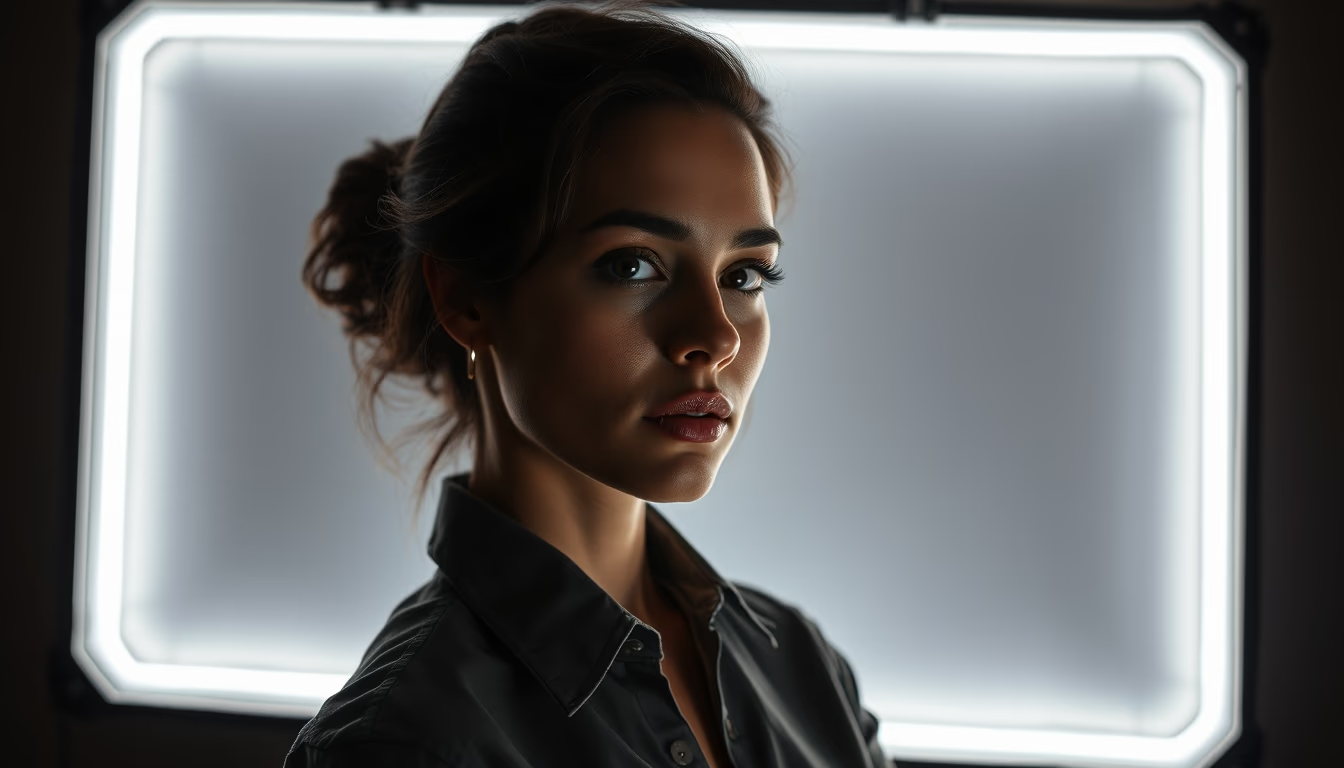
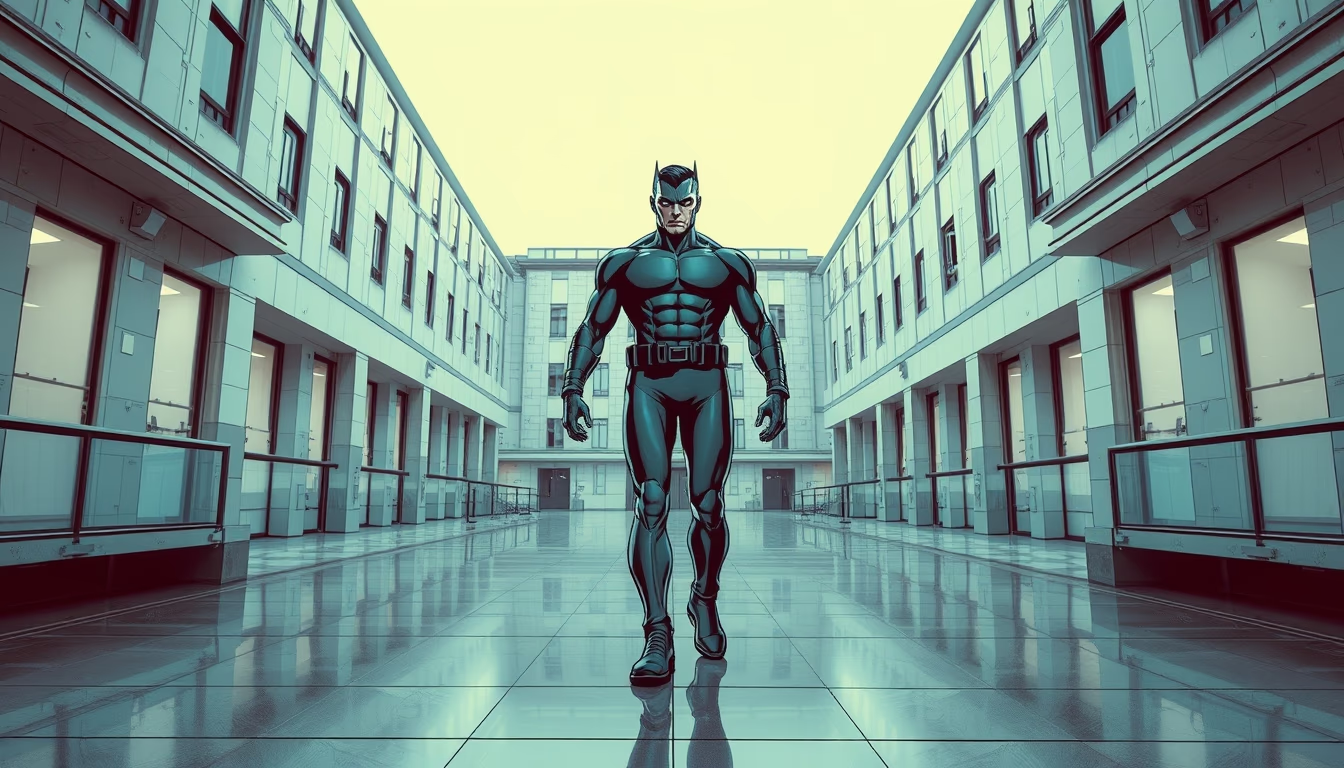
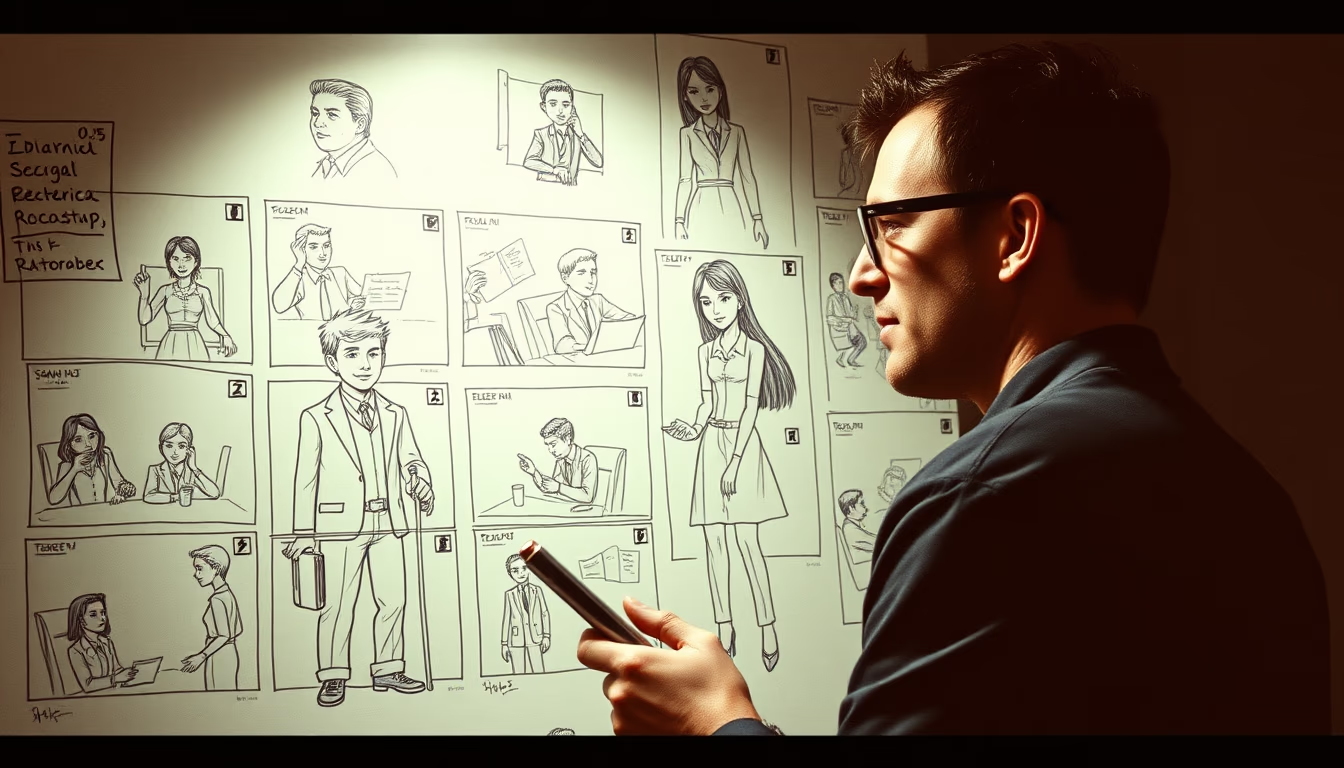
Lightbox tracing is a drawing transfer technique that streamlines comic art creation, combining precision and dramatic Rembrandt-style lighting.
About this subject
Lightbox tracing is a traditional technique used by comic artists and animators to transfer a sketch to final art with high precision. The process involves placing the original drawing on a light-emitting surface, typically a lightbox, and tracing the desired lines onto a new sheet. This practice originated in animation studios in the 1920s and 1930s, later adopted by cartoonists and comic book artists to maintain character consistency across multiple pages.
The connection to Rembrandt lighting, defined by strong contrasts between light and shadow, is indirect yet reflects a pursuit of visual drama. Many artists use lightboxes to refine compositions with striking shadows, inspired by the Dutch painter's style. This technique allows experimentation with different lighting angles without losing the original line base.
Although digital drawing software has reduced the use of physical lightboxes, the technique remains relevant in studios that value analog processes. European and Brazilian comic artists often combine lightbox tracing with ink to achieve sharp lines and dramatic contrast, especially in noir or dark fantasy works.
Interestingly, lightbox tracing is also used for proportion correction: an artist can photograph themselves in specific poses, project the photo onto the lightbox, and trace the silhouette to ensure realistic anatomy. This method, called "trace over," is common in superhero comics, where dynamic action requires precise poses.
Frequently Asked Questions
What is lightbox tracing?
Lightbox tracing is a drawing transfer technique where the artist places a sketch on a light-emitting surface and traces the lines onto a new sheet. It is used to ensure precision and consistency, especially in comics and animation.
How does lightbox tracing relate to Rembrandt lighting?
Rembrandt lighting, with its high contrast between light and shadow, inspires artists to create dramatic compositions. The lightbox allows refining those shadows while tracing, maintaining the balance between light and darkness.
Why do comic artists use lightbox tracing?
Comic artists use lightbox tracing to save time, maintain character proportions, and experiment with complex poses and lighting angles without redrawing everything from scratch. It is especially useful in long-running series.
Direct URL
https://pub-c7d6a6ea828543ac903a74a341ccb2e1.r2.dev/imagens/lightbox-tracing-rembrandt-lighting-dramatic-shadows-fresh3.avifHow to credit
Include a visible link back to UtilizAí. Copy one of the snippets below:
<a href="https://xn--utiliza-eza.com/en/midia/imagens/lightbox-tracing-rembrandt-lighting-dramatic-shadows-fresh3">Lightbox tracing</a> by <a href="https://xn--utiliza-eza.com">UtilizAí</a>, licensed under <a href="https://creativecommons.org/licenses/by/4.0/">CC BY 4.0</a>.
[Lightbox tracing](https://xn--utiliza-eza.com/en/midia/imagens/lightbox-tracing-rembrandt-lighting-dramatic-shadows-fresh3) by [UtilizAí](https://xn--utiliza-eza.com), CC BY 4.0
License: CC-BY-4.0