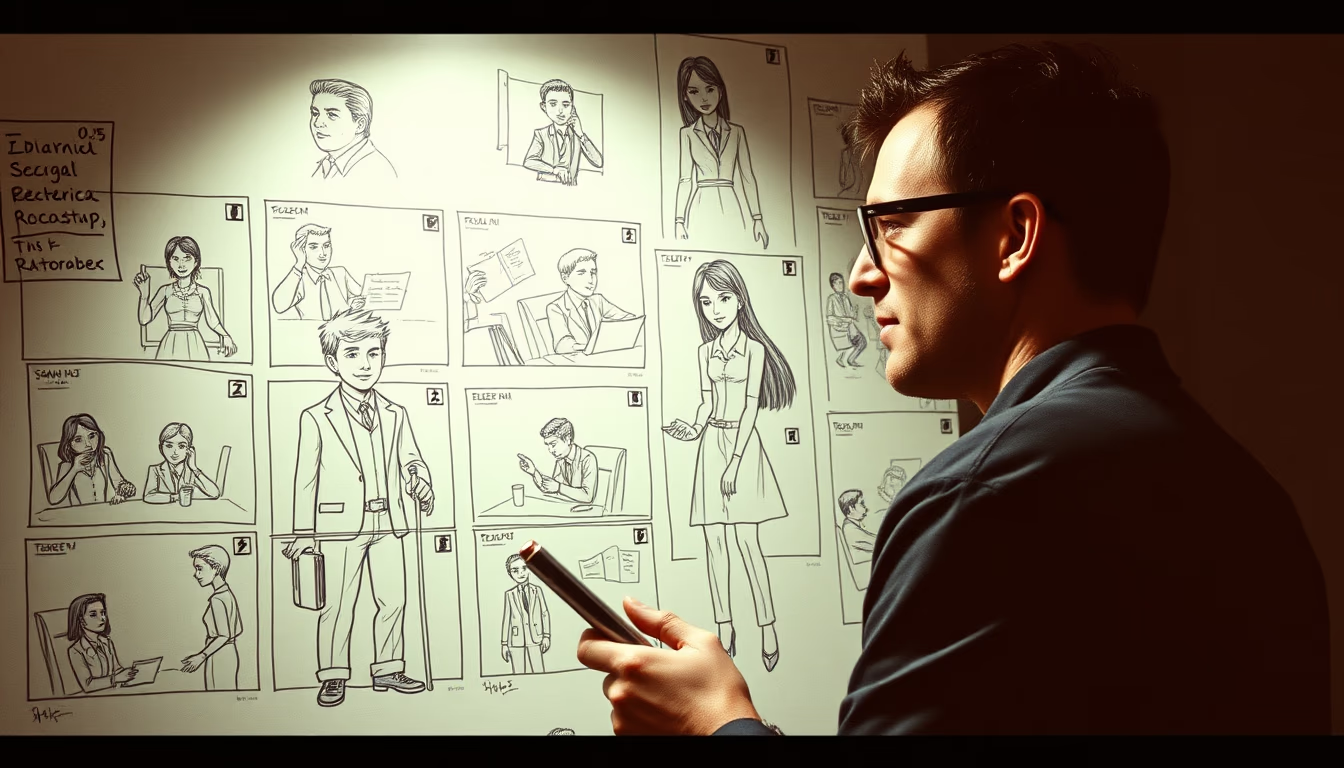
Lightbox tracing
1344×768 · AVIF · CC BY 4.0

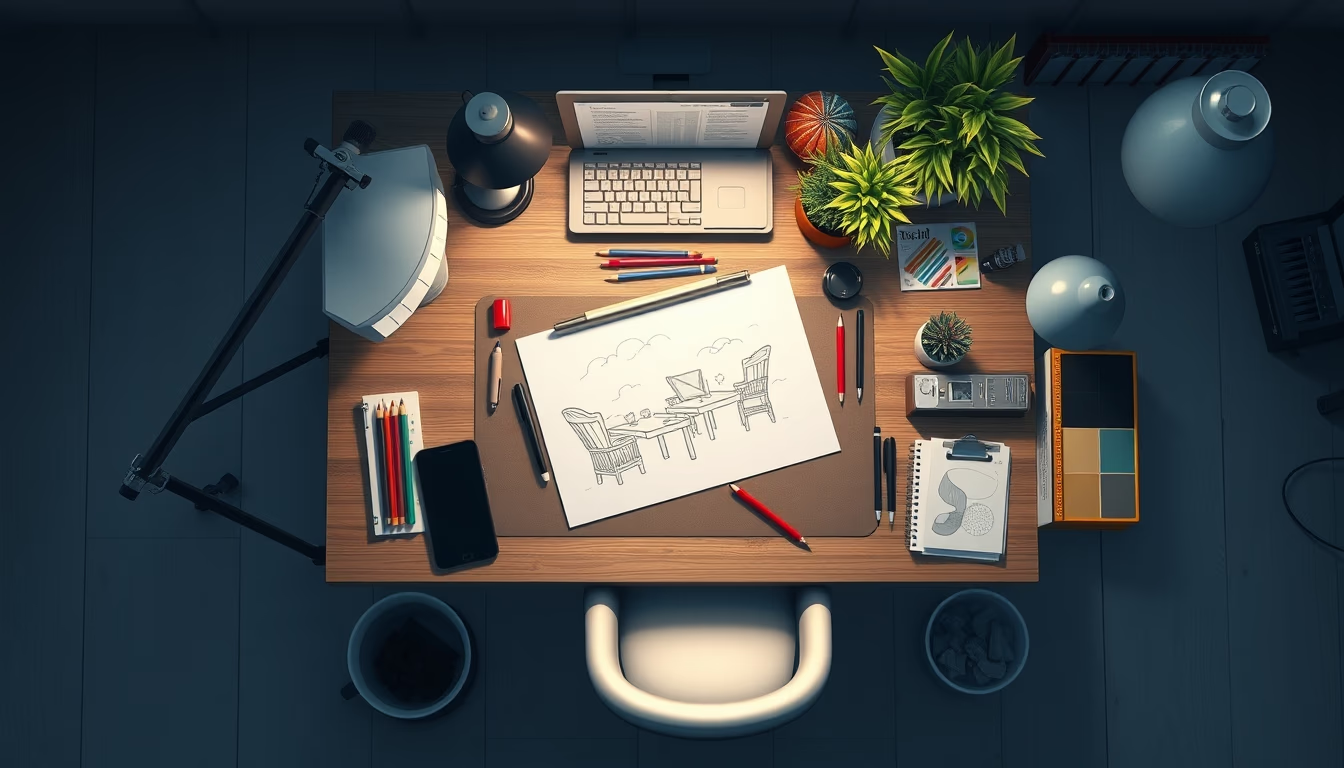
Lightbox tracing is a classic sequential art technique that allows accurate transfer of drawings, essential in comic production.
About this subject
Lightbox tracing is a fundamental tool in comic art, consisting of a backlit surface that allows an artist to place a blank sheet over an original drawing and trace the visible lines. This technique is widely used to refine sketches, correct proportions, and transfer layouts to final art without losing line quality. Pioneering artists like Will Eisner and Jack Kirby employed similar methods using natural light or illuminated windows. Modern lightboxes with fluorescent or LED lamps have made the process faster and more consistent.
In comic book production, tracing is especially useful during the inking phase. The penciler creates a loose sketch on one sheet, then places it on the lightbox and redraws it with more precision on another sheet. This allows for experimentation without damaging the original work. Many artists also use lightboxes to transfer detailed backgrounds or recurring scenes across panels, saving time and ensuring uniformity. The technique is also used in digital coloring, where scanned drawings are traced in software, but the physical version remains valued for its tactile feedback.
Culturally, lightbox tracing is a debated skill. Purists argue that freehand drawing is superior, while professionals recognize its efficiency. Major comic studios like Marvel and DC have integrated lightboxes into their workflows since the 1960s. In Brazil, artists such as Mauricio de Sousa and Ziraldo used similar techniques to produce large-scale strips and magazines. Although digital tablets have largely replaced physical lightboxes, they remain an important teaching tool in art schools.
A curious fact: the term "lightbox" is also used in photography for viewing negatives, but in comics it strictly refers to the tracing surface. Portable and adjustable versions with variable light intensity help reduce eye strain. For beginners, a lightbox aids in understanding shape construction and anatomy by allowing them to overlay references and learn from masters.
Frequently Asked Questions
What is the difference between a lightbox and a tracing table?
In comic art, 'lightbox' and 'tracing table' are often used interchangeably. However, a tracing table is usually larger and may have adjustable angles, while a lightbox is more portable.
Is it cheating to use a lightbox for drawing comics?
No, it is a professional tool used to save time and improve accuracy. Many famous comic artists rely on lightboxes for consistency, especially for backgrounds and complex panels.
Can I learn to draw without a lightbox?
Absolutely. A lightbox is an aid, not a necessity. Traditional freehand drawing is the foundation; the lightbox helps with repetition and refinement once the basics are mastered.
Direct URL
https://pub-c7d6a6ea828543ac903a74a341ccb2e1.r2.dev/imagens/lightbox-tracing-isometric-flat-lay-fresh0.avifHow to credit
Include a visible link back to UtilizAí. Copy one of the snippets below:
<a href="https://xn--utiliza-eza.com/en/midia/imagens/lightbox-tracing-isometric-flat-lay-fresh0">Lightbox tracing</a> by <a href="https://xn--utiliza-eza.com">UtilizAí</a>, licensed under <a href="https://creativecommons.org/licenses/by/4.0/">CC BY 4.0</a>.
[Lightbox tracing](https://xn--utiliza-eza.com/en/midia/imagens/lightbox-tracing-isometric-flat-lay-fresh0) by [UtilizAí](https://xn--utiliza-eza.com), CC BY 4.0
License: CC-BY-4.0