Level bubble vintage
1344×768 · AVIF · CC BY 4.0

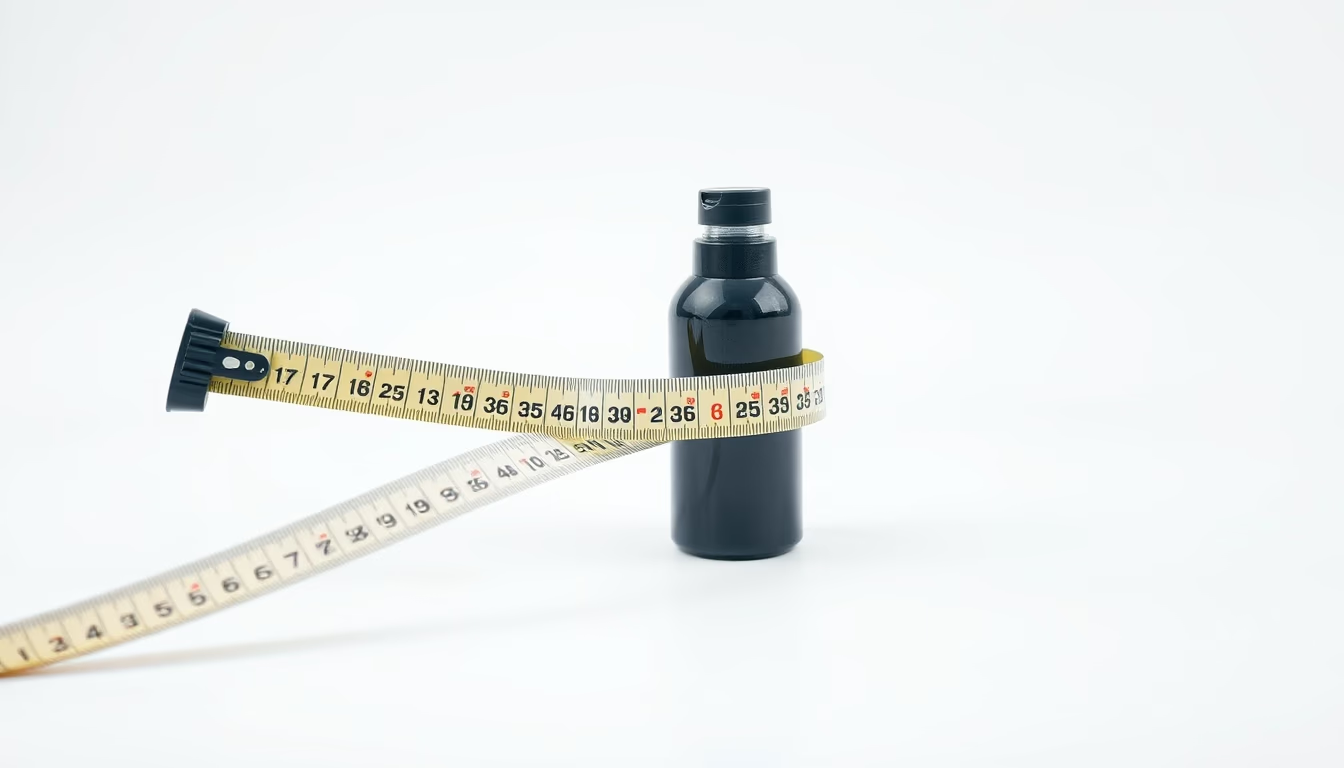
O nível de bolha vintage é mais do que uma ferramenta de medição: é um símbolo da precisão artesanal que marcou gerações de construtores e marceneiros.
Sobre o tema
O nível de bolha, também conhecido como nível de carpinteiro, é um instrumento usado para verificar a horizontalidade ou verticalidade de uma superfície. Seu funcionamento se baseia no deslocamento de uma bolha de ar dentro de um tubo contendo líquido, geralmente álcool ou éter, que se posiciona no centro quando a superfície está nivelada. A versão moderna foi patenteada pelo francês Henri de La Boétie no século XVIII, mas princípios similares eram usados desde a antiguidade, como no chorobates romano.
Os níveis vintage, sobretudo os produzidos entre o final do século XIX e meados do XX, são peças de grande valor estético e funcional. Fabricados em madeira nobre, latão e vidro, muitos apresentam detalhes como incrustações, gravações e parafusos ornamentais. Marcas como Stanley, Starrett e Empire são especialmente cobiçadas por colecionadores, que buscam exemplares com a pátina original e os frascos de vidro intactos.
Além da função prática, esses níveis representam a transição da artesania para a produção industrial. Em uma época em que a precisão era conquistada com mãos hábeis e ferramentas bem calibradas, o nível de bolha tornou-se peça-chave em canteiros de obras, oficinas de carpintaria e laboratórios de marcenaria. Hoje, eles são objetos de decoração em estilos retrô e steampunk, fotografados como natureza-morta e exibidos em museus de design.
A preservação desses níveis é um testemunho da engenharia de outrora. Cada bolha encerrada em seu tubo conta a história de construtores que erguiam desde simples mesas até imponentes edifícios, confiando em uma ferramenta que permanece essencial: o simples, porém genial, nível de bolha.
Perguntas frequentes
Como funciona um nível de bolha?
Um nível de bolha contém um tubo de vidro preenchido com um líquido (álcool ou éter) e uma bolha de ar. Quando a superfície está nivelada, a bolha se posiciona exatamente no centro do tubo, indicado por duas marcas. Qualquer inclinação desloca a bolha para um dos lados.
Qual a origem do nível de bolha como ferramenta?
O princípio do nível de bolha remonta a instrumentos antigos como o chorobates romano, um longo nível de água. O design moderno com tubo de vidro foi patenteado no século XVIII pelo francês Henri de La Boétie e tornou-se padrão na construção e marcenaria.
Por que os níveis de bolha vintage são valorizados por colecionadores?
Eles são valorizados pelo design artesanal, materiais nobres (madeira, latão, vidro) e pela história que carregam. Marcas renomadas como Stanley e Starrett produziram modelos icônicos que hoje são raros, especialmente com todos os componentes originais e a pátina do tempo.
URL direta
https://pub-c7d6a6ea828543ac903a74a341ccb2e1.r2.dev/imagens/level-bubble-vintage-fine-art-photography-p3.avifComo creditar
Inclua um link visível de volta pro UtilizAí. Copie um dos snippets abaixo:
<a href="https://xn--utiliza-eza.com/midia/imagens/level-bubble-vintage-fine-art-photography-p3">Level bubble vintage</a> by <a href="https://xn--utiliza-eza.com">UtilizAí</a>, licensed under <a href="https://creativecommons.org/licenses/by/4.0/">CC BY 4.0</a>.
[Level bubble vintage](https://xn--utiliza-eza.com/midia/imagens/level-bubble-vintage-fine-art-photography-p3) by [UtilizAí](https://xn--utiliza-eza.com), CC BY 4.0
Licença: CC-BY-4.0