Leather workshop knives
1344×768 · AVIF · CC BY 4.0
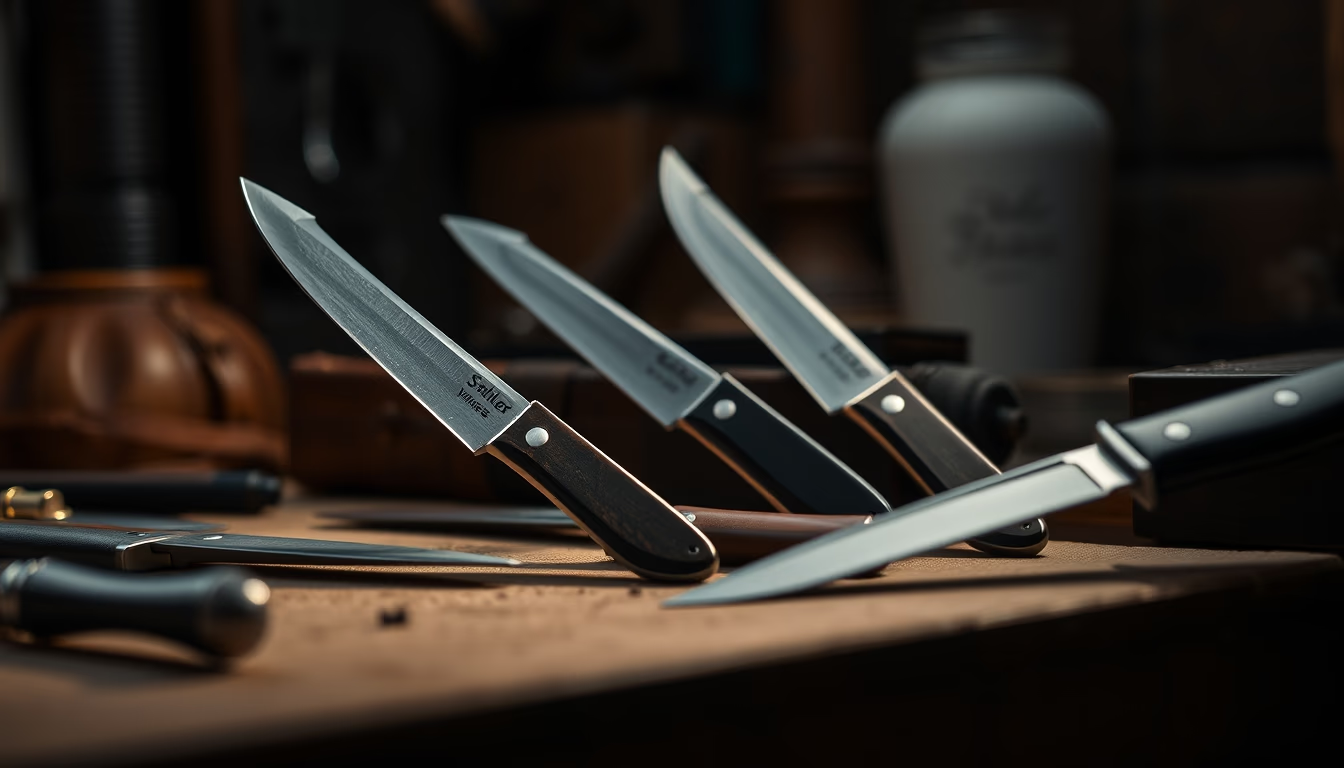
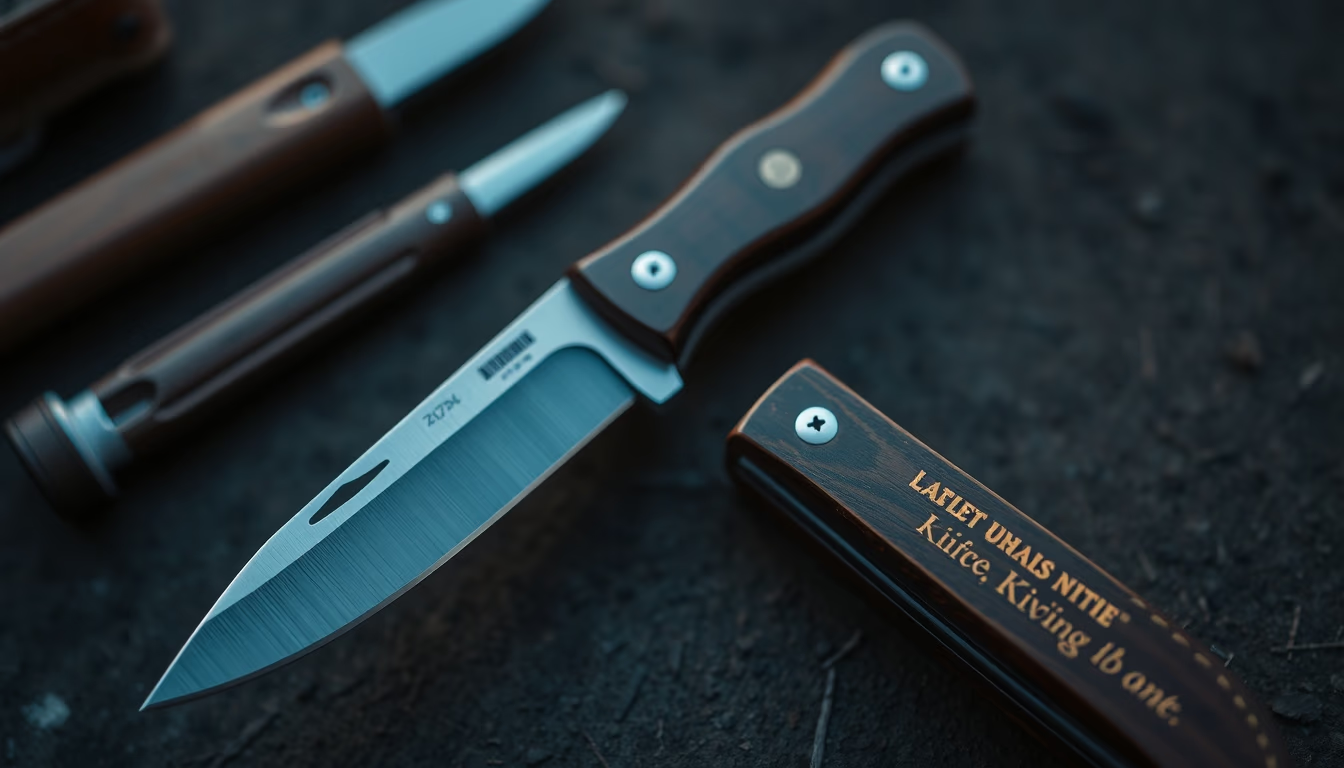
Leather workshop knives are essential tools in craftsmanship, each type serving a specific purpose such as cutting, skiving or finishing.
About this subject
In leatherworking, knives are as diverse as they are essential. Each type addresses a specific stage, from rough cutting to fine finishing. The round knife is perfect for long curves, while the skiving knife thins edges precisely for folds and stitching. The head knife, with its half-moon blade, serves for straight cuts and skiving alike. Straight utility knives or shoemaker's knives excel in linear cuts and details.
Steel quality is crucial. Carbon steels like 1095 or O1 hold an extremely sharp edge and are easy to sharpen, but require rust prevention. Stainless steels trade some edge retention for corrosion resistance. Heat treatment and blade geometry directly affect performance: thinner blades with acute angles cut better but are more fragile. Regular maintenance involves water stones, abrasive compounds, and leather strops to refine the edge.
Historically, specialized knives evolved with leatherworking traditions. Medieval European cutlers produced blades for saddlers and glovers. In Brazil, the gaucho tradition of raw leather and Northeastern craftsmanship incorporated knives adapted to local needs. Modern designs feature ergonomic handles made of micarta or G10 for comfort and durability. Whether for bags, belts, saddles, or shoes, the proper knife significantly impacts the final quality.
Frequently Asked Questions
What is the difference between a round knife and a skiving knife?
A round knife has a continuous curved blade, ideal for long curved cuts in leather. A skiving knife has a straight or slightly curved blade, specifically designed to thin edges with precision.
How to maintain the edge of a leather knife?
Sharpen using water stones from 1000 to 6000 grit, followed by abrasive compound on a leather strop. Avoid sandpaper or grinding wheels that can damage the edge. Apply mineral oil after use to prevent rust.
Which type of steel is best for leather knives?
Carbon steels like 1095 and O1 are favored by craftsmen for easy sharpening and superior edge retention. Stainless steels like CPM-154 or AEB-L offer better corrosion resistance but require more advanced sharpening techniques.
Direct URL
https://pub-c7d6a6ea828543ac903a74a341ccb2e1.r2.dev/imagens/leather-workshop-knives-rembrandt-lighting-dramatic-shadows-fresh18.avifHow to credit
Include a visible link back to UtilizAí. Copy one of the snippets below:
<a href="https://xn--utiliza-eza.com/en/midia/imagens/leather-workshop-knives-rembrandt-lighting-dramatic-shadows-fresh18">Leather workshop knives</a> by <a href="https://xn--utiliza-eza.com">UtilizAí</a>, licensed under <a href="https://creativecommons.org/licenses/by/4.0/">CC BY 4.0</a>.
[Leather workshop knives](https://xn--utiliza-eza.com/en/midia/imagens/leather-workshop-knives-rembrandt-lighting-dramatic-shadows-fresh18) by [UtilizAí](https://xn--utiliza-eza.com), CC BY 4.0
License: CC-BY-4.0